written and posted by members of Lancashire Dead Good Poets' Society

Showing posts with label bread. Show all posts

Wednesday, 22 July 2020

Grandma's Cakes and a Bloody Pain

16:50:00 Posted by Jill Reidy Red Snapper Photography , , , , , , , 2 comments
My grandma looked the part.  She was round and soft, with arms like ham shanks.  Only took her pinny off when she put her hat on to leave the house. Oh yes, she looked the part, but her cooking left a lot to be desired. It was a very limited repertoire according to my mum, who was brought up on undercooked potatoes and soggy greens. 

One thing she could do though was bake a mean rock cake. Nobody was ever sure if that was the intended outcome but they were delicious if rock bun was the expectation. It was grandma’s signature dish - if only that title had existed 60 years ago.  I have a vivid memory and I think it only happened once - perhaps grandma was protective of her secret recipe - but we squeezed into her tiny kitchen and together made of batch of the famous buns.  For me this was a treat. Not the baking, as I did that with my mum quite regularly, but baking with grandma.  I had one of her huge pinnies tied around my waist, hands washed, ready for action.  

Grandma had an old enamel table where all the action took place.  The scales came out, complete with the different sized weights, which fascinated me. If I remember rightly the weighing was a pretty casual activity.  Grandma had had very little education and I wonder now whether the scales were only used to impress me.  I can see those ham shank arms now, bowl under the left one, right hand frantically beating the marge and sugar with a worn wooden spoon.  I was allowed a turn but my beating wasn’t a patch on grandma’s and the bowl was soon back under her arm.  Eggs were next.  I was allowed to break one, and hoped grandma’s eyesight wasn’t up to detecting the tiny shards of shell that fell into the mixture. It was agreed that I could add the currants, and I’m sure this particular batch of cakes suffered a significant deficit of fruit through this one decision. 

The best part was adding the flour, which came in a huge bag that I was told not to touch. I’m guessing grandma had probably experienced the split flour bag in the past and didn’t want it repeated.  I remember watching, fascinated, as she tipped the flour into the pan to weigh.  I was facing the window as the sun shone through and found myself  mesmerised by the white powder caught in the light*.  I don't think grandma possessed a sieve.  Finally, and without ceremony, spoonfuls of mixture were plonked onto a greased baking tray - no dainty paper cases for grandma - and placed in the oven.  By the time we’d washed up, the cakes were out and cooling on a rack.  The biggest treat was being told I could eat one fresh from the oven - lots of blowing and oohs and ahhs whilst trying not to burn my mouth. That was when the cakes were at their best. Fortunately there were always lots of willing testers, and the inevitable rapid deterioration of such a random mixture was rarely experienced. 

I carried on the baking tradition

Against all odds my mum became an excellent cook and an equally proficient baker. In fact she went on to teach Cordon Bleu Cookery which was all the rage in the '70s.  I’m sure this is where I gained my love of cooking, and eventually went on to start up a cake making business which ran for several years. It was at the time when shops were displaying loose goods in huge tubs as a way to lure customers into buying more cheaply.  Each week I would go to Fine Fare and fill bags with all the baking essentials. 

One week the flour tub was empty.  I asked an assistant if they had any more, and slightly huffily, she said she’d look.  Whilst I waited I wandered around the nearest aisles, picking up other items from my list. I heard two voices approaching the tub section and started up the aisle to collect my flour.  As I approached the women from behind I heard the following exchange:

Assistant one: it’s that bloody woman wanting flour.
Assistant two: oh she’s a pain, always wanting something that isn’t there. 

Without missing a beat, I said icily, ‘Well that pain of a bloody woman is right behind you, so could she have her flour now, please?’ 
The flour was handed over without a word, both assistants’ eyes fixed firmly on the floor.  I think it’s the only time I’ve done an about turn that could be accurately described as a flounce. 

I can laugh about it now - no doubt I was a bloody pain - but at the time it gave me great pleasure to think of those women staring worriedly at each other, without uttering a word, and squirming as I waltzed off to the till with my bag of flour. I just hope I hadn’t got my skirt tucked in my knickers...


*It’s such an abiding memory that I’ve tried to recreate it several times with my photography. 


The Windmill by Jill Reidy

It stands proud, solid 
Here to stay
Arms waving 
Paddles whirling
Water flowing 

Whilst inside
In a tiny room
Round as a penny
More whirring 
More grinding

Blades spin
Devour the wheat
With little fuss
And fine white powder 
Settles on every surface 

Flour 
Main player in the staff of life 

Thanks for reading - Jill x


Tuesday, 21 July 2020

Flour - Fred, the Flour Dredger

I hated Cookery at school. Nothing ever worked out for me. The shortcake made that morning, of which I was so proud, arrived home as a mass of crumbs in my tin. I came last in my Third Year exam because I’d forgotten my very necessary egg. On another occasion I was ridiculed by the horrid Domestic Science teacher for my choice of crumble – banana. It was the only fruit available to me and at least I’d made an effort.  It worked and tasted fine with custard. Looking back, I don’t think she, or any of my teachers, was aware that my mother was terminally ill and I was looking after myself and the family when my grandmother couldn’t be there. Perhaps, she might have been more kind to me had she known. When the ‘O’ Level options were announced, she geared me towards needlework, not that I needed any help with my choice.  If I learnt anything about cookery at school, it was the importance of a flour dredger. It was the one thing I was going to have when I had my own kitchen.  Many years passed before that happened and a flour dredger wasn’t included.

From somewhere along the years I’ve mastered enough cookery skills to feed myself properly when I lived alone and raise my family on a well-balanced diet and some home-baked treats,  Christmas cake, birthday cake, biscuits, flapjack and bread. There’s usually something tempting by the bread bin.

As Covid 19 hit, a national shortage of all important things happened overnight. It wasn’t just toilet rolls and domestic cleaning items with the basic food stuffs, flour became impossible to find.  I was in Dumfries & Galloway as lockdown commenced and found an abundance of various flours in Kirkcudbright’s Co-op. I bought one packet of bread flour and one packet of plain flour to bring home. We came back into self-isolation, relying on shopping deliveries or family members picking things up for us. I told everyone to look for flour and buy me any sort, also baking powder, which had vanished from stock lists everywhere. Flapjack became the usual home bake as porridge oats and syrup were still easily available. I even blitzed some oats to make a flour suitable for melt-in-the-mouth oaty cookies. They were so successful, that I’d like to believe the nasty Domestic Science ma’am would have a tiny word of praise.  She will be quite old by now, possibly shaking her flour dredger in the next world.

I have lots of flour now, of all types, even some organic rye flour, ideal for making almond shortcake, according to the blurb on the packet. I had to try out the recipe and it is delicious, as my disappearing waistline can confirm.

Ah, flour dredger, a Fred one from Homepride. I’ll put it on my birthday list.


My poem,  Flour Shortage

And on the Home Baking aisle, shelves are bare,
Devoid of flour that's usu'lly there.
No bread flour, no self-raising, no plain,
Not even that fancy rye or whole grain.
The entire selection is out of stock
Because too many people ran amok
Filling their trolleys with endless supplies
Of bread and milk and beans and frozen pies.
And flour.

I brought some home from Scotland, back in March.
Some plain and some wholemeal flour, low starch.
I bake a lot and I like my own bread
Otherwise, Hovis is perfect, instead.
I use up my flour then need some more,
I'm shopping on-line like never before.
No rice, no pasta, no cheese? Human greed
Means there's no provision for what I need,
No flour.

Pamela Winning 2020


Thanks for reading, keep baking and keep safe, Pam x


Tuesday, 17 March 2020

Coal - Fossil Fuel

     There is something soothing about a coal fire.  It isn’t just the warmth, it’s the welcoming glow
     and the hypnotising darting flames.

I remember a few of us going to a friend’s house after youth club. It was an icy night and we were all very happy to be having a supper of tea and toast with her family in their warm, cosy living room. I was almost falling asleep watching the fire from my slouched position on the sofa. It was only the jovial atmosphere keeping me awake and I might have stayed, as I sometimes did at weekends, but this was a school night and soon I would be back out in the cold, heading home with the others.  It’s funny how things stick in your mind.
 

My grandfather once scared me when he was lighting the fire. I think he’s the one who showed me how to make firelighters out of newspaper. It’s a skill I still have, but no call for it. He was trying to get the fire going and nothing was happening, so he held a sheet of newspaper across the fireplace.  There was a tremendous roar that frightened me and the newspaper was sucked into the hearth which had become a furnace. I wasn’t very old, certainly pre-school age. I ran away in tears looking for my mum or my nanna. That same grandfather, who loved me to bits and I adored him, had a network of blue-grey lines on the backs of his hands, like a road map. He told me it was a result of his short time as a coal miner when he was young, before joining the army for WW1. He never returned to the pit. He went into the licenced trade, starting a family tradition.

 I was watching a neighbour’s coal delivery the other day, fascinated to see that nothing had changed. The wagon had stopped across our driveway, which made me look, and it could have been nineteen-fifty-odd again. The coalman’s jacket and the way he heaved the full sack on his back to carry it, was exactly the same as when had coal delivered to the pubs, before central heating took over.

Welcoming in the New Year always involved a lump of coal, a crust of bread and a shilling or a penny – whatever my father had in his pocket. He would go out of the back door and come in the front, with the said items to ensure heat, food and wealth for the year.

Coal mining accidents and disasters have happened world-wide. I remember Aberfan in 1966 and being horrified at the pictures in the paper. A coal tip created by a nearby colliery slid down a hill on to a junior school, demolishing some of it. Many lives were lost, mostly children. The Minnie Pit Disaster in Staffordshire happened in January, 1918. Over a hundred men and boys lost their lives, forty of the pit lads were under sixteen. It inspired Wilfred Owen to write this poem,
 
Miners

 There was a whispering in my hearth,
    A sigh of the coal,
Grown wistful of a former earth
    It might recall.

I listened for a tale of leaves
    And smothered ferns,
Frond-forests, and the low sly lives
    Before the fauns.

My fire might show steam-phantoms simmer
    From Time's old cauldron,
Before the birds made nests in summer,
    Or men had children.

But the coals were murmuring of their mine,
    And moans down there
Of boys that slept wry sleep, and men
    Writhing for air.

And I saw white bones in the cinder-shard,
    Bones without number.
Many the muscled bodies charred,
    And few remember.

I thought of all that worked dark pits
    Of war, and died
Digging the rock where Death reputes
    Peace lies indeed.

Comforted years will sit soft-chaired,
    In rooms of amber;
The years will stretch their hands, well-cheered
    By our life's ember;

The centuries will burn rich loads
    With which we groaned,
Whose warmth shall lull their dreaming lids,
    While songs are crooned;
But they will not dream of us poor lads,
    Left in the ground.

 
Wilfred Owen (18/3/1893 – 4/11/1918)

 
Thanks for reading. Keep safe and well. Pam x 

Tuesday, 3 January 2017

Excess - Another Walnut and One More Chocolate

I’m doing it again and I really must stop, but the contents of that tub of Heroes beckons me continuously.  I’ve unwrapped a mouthful sized Twirl and I’m determined to let it melt on my tongue. I’ll just have two, no, three more then put the lid back on. I’ve already had a massive dinner conjured up from New Year’s Day leftovers.  Ah, nuts. The nut-crackers go off like pistol shots and I can’t resist the handful of walnuts coming my way.


There’s something about food, besides Christmas Dinner and New Year’s Day Dinner at this time of the year, or is it just me doing it to excess? We have bread, our usual wholemeal loaf and some finger rolls. As a stand by there’s plenty of cream crackers and other cheese biscuits. I’ve made sure there are enough ingredients to make six loaves in the breadmaker.  The door on our super-sized fridge groans under the weight of all the extra milk but I have some powdered stuff, just in case. And there’s a good supply of instant Horlicks and instant Hot Chocolate.

Sprouts, carrots, parsnips, red cabbage, potatoes. Oh, the potatoes. Crispy roasties, croquettes, mash. So much choice, so much food and I can’t wait for the pudding with enough rum sauce to render me unconscious for an hour or two. There is ice cream instead, if preferred.  Is gluttony still a sin?

The thing is, we used to be a family of four, sometimes five, often more.  Now we are two. I can’t cook for two. What if there isn’t enough? What if we get unexpected guests? Actually, there were four of us for dinner on Christmas Day then three and a baby on New Year’s Day, with lots of food to get through. Our grown up children were eating with their own families and I like to be quiet at home. Everyone is happy. I should reduce the food quantity, but nothing gets wasted.

The contents of the freezer will keep us going until February. The tubs of chocolates we have received as gifts will last us until Easter. I’ll slow the consumption down, really I will.

I’m left with the personal job of shedding a couple of ounces of excess weight, so as I return to work later this week, it will be fruit for snacks, a brisk walk across town on my lunch break and a home-made sandwich using only one slice of bread. I think I promised myself to do this last year, too. Let’s see how long it lasts – or if it gets started.

A Haiku
Dates and tangerines
Apple and cinnamon treats
Flavours of Christmas.

Happy New Year! Thanks for reading, Pam x

Tuesday, 8 July 2014

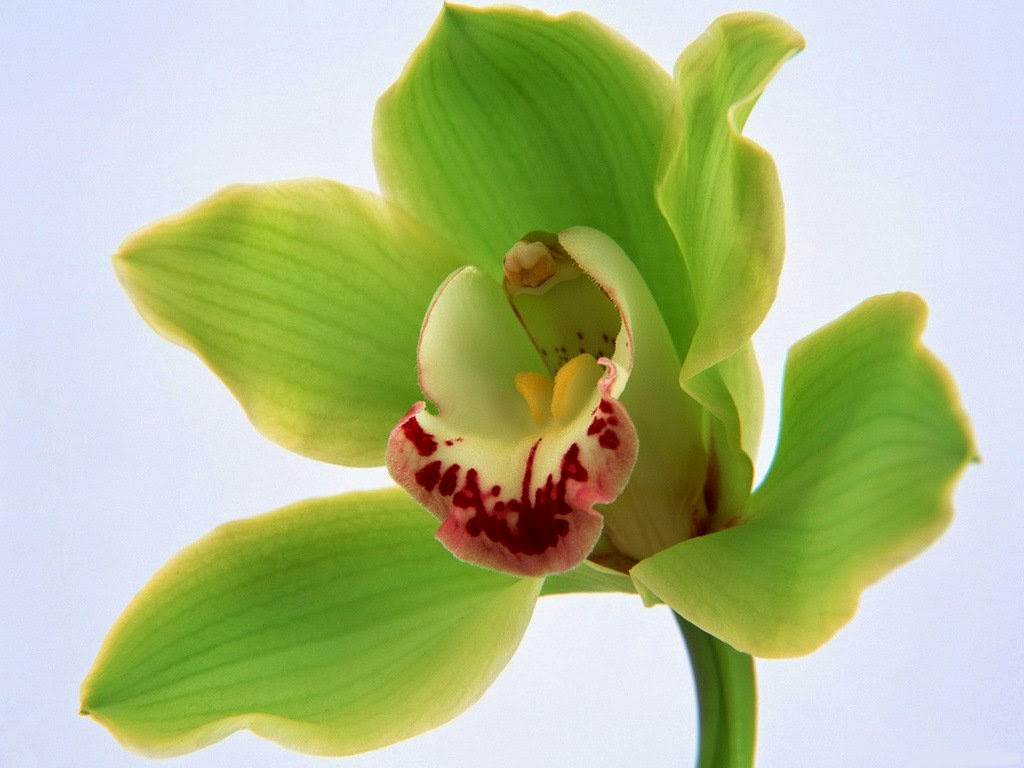
Green Orchid

Anecdotes have triggers.

Often I'll hold onto my stories, sharing them with select individuals at a time that suits me, but some stories must be told straight away, to anyone who will listen.  If all else fails and there is nobody to communicate with, individuals will begin muttering to themselves, "I can't believe that just happened...she swallowed the whole thing!" 

Then there are the anecdotes that are flourished, as if from a hat, at parties and during the 'getting to know you' stage of a friendship.  These stories come with embellishments and have likely been told many times before.  They involve flamboyant gestures and, occasionally, song. 

Parents and teachers will be familiar with the forced stories.  These are the anecdotes we tell when we are made aware that a sparse description of events is not sufficient and we dredge through the details in the hope of offering a tidbit that will impress the other just enough so that they will leave us alone.  These stories can also contain 'not-quite-truths'.  You'll hear these falling from the lips of children when they haven't completed a task, from spouses when they haven't completed a task, and criminals when they have completed a task which wasn't theirs to complete. 

The definition of anecdote is a fraught one.  Many would contend that anecdotes should be interesting or amusing however there are many who use the cover of 'anecdote' to smuggle Trojan Horses filled with dull particulars of their sleeping habits or the particular manner in which a counter assistant filled their grocery bag.  Doubtless for every hundred thousand listeners who would write this off as unanecdotal, there will always be one who wishes to pursue the story further, hanging on the details and asking whether the counter assistant had a lazy eye and a creased shirt because they might have met this shop assistant and how very interesting because their bags had been filled with great care, in particular the delicate items such as the Danish loaf which everyone knows is prone to crushing and he actually gave it a bag of its own and if that doesn't show customer service, they don't know what we're expecting and perhaps the shirt was creased because they don't believe in wasting energy on ironing when the earth is in the grip of a fuel crisis and really, when there is the capacity to produce iron-free shirts, why aren't we all wearing them...

Anecdotes, in poetry, tend to live in the narrative form.  I've mentioned before that this is the superior form and will brook no argument on this point.  As evidence, here is a portion of Two Deaths in the Bronx by Donald Evans.

TWO DEATHS IN THE BRONX 

The sodden stretches of the months of pregnancy 
Had had but one green orchid; 
That was their sole pauseful 
And suspended moment of beauty. 
He had brought it home to her at dawn 
On the day before Christmas, 

And he was a little drunken as he dropped it on her bed. 
But it was a green orchid, 
And pleased she took it unquestioningly. 
He had bought it with many more 
Hours and hours earlier for the girl, 
Who was then amusing him. 
In some way it had got into his pocket — 
Or, perhaps, it was his buttonhole. 
He had noticed it as he entered the abode of maternity, 
And with his quick sense of values 
He offered it in a tenderness. 
He would have sent her orchids every day, 
But he had no money to spare. He must live. 

He was spending the nine months with her — 
He had promised to do that — to take care of her 
Until their child was born — 
Then she would go away with the child. 


http://www.scenicreflections.com/media/581049/Green_orchid_Wallpaper/