written and posted by members of Lancashire Dead Good Poets' Society

Showing posts with label fantasy. Show all posts

Tuesday, 23 June 2026

Imprinting - Twilight


I was unfamiliar with the term ‘imprinting’ when I read the Twilight series of novels by Stephenie Meyer. I understood it to be a strong infatuation, but it was more than that in the story setting of a supernatural fantasy world. I wanted to know what the teenaged and young adults were reading and raving about. This was a long time ago, when my daughter was fourteen or fifteen years old. The film versions quickly hit the cinema and helped to raise the profile of lead actor, Robert Pattinson. He was an attractive vampire.

Quoting from online information,

“In Twilight, imprinting is a supernatural, involuntary soulmate bond that occurs exclusively among the Quileute shape-shifters. Where a wolf first phases, they may instantly imprint on someone, completely overriding their own free will and severing previous attachments.”

Character Jacob, a wolf, attempts to explain imprinting to character, Bella, wife of vampire. He has previously been in love with Bella, but now is imprinting on her new born daughter, Renesmee,

“It’s not like love at first sight, really it’s more like…gravity moves…suddenly. It’s not the earth holding you here anymore. She does. You become whatever she needs you to be, whether that’s a protector, or a lover, or a friend.”

 The books gave me an insight into what some impressionable teenagers were reading and watching. As usual with me, I preferred the novels to the films. Imprinting, up to now, isn’t a word in my regular use.

I thought of imprinting as being a family likeness, the way we take after our parents in looks and traits. I met a little girl years ago when I first worked in a school. She was four or five years old and an absolute carbon copy of a girl I had known when I was a child in another town. Many years passed and the little girl was grown up when I discovered that her mother was the girl from my childhood.

I found this poem,

 Imprinting Stare

I sit upon the earthen floor,
Staring up at my first vision.
My true emotion revealed.
But as I imprint,
I am torn away
My delicate eyes burnt beyond the
Purpose of pain.

I am the butterfly,
Waiting to pervade the shell of my cocoon.
I am the spider,
Waiting with omnipotent patience,
To drink my fill.
I am the serpent,
Cursed with the destiny to slide among
The lowest beings.

But most of all,
I am Human,
Blessed with emotion, Cursed with Heartache,
I learn, live and love.
I am Man.
And I shall arise again.

Stuart Logan.

Thanks for reading, Pam x

Tuesday, 3 February 2026

Fruit Tree - An Apple Tree on St Kilda


It was one of those rare mornings where I didn’t need to be up early. A grandson had stayed with us recently, which meant early starts and walks to school in all weathers. Since he’s been home, I’ve been fighting some sort of flu virus which has given me a dreadful cough and some aches and pains. I’m not blaming him, of course not. I’ve got run down and not rested enough. Anyway, it was nice to stay in bed a bit longer, just dozing, listening to the wind whistling round the windows and imagining that I’m in my fantasy cottage in St Kilda, warm, cosy, everything I need, as a wild blizzard dominates the bleak surroundings. Somewhere in this blissful existence, I wanted a fruit tree. In reality, there are no trees of any sort on St Kilda. High winds and constant salt spray prevent tree growth and the peat, acidic soil is completely unsuitable. In my imagination, I have had sustainable soil shipped over to help maintain my vegetable plot. An apple tree would be lovely. Eventually, I had to get up from my gorgeous bed and live in the real world. My fruit tree blog had to be in there, somewhere.

Close to where I live, there was an abundance of damsons. The tree was over-hanging the garden wall on the property and the fruit spilled on to the pavement making a sticky, purple mess. One of my neighbours, with permission, collected some damsons and made jam. Much better than wasted fruit making a mess.

Nearby, there is a small, confused cherry tree. I say confused because it comes into bloom with fabulous blossom at various times of the year. Never any cherries, though.

At a young age, I learnt the hard way just how bad a tummy ache can be after eating crab apples picked from the tree. Home was always a pub, on a street in a town, so nowhere to play out except the carpark. That was fine for my bike or scooter, but no mates to play with. All changed when we moved to a pub in the village of Padfield near Glossop. I soon made friends from our school down the road and we were never in. We fished for tadpoles, got in trouble for playing in the local farmer’s silage pit until we were filthy and stinky and one day, decided to feast from an apple tree. Crab apples. They were bitter tasting, probably not ripe, and I imagine it was quantity that made me unwell. A lesson learnt.

My Haiku poem,

In my wildest dreams
I’m in comfort perfection,
St Kilda cottage.

Sweet, rosy apples,
So juicy and fresh each day,
Clustered on branches.

A rare, sunny day
And a cloudless sky in this
Archipelago.

Strong winds just bring snow
Icy, northern blasts make a
Harsh environment.

I wish I could grow
A fruit tree on St Kilda,
Weather protected.

PMW 2026

Thanks for reading, Pam x

Tuesday, 18 June 2024

Witches - The Witchiest Witch


‘The Lancashire Witches’

One voice for ten dragged this way once
by superstition, ignorance.
Thou shalt not suffer a witch to live.

Witch: female, cunning, manless, old,
daughter of such, of evil faith;
in the murk of Pendle Hill, a crone.

Here, heavy storm-clouds, ill-will brewed,
over fields, fells, farms, blighted woods.
On the wind’s breath, curse of crow and rook.

From poverty, no poetry
but weird spells, half-prayer, half-threat;
sharp pins in the little dolls of death.

At daylight’s gate, the things we fear
darken and form. That tree, that rock,
a slattern’s shape with the devil’s dog.

Something upholds us in its palm-
landscape, history, place and time-
and, above, the same old witness moon

below which Demdike, Chattox, shrieked,
like hags, unloved, an underclass,
badly fed, unwell. Their eyes were red.

But that was then – when difference
made ghouls of neighbours; child beggars,
feral, filthy, threatened in their cowls.

Grim skies, the grey remorse of rain;
sunset’s crimson shame; four seasons,
centuries, turning, in Lancashire,

away from Castle, Jury, Judge,
huge crowd, rough rope, short drop, no grave;
only future tourists who might grieve.

                                                 Carol Ann Duffy

On a pleasant, summer afternoon in 2012, we went to Barrowford, Lancashire, to visit the Pendle Heritage Centre and find out more about the Lancashire Witches. It was the 400th anniversary of their trials that year. Having previously visited Lancaster Castle and the area where some of the witches were executed by hanging, we were starting our explorations at their end and going backwards into their beginnings. I found their story fascinating, disturbing and very sad. Witches? Really? Blind, struggling, penniless old ladies being picked on for how they lived and what they looked like upset me so much and it was too late to stick up for them. I saw them as two families who didn’t get on and tried to out-wit each other. They knew plants, good and bad. They knew the properties of each and how to use them for nourishment, medicine and poison. I don’t believe they murdered anyone. I believe that they were so terrified, that they made false confessions and were consequently found guilty at their trials and executed. That’s my opinion, based on what I felt was real and dismissing what I considered to be fantasy – familiars, in the sense, or rather nonsense of a person taking on the form of an animal or non-human creature.

The stories of the Pendle Witches are well documented, but here are a few snippets from a booklet we picked up on our visit,

“Early 1600s – Two rival peasant families live on the slopes of Pendle Hill. They are led by two old women called Demdike, a.k.a. Elizabeth Southerns and Old Chattox, a.k.a. Anne Whittle. The men of their families are dead, leaving them in poverty to beg and find work where they can. Many local people live in fear of them, believing them to have special powers.”

According to the booklet, things really kick off and reach a peak in the spring of 1612,

“March 18th, 1612 – Alizon Device, grand-daughter of Demdike, is begging on the road to Colne. A pedlar refuses her some pins and she curses him. Suddenly a black dog appears and she orders it to lame the pedlar who collapses, paralysed on the left side.

March 30th, 1612 – Alizon Device is hauled before the Justice Roger Nowell and confesses to witchcraft. Forced to give an account of her family’s activities she tells how Demdike had been asked to heal a sick cow which then died. She also told Nowell that Demdike had cursed Richard Baldwin after which his daughter fell sick and died a year later. Describing her family’s feud with the Chattox family she reports how Chattox turned the ale sour at an inn at Higham and bewitched the landlord’s son to death using a clay image.

April 3rd, 1612 – Nowell sends Demdike, Alizon Device, Chattox and her daughter Ann Redfearn to Lancaster Castle to await trial for witchcraft. Demdike dies in prison before the trial.

August 17th 1612 – The trial opens at Lancaster Castle. The accused are not provided with a defence lawyer. Nowell produces nine year old Jennet Device as a witness and she gives evidence against her own family. Her mother, Elizabeth, is dragged from the court screaming at her daughter and cursing Nowell. Alizon Device faints when confronted with the pedlar she is said to have lamed and when she is revived, confesses her guilt. Chattox weeps as she hears the evidence against her and asks God for forgiveness. She pleads for mercy to be shown to her daughter, Ann. The judge finds them all guilty.

August 20th 1612 – Chattox, Ann Redfearn, Elizabeth, James and Alizon Device, Alice Nutter, Katherine Hewitt, Jane Bulcock and her son John are hanged in Lancaster in front of huge crowds.

Were they malevolent people possessed by supernatural powers, or the innocent victims of a time obsessed with the pursuit and punishment of witchcraft?”

There is much more to learn about the Lancashire witches, that was just an outline of events.

I’ve convinced my grandchildren that I have special powers and I’m not even a witch! Well, I am sometimes, usually at Hallowe’en when I transform into The Witchiest Witch and give chocolate to all the children who come to my door. These are children who know me and recognise me from school or the neighbourhood. They are often disguised beyond my best efforts to recognise them as monsters, vampires, ghosts and miniature witches.

My own poem,

The Love Potion

She visited after midnight
And I listened to what she said.
Her voice was quiet and distant
For she was seven decades dead.
Her threadbare clothes were shades of black,
Her knitted shawl, faded to grey.
Old eyes, soft in her wizened face
Still had a kind and gentle way.

I adored my great-great grandma,
Her ghostly presence brought no fear.
She always knew what I needed
And I loved to sense her so near.
She said, “I believe I can help.
I know of a very old spell.
Come sit a-while beside me
And write it all down as I tell.

“Get some milk thistle and nettle,
Buttercup, daisy and clover.
Leave it to rest in rose water
Until the petals turn over.
Slowly stir in bramble honey,
A splash of dandelion wine
And sprinkle the seeds of the poppy
While you sing ‘Oh Let Him Be Mine’.”

“You want him so much,” she whispered.
“This potion will bring him along.
He will love you as you love him
And together you will belong.
Follow instructions exactly.
Choose every item with great care
And take your time, do not hurry.
Be of glad mind as you prepare.”

Her cold, hard fingers touched my face
And I felt the warmth of her love.
The vision drifted out of sight
Carried floating somewhere above.
She’d died long before I was born,
Yet she was always there for me.
I am blessed to share the blood-line
Of a free spirit such as she.

Pamela M Winning 2012

Thanks for reading, Pam x

Tuesday, 19 December 2023

Blizzard - The Postie Stone, Moffat

The Postie Stone (i)

How exciting it would be to become snowed in when we have our pre-Christmas break at our favourite lodge in Dumfries & Galloway. I think of this every November into December, when we spend a couple of weeks there, wrapped around my birthday, to do some Christmas shopping in the fabulous, privately owned individual shops. In anticipation of having to stay until March, unless a tractor from the farm comes along to rescue us, I take a supply of ‘emergency’ tinned food and packets, and stock up aplenty on arrival.  This time, it nearly happened. It was our last morning, the day we were leaving. Snow was about eight inches deep and still falling thick and fast. A huge mound shaped over and around our car so it looked like an igloo. We never have snow at home, not like this proper ‘build a snowman’ stuff and we stood in awe gazing at the most amazing landscape through the window.

One day, we went to Moffat, an enchanting market town north of Dumfries. We’ve been before and enjoy a stroll along the high street, seeing what the shops have and this visit was pretty with festive lights and shop windows trimmed for Christmas. It was a cold but calm, sunny day and for me, a wander into the Old Graveyard was appealing. John Loudon McAdam, of tarmac fame is buried there, also are the graves of James McGeorge and John Goodfellow. They were enroute to Edinburgh from Dumfries with postal deliveries when they were caught in a blizzard and died. 

The Postie Stone (ii) Detail

Taken from Atlas Obscurer –
“A roadside memorial commemorates the lives of John Goodfellow, the coach driver, and James McGeorge, the coach guard of a mail coach.

The pair were on a mail coach traveling from Dumfries to Edinburgh in February 1831. They became caught in a fierce blizzard which forced them to abandon the coach and set off on foot through the snow to try and deliver the mail and make it to safety.

They took the mailbags and horses but eventually, the men were overcome by the elements and died of exposure near the head of Cross Burn. The horses continued on, eventually reaching a nearby farm which raised the alarm.

The stone was erected in their memory in 1931, a century after the event. The men were laid to rest in the churchyard in nearby Moffat.”

(A full account of this can be found online, titled The Coaching Disaster.)

Such a sad story and I thought of them again as I watched the falling snow on our journey home. All was well until we were driving into Cumbria and coming over Shap. Late afternoon and it was going dark, the snow clouds were low and visibility was poor. The blizzard soon reduced the motorway from three to two lanes and traffic slowed accordingly. We were grateful to arrive home unscathed because soon after we heard about abandoned cars in Cumbria and jack-knifed wagons on the M6.

Being snowed in at the lodge would have been cosy, though, in my fantasy world.

 During my childhood, age 8 to 9, we lived in Padfield, near Glossop in what became one of dad’s favourite pubs and B&B to manage. We got snowed in, which still happens up there. The village was cut off for days and I remember my mum helping the neighbours out with food where she could.  School stayed open, which meant the fun of snowball fights on the walk down and up again. All the teachers – there was only four of them – lived near the school so it wasn’t likely to be closed and we were allowed to play out in the snow. Times have changed. If the travel news should mention The Snake Pass or Woodhead Road being closed due to snow I think ‘That’s Padfield cut off, then’. Fond memories.

Leaving the Lodge
Emily Bronte passed away on this day in 1848. This is one of her poems. It reminds me of Wuthering Heights as I imagine a blizzard over the moors.

The night is darkening round me,
The wild winds coldly blow;
But a tyrant spell has bound me
And I cannot, cannot go.

The giant trees are bending
Their bare boughs weighed with snow,
The storm is fast descending
And yet I cannot go.

Clouds beyond clouds above me,
Wastes beyond wastes below;
But nothing drear can move me;
I will not, cannot go.

             Emily Jane Bronte 1818 – 1848

Thanks for reading. A Merry Christmas to all, Pam x
                                        

Tuesday, 13 September 2022

Screen Crush - Rowdy, Heathcliff and Robert


I recently watched the 1940 film, ‘The Grapes of Wrath’ on TV. It’s dark, disturbing and honest of the time, but falls short of John Steinbeck’s excellent book in typical Hollywood style of failing to follow stories to the end. Anyway, what struck me this time – I’ve seen it before – is how good-looking Henry Fonda was. I wouldn’t call him a screen crush, not for me, but he had perfect jaw alignment which gave him a fabulous smile. This gene was inherited by his son, Peter and daughter Jane. All have been screen idols for many fans.

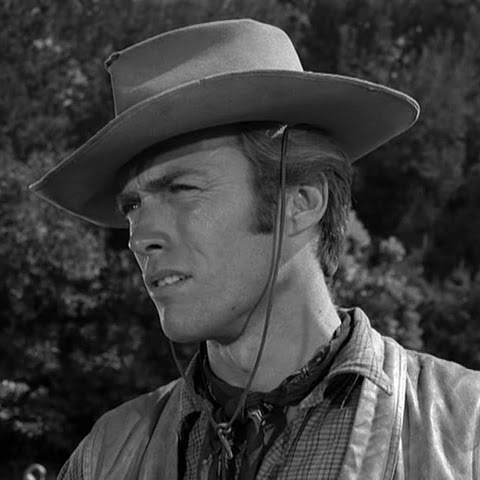
For me, having a screen crush started when I was about five years old. I could stay up on a Friday evening to watch ‘Rawhide’ and fall in love with Rowdy Yates aka Clint Eastwood. It was good to see all the episodes again when the TV channel TCM did a complete run on them. I hadn’t remembered any of the stories but they did take me back in my mind to our cosy sitting-room over the pub, coal fire and a tiny black and white TV screen. This was family time, c.1959/60, priceless. Clint Eastwood has continued to be one of my favourites, but not my one and only.


My head was turned by another. His name was Heathcliff. Again, we had Hollywood spoiling a good book by telling only half a tale, as I discovered in later years when I read, re-read and studied Wuthering Heights, but I was only eleven when I was first smitten. We were in the living-room of the quiet house we had for a while when my mum wasn’t well enough to help run the pub. We still had a tiny black and white TV. I might have missed the very beginning of the film, but I was soon drawn in and as the character Heathcliff emerged, I was star struck. My mum told me the actor was Laurence Olivier. I’ve seen all of his films over and over. Max de Winter in ‘Rebecca’ was another Heathcliff moment. I owe him everything I’ve been able to get to grips with by Shakespeare. His life and his work have been of great interest to me. Returning to ‘Wuthering Heights’, I have seen many TV productions but for me, Laurence Olivier is the definitive Heathcliff.


If you know me, you’ll understand that I couldn’t miss out a certain person who has entertained me on the small screen in recent years. I refer to him as my mid-life crush, my toy-boy fantasy in an innocent way. Robert Peston. I can nearly hear the ‘who, what, why?’ Well, I don’t know why. I can’t explain it. He’s a journalist and writer, currently the political editor for ITV and has his own politics show for ITV on Wednesday nights. It’s been a slow burn over a few years. I used to find him irritating in his TV journalist delivery. One day, driving through Ayrshire, I was listening to him in conversation on the Jeremy Vine radio show. Robert’s wife had died. He was talking about how they met, married, her illness, his feelings, then, he’d had a burglary at their home and jewellery, including his late wife’s wedding ring had been taken. I was upset by everything he’d gone through and began to see him as less irritating and more of a person I’d like to hug and reassure. More recently, he’s been fortunate in
finding love again and I wish him every happiness.

My haiku,

Friday night Rawhide
With my heart throb, Rowdy Yates,
When I was five – ish.
Clint Eastwood, so cool,
And he’s still a handsome man
In his mature years.

Then there was Heathcliff
Who swept me clean off my feet,
Rugged Yorkshire Moors.
I didn’t look back,
Yes, Laurence Olivier,
Screen love of my life.

Wednesday nights I am
Beguiled by Robert Peston,
Late night politics.
I’m not listening,
Not properly, anyway.
Just fascinated.

Thanks for reading, Pam
x

Friday, 12 March 2021

It's a Small World

This week's theme is 'miniatures'. Obviously young children are enthralled by small figures, animals, vehicles etc that they can hold in their hands, move about into different positions, enact with, talk to and generally enjoy.

When my son was very young I made a play mat from a sheet... there was a railway track went round the centre for his clockwork train, roads led out with crossings and junctions. On one corner was a farm with space for 'Lego' buildings, fields for animals, a farmyard with tractors. The opposite corner had a zoo for all his 'wild' animals and a duck pond in the centre... to this day I am not sure who got the greatest pleasure from playing with this ! For I was transported back to the doll's house I had as a child. It seems that adults are drawn to a  miniature world, as many women have a doll's house that they decorate, furnish and tend to. I would be tempted to have one, if I had the room! Men too can enjoy model making, collecting model cars, flying model planes, wargaming and the like. So it seems that it it might be good for the soul to interact in some way with a miniature world. 

As my son grew older he was enthralled by 'Star Wars' and collected the charterers and craft from the films. He also did wargaming... which I must admit was beyond me!

So it is that the 'small' world is captivating. Why! Small figures accompanied the dead on their way in many ancient cultures. 

My piece for today is about the doll's house I was given by a friend of my father. He had made the house and the furniture inside. It was, thinking back, in a 1940's style... I loved playing with it, making curtains, bedspreads, rugs etc  and was rather upset when my mother decided it was time for it to go to a family with 3 girls... I wonder what became of it ?


Doll's House

Look through the window-
An eternal fire is burning in the grate.

The furniture is 1940's style -
Handmade.
The dog on the rug is silent and never moves,
A baby in the cot doesn't grow!
Mother is in the kitchen, leaning against the wall-
She has to , else she'd fall!

Look at the garden!
Climbing roses painted on the porch-
A small tree in a pot-
Plastic.
Table and chairs set out on painted grass
Nothing ever needs pruned!
Father is by the driveway, lying down-
He has to, he'd fall down!

Open the house front -
Yes! the whole front swings open,
Making it much easier for me
To play.
I move mother to the bedroom to sleep-
Father is laid beside her, inert.
The two don't love- never love!
How come a baby in a cot ?

Close the door, dim the light
On that cosy miniature home of mine-
Built by my father's friend -
Gone now.
Given to others to enjoy.
Do they look in the window and wonder,
Move the figures with in their home?
I wish I had it still...


Thank you for reading , Kath

Saturday, 19 March 2016

I Am A Rock, I Am An Island

Island - okay, this feels like deja vu (all over again)! I've posted a Dead Good Blog on the topic before, albeit under a different heading:
   John Donne said "No man is an island", but from a physiological perspective we are all separate entities even          though we may occasionally rub up against each other (that from Valentine's Day, 2015).

So I pondered what to do differently this time - and while I was considering, an old Simon & Garfunkel song ("I am a rock, I am an island") leaked into my thoughts. I hadn't listened to it in years but today I've spun it a few times (on the road to Crewe and back). It's really rather good, quite uplifting in fact: jangly Byrdsian guitars, bubbling Hammond organ, peerless choirboy vocals, and sounding both prettier and steelier than I remembered it, less sorry for itself - by virtue of the arrangement and execution - than it ought to have done given Paul Simon's lyric. I've reproduced I Am A Rock below as one of today's two poems.

The other poem, I Am An Island, is a little something I've just conjured up, Surtsey-like, out of the sour milk sea of the poetic unconscious. It's not exactly a riposte to Mr Simon, more to balance the record.

I remember Surtsey being born, if I can put it like that. Back in November 1963 it burst up in most dramatic fashion, spewing out of the Atlantic ocean just south of Iceland, part of the Vestmannaevjar archipelago of volcanic islands. Named after Surtr, a fire-giant of Norse myth, Surtsey became the newest island on planet Earth, an event to grip the imagination of any ten-year old. Since then, wave erosion has diminished its size by half.

Much as I was intrigued by Surtsey, my preference is for islands of a warmer and more luxurious clime. They could still be volcanic in origin, or made of coral, but they need to be balmy, located in tropical seas with breath-taking vistas and lush vegetation, offering the possibility of adventure, maybe a hint of romance - and friendly natives who can cook a decent meal for the passing visitor. See the image below for reference...


Okay... two contrasting takes on the island in isolation -

I Am A Rock
A winter's day
In a deep and dark December;
I am alone,
Gazing from my window to the streets below
On a freshly fallen silent shroud of snow.
I am A Rock,
I am an island.

I've built walls,
A fortress steep and mighty,
That none may penetrate.
I have no need of friendship;
  friendship causes pain.
It's laughter and it's loving I disdain.
I am A Rock,
I am an island.

Don't talk of love,
Well I've heard the words before;
It's sleeping in my memory.
I won't disturb the slumber of feelings
  that have died.
If I never loved I never would have cried.
I am A Rock,
I am an island.

I have my books
And my poetry to protect me;
I am shielded in my armour,
Hiding in my room, safe within my womb,
I touch no one and no one touches me.
I am A Rock,
I am an island.
And a rock feels no pain;
And an island never cries.

                                    Paul Simon (1965)

I Am An Island
Never forget this,
fellows of my archipelago:
that however singularly insular
we may appear to be,
unique even in aspect and ratio,
below the waterline
of our individuality
we are similar in substrate,
conjoined indeed
by the bedrock of a common humanity.

Thanks for reading. Love one another. Have a good week, S ;-)

Thursday, 18 July 2013

Before I Wake

07:30:00 Posted by Damp incendiary device , , , , , , , 4 comments
The reason we fear the space under the bed is linked to our need to feel secure when we sleep.  When we surrender to the leaden eyelids, the urge to drool freely, we submit to the vulnerability of the unconscious state.  There are numerous visual examples of the dangers of submitting to Nyx under unsafe conditions. Ideally we'd employ a personal guard to sit beside us while we sleep, fanning us on hot nights and tucking the duvet around our toes in the winter; always ready with a glass of water or a bookmark.

Consideration of this nightly trepidation reminds me of the ubiquitous children's prayer:

Now I lay me down to sleep,
I pray the Lord my soul to keep,
If I shall die before I wake,
I pray the Lord my soul to take

According to the faithful Wiki, a version of this prayer was first recorded in 1711.  To put it into context, this prayer appeared just after the Great Plague of the 1660s.  This was the last in a wave of bubonic plagues to hit the UK since the fourteenth century.  This is the plague, carried by fleas, which would most likely kill you in four days once contracted.  As the plague began to peter out, its terror was replaced by the Great Fire of London.  What I'm getting at is the unavoidable fact that little'uns heading to bed weren't especially worried about monsters.  Plague-infested flea-ridden cats and the smell of burnt toast were more than adequate to scare the bejeezus out of the squiggles during the Age of Enlightenment.


At this point I'll link to a blog post about children's books that deal with death.  Titans Terrors and Toys have reviewed That's Not Your Mommy Anymore and Grandpa Won't Wake Up.  The titles alone are enough to make you reach for your wallet.  These stories remind me of a book I took out of the library to read to children at the Al Fresco Festival in May: Tadpole's Promise. I went to the library with the intention of finding a new Tony Ross book as he was one of my daughter's favourite illustrators when she was young.  What I didn't expect was to read a tragedy which was so poignant it still makes me desperately sad to think on it.  I don't know what effect it would have had on other people's children because I didn't want to risk the court cases.  The adults and teens I showed it to were incredibly disturbed by its contents.  It's cathartic in the true Aristotelian sense.

This catharsis is akin to a mental workout.  It allows children and adults to imagine dangerous or tragic scenarios and prepare themselves mentally by conjuring up a variety of methods to deal with potential threats.  It has been noted that those who are most prone to vivid fantastical thoughts are also the most creative.  Leaving anxiety and worry aside, it's possible that the repeated fantasies of dangerous scenarios actually allow folks to respond more quickly when in real danger as they have, in effect, practiced for just such an event in their mind. 


Therefore, my sage advice to parents this week is as follows: apply liberal doses of terror at bedtime.  Scare your young'uns.  Tell them about the shadow-vomit that lives in dirty socks and crawls up noses to lay eggs behind the eyes.  Insist that they keep their eyes tightly shut in case the wallpaper fiend detects the glisten of an eyeball and reaches out to papercut them to death.  Finally, tell them that if the monsters do come to get them they only have to whisper the word 'flummoxed' and the horrors will all disappear.  Voila.  You have created your own religion and one tiny zealot.  L Ron Hubbard would be so proud.

Saturday, 16 June 2012

If Not Now, then after I’ve finished messing around for another half an hour or so


 by Ashley Lister

I’ll be honest here: my schedule is replete with displacement activities, all of which I justify with psychotic vehemence.

At the start of this year I was commissioned to produce a novel about dragons. The story was based in a pre-medieval version of the UK. Consequently I was looking at sites about dragons and the fantastic. I was reading similar literature and delving into essays on Tolkien and the relationship between the complementary genres of fantasy and science fiction. I was brushing up on my pre-medieval history. I was watching movies about dragons and wizards. I was even playing PC games based on medieval battles.

Notice how, in the paragraph above there is no mention of my writing the novel.

I justified the above activities under the rubric of ‘thinking time’. In my own mind I qualify it as opportunities for research and reflection. A part of me thinks it would be more honest to call it ‘not writing time’.

But I have to wonder – are these really displacement activities or are they valid exercises in research and reflection?

The dragon book is now complete and with the publisher.

I was particularly pleased with the level of historical detail I’ve included because it’s accurate without being boring or intrusive. I couldn’t have achieved any of this without all the online research I did or the visits I made to areas of historical interest.

I was also pleased with the approach to magic in the story. Arthur C Clarke (Clarke’s Third Law) says, ‘Any sufficiently advanced technology is indistinguishable from magic.’ I’d encountered this sage piece of wisdom before I started writing the most recent opus but it was at the forefront of my mind when I encountered the writings of the 1930’s editor of Astounding Stories, John W Campbell.

Campbell dealt mainly with SF stories and advocated that those fantastic elements of the future that made SF so appealing to readers should be treated as if they were everyday objects or occurrences by the characters in the story. It’s a technique where characters perceive the marvellous as mundane.

Applied to the genre of fantasy, the magic in my story is not treated as miraculous, making it seem (I think) more credible.

All of which is my way of saying I don’t believe my displacement activities really are displacement activities: I do think they are genuine opportunities for research and reflection.

And the only thing that niggles at the back of my mind is the knowledge that I’ve spent time writing this blog post when I could have been working on outlining a sequel.