written and posted by members of Lancashire Dead Good Poets' Society

Showing posts with label Greek mythology. Show all posts

Tuesday, 11 April 2023

Struggle

Epimetheus and Pandora

“The name Epimetheus comes from the Greek god (or titan) Epimetheus (or hindsight) who was the brother of Prometheus (foresight). Together, they represented humanity.”

I read The Iliad and The Odyssey a long time ago but I would struggle to remember much Greek mythology now. Maybe worth a re-read, just to master the challenging names, even though I found lots of it scary.  Stephen Fry’s Mythos is on the shelf, looking more appealing. I’ll see. There is a reason for this.

I’m a reading volunteer at the local primary school. Actually, I’m not doing the reading, I’m listening, encouraging, praising and offering help where needed to Year 4 children, which is the 8 to 9 age group. I’m learning a lot. They don’t mind telling me what they think of reading. It’s a love or hate thing. I do my best to promote a positive love of books, stories developed by imagination and the joy of disappearing into the world created by a good author. It is lovely to meet a child who reads for pleasure. There are some struggles for me to overcome.

“I read in my head, Miss,” says the child with an open book half under the table.

“I’m sure you do, and that’s excellent, but you need to read aloud to me just for a couple of minutes while I check your progress. Pop it up on the table so I can see the words.”

Seeing the words would be good. The better the reader, the smaller the print, it seems. My glasses are the correct prescription but I struggle to see some pages and it’s hard to follow the text with a child who has a tiny voice. Then there was the stumbling over an unfamiliar name.

“Epi, Epi, Epim,” a pleading look for help. We sound it out together.

“Epimetheus. Well done!” I hoped I’d confirmed the correct pronunciation. The story was an age appropriate  Pandora’s Box. Other children also had Greek mythology stories. I’d better brush up before next time. Personally, I prefer the Amelia Fang stories by Laura Ellen Anderson.

One of my favourite poets, although he’s so much more, including writer, broadcaster and until recently, Chancellor of the University of Manchester, is Lemn Sissay, OBE, FRSL. Reading his autobiography was heart-breaking, tears on every page, a childhood full of struggle and adversity with situations which made me furious. I am in awe of him, the life he has made for himself and everything he does for the benefit of others. Out of many, I chose this poem,

 Let There Be Peace

By Lemn Sissay


Let there be peace
So frowns fly away like albatross
And skeletons foxtrot from cupboards,
So war correspondants become travel show presenters
And magpies bring back lost property,
Children, engagement rings, broken things.

Let there be peace
So storms can go out to sea to be
Angry and return to me calm,
So the broken can rise up and dance in the hospitals.
Let the aged Ethiopian man in the grey block of flats
Peer through his window and see Addis before him,
So his thrilled outstretched arms become frames
For his dreams.

Let there be peace
Let tears evaporate to form clouds, cleanse themselves
And fall into reservoirs of drinking water.
Let harsh memories burst into fireworks that melt
In the dark pupils of a child’s eyes
And disappear like shoals of silver darting fish,
And let the waves reach the shore with a
Shhhhhhhhhhhhhhh Shhhhhhhhhhhhhhhh Shhhhhhhhhhhhhhhh


Thanks for reading, Pam x

Thursday, 21 July 2016

Metamorphosis - it just happens.

As a dancer, I have always been fascinated by transformation. In many ballets and children's stories, beautiful creatures are really humans under evil spells, beasts are humans waiting for true love to break the spell and return them into handsome princes.

Discovering that an ugly caterpillar is the grub of the butterfly and studying its pupation and re-emergence as a beautiful winged creature is, to me, one of the wonders of nature. Metamorphosis of a tadpole to frog is not as exciting - they swim, grow legs and then still swim and hop. Not quite the big finish that a dramatic dancer appreciates but hey ho!

The word 'metamorphosis' is exciting in itself. 1. the prefix meta- comes from a Greek word meaning “beyond” or “change.” 2. the root morph comes from a Greek word meaning “shape.” 3. the suffix -osis comes from Greek as well, and means “state or process.” Don't you just love etymology? So revealing.
 
I think I first saw a print of Dali's Metamorphosis of Narcissus in the mid-seventies. It is a painting that is hard to ignore, filled with references to Greek mythology - another of my childhood fascinations. Aesop's Fables and an illustrated book of Myths and Legends taught me much of my formative morality.  Researching the painting itself is easier if you can find the best teacher. The text below is from the Tate Modern guide, with all appropriate referencing. The poem, written yesterday  is my own, requiring none.


This painting is Dalí's interpretation of the Greek myth of Narcissus. Narcissus was a youth of great beauty who loved only himself and broke the hearts of many lovers. The gods punished him by letting him see his own reflection in a pool. He fell in love with it, but discovered he could not embrace it and died of frustration. Relenting, the gods immortalised him as the narcissus (daffodil) flower. For this picture Dalí used a meticulous technique which he described as 'hand-painted colour photography' to depict with hallucinatory effect the transformation of Narcissus, kneeling in the pool, into the hand holding the egg and flower. Narcissus as he was before his transformation is seen posing in the background. The play with 'double images' sprang from Dalí's fascination with hallucination and delusion.
 
This was Dalí's first painting to be made entirely in accordance with the paranoiac critical method, which the artist described as a 'Spontaneous method of irrational knowledge, based on the critical-interpretative association of the phenomena of delirium' (The Conquest of the Irrational, published in The Secret Life of Salvador Dalí, New York 1942). Robert Descharnes noted that this painting meant a great deal to Dalí, as it was the first Surrealist work to offer a consistent interpretation of an irrational subject.
 
The artist said to Descharnes of this picture:
A painting shown and explained to Dr. Freud.
Pedagogical presentation of the myth of narcissism, illustrated by a poem written at the same time.
In this poem and this painting, there is death and fossilization of Narcissus. The poem to which Dalí referred was published in 1937, in a small book by the artist entitled Metamorphosis of Narcissus. The book also contains two explanatory notes printed facing a colour reproduction of the painting, the first of which reads:

WAY OF VISUALLY OBSERVING THE COURSE OF THE METAMORPHOSIS OF NARCISSUS REPRESENTED IN THE PRINT ON THE OPPOSITE PAGE:
If one looks for some time, from a slight distance and with a certain 'distant fixedness', at the hypnotically immobile figure of Narcissus, it gradually disappears until at last it is completely invisible.
The metamorphosis of the myth takes place at that precise moment, for the image of Narcissus is suddenly transformed into the image of a hand which rises out of his own reflection. At the tips of its fingers the hand is holding an egg, a seed, a bulb from which will be born the new narcissus - the flower. Beside it can be seen the limestone sculpture of the hand - the fossil hand of the water holding the blown flower.

When he met Sigmund Freud in London in 1938, Dalí took this picture with him as an example of his work, as well as a magazine containing an article he had written on paranoia. Freud wrote the following day to Stefan Zweig, who had introduced them, that 'it would be very interesting to explore analytically the growth of a picture like this'. Further reading:
Tate Gallery 1978-80 Illustrated Catalogue of Acquisitions, London 1981, pp.85-9, reproduced p.85.
Robert Descharnes, Gilles Néret, Salvador Dalí: The Paintings, 2 volumes, Köln 1994, pp.288-9, 299, 757, reproduced pl.645 in colour
Dawn Ades, Dalí, revised edition, London 1995, pp.132-3, reproduced p.131 in colour
Terry Riggs - March 1998
 
Change
 
It has changed.
I was overwhelmed at the start,
bathed in your brightness
affected by the slightest touch,
A wave of new feelings swept me away,
made me restless,
 unfurled my wings.   
Let me fly 

Soon I had to remind you that I was there,
Soon you didn’t notice when I left.
Soon you didn’t care.
I recall now that it was like this once before,
There was a promise,
too long ago to remember,

 Change happens slowly,
barely noticed,
I was just too close to see. 

Thanks for reading.  Adele

Thursday, 9 August 2012

Paul Young's Happy Place

I have constructed a pome based on the pictures used by Standard in yesterday's post.  I think it might accurately reflect the combination of his perplexion and my ennui. 


Wherever I lay my hat

mammalian flight case goes to battle - with only a walnut for a brain

reflects on the sheen of a young Roger Moore, thinking
Brylcreem might just be step 3 of a plan that it stole
from the Internet
memed to extremes, tweaked, wiki'd and tweeted
stolen like screams beneath Norwegian noses
causing the lice to parade in pomade
tank-top dancers
scratch as nymphs screw til they're squillions
skewer and suck through sub-dermal canals
blood utopia riptides
valves vibrating vodka
to darkness (Pig's likeness)
arch anthropods pissed as the head
with the hat


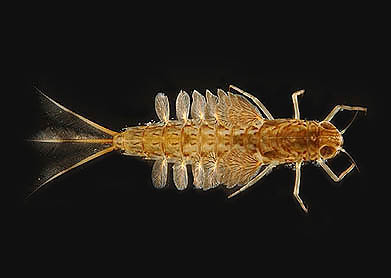
Fun fact for the day: just as some immature insects are called nymphs, the immature water-dwelling insects such as mayflies and damselflies are known as naiads, after the Greek mythological water nymphs. 

I think we can all see the resemblance between a mayfly naiad and a Greek naiad.


Thursday, 8 March 2012

Mars: Bringer of Tor

Aphrodite sat on the concrete steps, dangling her neatly arched feet into the milky spume from whence she came. Beneath the ubiquitous brine, Uranus lingered still - salty with a trace of zinc. This is where she came to revitalise. Infidelity had its charms but one too many Mona Lisa smiles had left the first traces of corvid footprints around her eyes. The goddess's fountain of youth wasn't what it used to be. If you listened carefully to the waves they'd tell you they felt a bit sick. The tide would pull down its lower eyelid and point to the dirty flesh, asking if it looked pale. Aprhodite weighed her right tit critically in her hand. Strictly speaking, it shouldn't rest on her palm like that. It certainly shouldn't spill over the edge. It might be time to head back to Paphos soon. The all-pervasive grey which dominated this landscape seemed to be sapping her colour, draining it from her body and feeding it into the brash glass structures which shut out the stars.

Hot, wet breath on the back of her neck alerted Aphrodite to the arrival of Setanta, the loping Irish wolfhound. The beast lapped at her shoulder briefly before sitting beside her. Ares whistled provocatively from the top of the steps but both goddess and dog ignored him, forcing the god of war to make his way down the steps. He continued to whistle to himself as he stood behind Aprhodite who smiled as Ares nestled his legs against her back so that she could feel his excitement against the back of her head. Aprhodite lifted her arms up to each side of her head and Ares pulled her up to her feet, spinning her round to face him and pulling her close so that he could taste the primal essence of his ancestor on her lips.

Minutes later the couple were between the sheets in the grotesque architectural anomaly known to locals as 'The Palace'. Here Hephaestus dwelt with Aprhodite in a doubtful arrangement which was part marriage, part transaction. Jove, Zeus, Jupiter. Whatever you called him, Aprhodite had daddy issues. The issue being that she'd rather he didn't see her as a convenient way of saying thank you:

Daughter or thank you card? Daughter or thank you card? Oh, go on - have my daughter. You earned her.

No.

Aphrodite, being a sensible goddess, reacted to this indignity in the most appropriate manner. She screwed Ares, god of war, at every available opportunity. She did so in Hephaestus' bed, beneath his own roof, just in case there was any confusion about her allegiance. She bore Ares 5 children. Or was it 6? After the third birth she'd stopped keeping track. Offspring also seemed to attract the footsteps of the corvidae.

Aprhodite giggled breathlessly beneath the excitable Ares as they attempted to recreate the dance of a pair of sparring swans. Even infidelity requires an injection of spice occasionally. Just as Ares was attempting his masterpiece move, which involved arching backwards to touch his toes so that he resembled a horny doughnut, a thin layer of incredibly fine fabric fell upon the couple, trapping them in their exotic embrace. Hephaestus pulled the magical net in tight around the couple and declared that he was taking them to the Winter Gardens where their shame would be revealed before the clan.


Ares tried to reason with the cuckolded Hephaestus but the miffed god was having none of it. Aphrodite was his play thing. Zeus said so. She was supposed to play with him whenever he liked and he didn't want to share. The crafty artisan dragged the sweaty pair through the town centre and into the Winter Gardens. He ignored the cheery greeting from Hermes on the door and stomped into the Olympia Exhibition Hall where Zeus was presiding over a busy antique market. Hephaestus dragged his cargo passed a table where Athena was haggling with a strident elderly lady over a bronze buckle. He ignored the indecent comment from Apollo who leaned back in a plastic chair, surrounded by over-priced lyres and tuneless guitars. Zeus was enjoying a brew and a Garibaldi at the back of the hall. A bubbly nereid was offering to top him up when Hephaestus dumped the net containing Aprhodite and Ares on the floor in front of him and demanded that the pair be punished for their disgraceful behaviour.

A giddy bout of laughter moved around the hall as gods and goddesses caught on to the situation. Thighs were slapped and eyes were dabbed and none laughed harder than Zeus himself. Hermes wandered in for a chuckle and Apollo shouted over, "Hermes! How much would you pay me to tie you up in a net with Aprhodite for half an hour?" Another ripple of laughter spread around the hall and even the stingy old woman chuckled. Meanwhile, Ares and Aphrodite were growing a little bored of their role in this comedy and Ares looked to his mate, Poseidon for assistance. The old earth shaker had a quiet word in Hephaestus' shell-like. Told him to set the pair free before anyone got upset. Promised to 'make it right'. He pulled rank. Hephaestus released the nude deities with no small amount of grumbling.

The lusty lovers retreated to their respective temples for a little pampering and adulation. Aprhodite simmered in a hot bubble bath. Grace A was putting the kettle on while Grace B picked out something snazzy for the evening. Grace C hummed to herself while applying a conditioning treatment to the ends of Aphrodite's hair. The goddess' perfect toes turned the hot tap back on as she relaxed. With a single malt whisky in one hand and a holiday brochure in the other, Aprhodite laughed.


Image from: http://www.amounderness.co.uk/blackpool_winter_gardens_entrance_church_street.html

Sunday, 12 February 2012

Knocking Down the Walls

10:16:00 Posted by Damp incendiary device , , , , , , , , , , , 15 comments
by Jessica Bell

Today I’m supposed to be discussing the difference between narrative and lyric poetry. You know, I could do that. I could tell you that “lyric” comes from the ancient Greek instrument, the lyre, and that the Greeks used to always sing their poetry to its accompaniment. I could also tell you that lyric poems resemble songs in three distinct ways: they are shorter than epic (narrative) poetry, they usually express the thoughts of the poet, and they often give you the feeling they can be sung.

On that note, I’d also mention that epic (narrative) poetry stems from Greek too. From the word “epos,” which means to speak or to tell a tale. Homer’s Iliad is and example of an epic poem. So is the Odyssey. Epic poems are supposed to enhance the reader’s sense of good and evil, by focusing on the heroism of a certain individual that is a symbol of strength, virtue, courage … really I could go on and on telling you what these forms of poetry are and bore the crikeyness out of you. So let me tell you a little something about myself …

I hate rules. I love to learn them, however, and I love to know that I know them. But rarely do I utilize them, and rarely do I label poetry as this, that, and the other. Poetry, to me, is art. There are no limits to art. You can’t pigeon hole it. This is another reason why I don’t much like ‘genres’ in fiction. But that’s a completely different discussion.

The ‘type’ or style of poem, ultimately has no significant meaning. They’re there for scholars to refer to in their lectures and print in their theses, so … Narrative or Lyric? Who cares! Does your poem evoke emotion? Yes? Then you’re good to go in my book. Does your poem keep me engaged? Does it make me want to read more of it? Does it use vocabulary creatively, avoid cliché, kick me in the gut and make me want to write like you? Does it make me email all my friends and tell them to check out this new and upcoming genius? Does it make me read the same poem over and over and over and find new meaning in it with every reading? Yes? Brilliant. Then keep doing what you’re doing.

And if you’ve mixed and matched various forms of poetry to create your own, then you deserve a standing ovation. Because seriously, rules can suck the life out of art … they can also enhance it, but again, that’s another discussion, and maybe Vicky can invite me back one day to tell you what I think about that. So I’ll just leave you with this:

Don’t ever listen to people who begin a sentence with, “You can’t do that because … .”

You can do that. Do it. And show everybody how it’s done.


Jessica Bell Online:

Website
String Bridge (a novel)
Retreat & workshop
Blog
Vine Leaves Journal
Facebook
Twitter

Thursday, 6 October 2011

HAPPY NATIONAL POETRY DAY!

It's a good job you made it here today. This is a free service aimed at ensuring that nobody is left wanting when the question is asked: "What did you read on National Poetry Day 2011?"

Perhaps it's because I turned it into a (terrible) song but this portion of The Walls Do Not Fall by Hilda Doolittle is one of the few I can recall on demand.

But we fight for life,
we fight, they say, for breath,

so what good are your scribblings?
this - we take them with us

beyond death; Mercury, Hermes, Thoth
invented the script, letters, palette;

the indicated flute or lyre-notes
on papyrus or parchment

are magic, indelibly stamped
on the atmosphere somewhere,

forever; remember, O Sword,
you are the younger brother, the latter-born,

your Triumph, however exultant,
must one day be over,

in the beginning
was the Word.


Hilda Doolittle (1946)


I have always been partial to that phrase: In the beginning was the Word. Most likely this is a throwback to a Catholic upbringing. It reminds me of the church social club on a Sunday afternoon and pestering those around me with the same question again and again: "What is the word?" Of course nobody could tell me what that word was but hearing that phrase convinced me that there was a word, an idea made communicable, that would unlock some essential key to existence. This, in part, is why I write.

Another favourite poem of mine, because Regina Spektor embedded it in a song, is Fevrale by Boris Pasternak:

February. Get ink, shed tears.
Write of it, sob your heart out, sing,
While torrential slush that roars
Burns in the blackness of the spring.

Go hire a buggy. For six grivnas,
Race through the noice of bells and wheels
To where the ink and all your grieving
Is muffled when the rainshower falls.

To where, like pears burnt black as charcoal,
A myriad rooks, plucked from the trees,
Fall down into the puddles, hurl
Dry sadness deep into the eyes.

Below, the wet black earth shows through,
With sudden cries the wind is pitted,
The more haphazard, the more true
The poetry that sobs its heart out.


You can hear it read in Russian here: http://www.youtube.com/watch?v=pf4FQxILI1I

My partner's father has been learning Russian for some time and he assures me that the English translation does not accurately portray the emotions of this poem. Hearing it read in Russian, I have to agree. So much about the way language is used in poetry is about an emotional connection to the words and a feeling for the sounds. It is close to music I think.

The poetry that matters to me is the poetry that forces me to stop. Both of these pieces had the power to do that to me. Ideas flow so easily through the brain when they are familiar. Living by the sea I appreciate how something as spectacular as an ocean can become commonplace when seen every day. Occasionally, however, the light is just right or the wind gentle enough that I remember the vastness of the water, the strength of a single wave. In this analogy poetry is elemental. It is the light or the wind which forces us to stop and notice an ocean; forces us to open our eyes and see something essential.