written and posted by members of Lancashire Dead Good Poets' Society

Showing posts with label ekphrasis. Show all posts

Wednesday, 12 June 2024

Ekphrastic Poetry

When poets are writing Ekphrastic poetry there’s a fair chance they’ll be looking at an object from years ago. How often are they watching the piece being made? I had this chance when following Nick Williams, artist and poet from Preston, creating his River Clock sculpture in the summer of 2020.

During this time I was curious about aspects of his work and asked questions. I’ll just give his replies:

I follow simple rules. 1: No tools. 2: Only use what is found at the place. 3: There must be an element of balance and balancing involved in each work. 4: Anything of interest that I feel could be used in a different way goes in the rucksack which is the most useful sculptor's tool.

a beginning
I choose each place by feel and by the wood that is in that place, looking carefully at each shape to see if they speak together...glad you like the stones, am interested in building the dry stone pebble wall outwards into spiral arms next time I go out... they reminded me a little of old harbour buildings and cairns and buoys too... some of the wood won't stand up alone even though I want it too so after propping it up with a another it felt right to begin to build the base of stones around. I breathed a sigh of relief when I removed the prop and nothing fell over.

Every painting and poem and sculpture whether site specific or not has a story, every artwork in every medium has a story, the whole thing, art from the body decoration, drum beats and shamanic dancing to the cave paintings through to modern times has a story, even science is an art, numbers have a story, astrophysics theories and quantum theories all have a story, we are the story of the universe (a small part of it).

Nick in the act of creation
This has always been central to all my work as an idea. Time and space and the story made by them both. A sculpture made in the hinterland, in the tidal flood plain, the space between two states of being, the borders between land river and sea, dwells in two states, one submerged at certain times of the day or week and one unsubmerged in the water flows and adds a new dimension to the sculpture and this movement of water and weather and random things happening to it, slight minute changes which occur over time help continually co-create the sculpture, my hand, my eye and my mind guide the building of the repair and nature provides the accident and the transformation of static into narrative. At least that's how I see it. 

I went today to film the tide coming in and build an extra part of the spiral but the wind was very cold, and the tide didn't rise as far as I expected after yesterday, yikes, but even through my heavy duffle coat my shoulder whilst waiting for the tide to rise was cold to the marrow of the bones (they call this suffering for our art I had heard tell once - me ?) I decided that my arm had suffered enough after several hours of waiting and realizing the tide wasn't going flow completely over the banks.

You must have just arrived after I had left... not so worrying that it hasn't washed it away as I tested it under flooding conditions and the water rise does no damage... more worrying is, as you say, the lowness of the river but have seen river fall like this before so is hard to tell... the reason for the river flood at this part of the river is not the Ribble water coming from its source but the sea tide which comes in from the coast and mingling with the river water, hence the salt you occasionally see on the grass like a thin film of dust.

River Clock
It is called river clock... the shadows line up with the wood at approximately 1.33 pm afternoon and that line of shadow is approximately at the ratio 1/2 thirds which is golden section (I know most clocks and sun dials would use 12 noon to 12 etc but I like the oddness of 1.33 plus if you take off the last 3 and turn it round it's PI 3.1(4).

Yep, sheep very numerous if I sit still long enough I get sniffed which I quite enjoy. I have found if I become completely still most animals become calm around me, even had a butterfly land on a finger once. 

Today was hot and the heron of the Ribble was out to play, sadly yet again there had been some mindless vandalism since I was last there, but didn't take me more than a few minutes to fix (what is currently taking time is scouting up and down the river for large enough rocks and bricks to use for the segment walls as I elongate the spiral out like an ammonite, building method is as follows at the moment build a segment of the spiral as a walled enclosure then fill the enclosure with driftwood and then cover the driftwood with stone (this is symbolic as a burial of the trees yet also allows me to anchor any wood I deem beautiful enough to become a standing structure) carrying the larger rocks back from either end of the marsh is laborious but worth it.

bottle/bomb
The coast guard were there today because I found this (above) and reported it...when I left at 5:40/ 6 pm after answering the standard police questions for reporting such an object the bomb squad were on their way from Carlisle. Possibly a first or second world war mortar with the fin broken off at the back and the cap missing, it matched two items in their little blue book. I thought it was a beer bottle at first.

The sculpture is slowly reaching the right height (currently the outer wall is somewhere close to my knee level), though may have to extend parts of the spiral and central stone edifices being built around the wood upwards in order to have them standing out of the water when the tide is really high - currently am in two minds about whether I should cover the wood entirely with stone as am adapting the idea of it as I build.

I haven't worked on it or seen it since the thunderstorms when my boots got holes in so hopefully no-one has pinched it and started adding rocks, the only bits left to do are to cover the wood still sticking out of it with stone walls like a cairn (so it won't be any higher than maybe one stone above its current height).

stormy weather
There is wood underneath the stone surface in between the outer spiral wall and inner spiral wall anyway which is deliberate and will allow for the eventual and slow decline of the structure over a long period of time once finished. As each of the hidden pieces of wood rot down the pebble-stone overlay drops further towards the ground and thus over a period of three to ten years or longer the sculpture may slowly collapse into itself and become a ruin with an inner and outer spiral structure - again time and the long term or short term transient nature of all man made things are explored in this longer projection of the sculpture so that the slow collapse is part of the artwork too. If I came back in forty years time for example would it be covered in moss having become part of the landscape itself to be uncovered later by archaeologists who wonder what it was? Or will the river have eaten it and the flat salt marsh it rests on turn it at first into a lone island which slowly collapses into the river as the erosion takes it gradually away? All of these questions are being posed by me as I build.

PS: Today Nick told me that the River Clock is still there.

x marks the spot

River Clock
(for Nicholas Guy Williams)

OS map 102
Reference SD482287

a place needing boots
sandwiches and flask
in a lightweight rucksack

that was slipped off
onto the grass bank
of a tidal plain
and another viewing
of what is going to be
difficult to explain

a spiral of old bricks
pebbles rocks flotsam
branches boughs and twigs
which is all true enough

but doesn’t take into account
that it exists in two states
as my mate tried to explain
submerged or unsubmerged
linked by quantum entanglements
of water and weather and time
or a peacock butterfly
flapping its wings

unlike today as swallows
flit on a brisk wind
scudding their calls to my ear
and there’s a touch of loneliness
on a base of green and grey.

First published in Acumen, March 2022

Thanks for reading, Terry Q.

Saturday, 9 September 2017

For In That Sleep...

...of death, what dreams may come
When we have shuffled off this mortal coil
Must give us pause - there's the respect
That makes calamity of so long life.

Those lines are from the famous 'To be or not to be' soliloquy as spoken by the famous Hamlet in the play written by the famous Shakespeare of course. More of which later.

First, I want to tell you about Thursday evening, because a funny thing happened on the way to the Dead Good Poets open mic night. We arrived at the venue (a very pleasant bar in Lytham St Annes that has been our regular haunt for some several months) only to find it all shut up and with a sign saying 'closed due to illness'. There had been no fore-warning, which in these days of global connectivity was a bit of a surprise. Hurried mobile phone calls to the owners bounced straight through to a message box. A bunch (a declamation? is there a collective noun?) of disconsolate poets and their entourages milled unhappily on the pavement outside. Expectation and disappointment mingled in the air; plus, it was turning cold and wet. What to do?

Fortunately for us, a nearby Greek taverna was experiencing something of a quiet Thursday evening and we cajoled them into giving us a performance space in the back half room of their restaurant, in return for our trade (much Mythos, Demestica and meze was consumed). Poetry At The Greek, of necessity, was different from anything we've done before - interesting to perform with the strains of bouzouki music in the background - but a great time was had by all and a huge thank you goes to the staff of Taverna for being so accommodating. Flame is well worth a visit, good people, even when there is no poetry on the menu. By a spooky slice of serendipity, Adele and I are off to Kos next week for some mid-September Mediterranean sun, so this was an excellent taster.

Back on theme with a bump, Hamlet's dilemma (good Greek word) about whether or not to commit suicide hinged partly on his fear about what form a possible afterlife (if any) might take, the worry being that it might be worse than the life he was living; (i.e. Hell might welcome one who took his own life).

Many of the world's major civilizations and religions have propounded the belief that death on this earthly, temporal plane is not the end. The Egyptians believed in reincarnation as do Buddhists; the Greeks in recycling (with memory wiped clean), Christians in Heaven and Hell (and resurrection). You know all this stuff and I'm no authority on the subject, so I won't tread on ground I'm not sure of.

Suffice it to say that no one knows for certain what may befall hereafter, if anything. Many believe and as many are sceptical. My own father, a devoutly religious man, told me when he was dying that he had no fear of death as he looked forward to meeting his God and being reunited with my mother (who had died nearly 20 years earlier). I was happy for him in his unwavering conviction. I'm sure it gave him strength to face that particular rite of passage; I'm not sure my mother would have been so happy (because of the snoring - but that's another story).

Accounts from 'flatliners', those who have 'died' for some minutes and been resuscitated, often retell an experience of going down a dark tunnel towards a bright light, but clinical evidence suggests it is an entirely temporal, physiological manifestation, an effect of the brain shutting down as it is starved of oxygen. If you know me, or have been reading the blogs for any length of time, you could probably hazard a guess that I would hazard a guess that once the spark of life has died there is nothing left of us or for us as entities. Our metaphorical sleep is of necessity a dreamless one.

I didn't feel inclined to write a poem on the subject of death/afterlife but I've conjured a strange ekphrastic one about the living dream state of a sleeping beauty (in what I assume must have been a coma), inspired by this rather fine painting.


Not So Sweet Cicely
She's going through a bad spell,
not so sweet Cicely,
benighted, bewitched, benumbed
beside a brackish inky stream,
upon a bed of crushed flowers
deep in the haunted dell
of thwarted desire.

Who'd be a Sorcerer's daughter?
Such a thankless lot.

Cicely promised her heart
to one of whom her father disapproved.
She chose defiance and lost.
Angry magic has her in remorseless grip,
immobilised; the retribution
of parental ire for wishes crossed.

Such unnatural cruelty
visited by a Magus upon a favourite daughter
might be expected to abate in short order,
excepting this:

as he reads her mind, not so sweet Cicely
in her intransigent dream still dotes
upon the unsuitable suitor, hopes 
his bold soul will have power
to break sorcery's rigid hold,
free her from this tyranny
of comatose repose
on the forest floor
before the rotting 
leaves of autumn
and winter frosts
blight her in
the bower.

As an aural bonus, not so much an inspiration, more a complement, here's a beautiful Jimi Hendrix song born out of a dream. Play it loud: One Rainy Wish

Thanks for reading. Have yourselves a dream of a week, S ;-)

Friday, 10 August 2012

Ekfaceywhat?


This week’s theme of ekphrasis made me wonder, if various forms of art including painting, sculptures or dance can be distilled into a poem or piece of prose, can it be reversed? Can a poem inspire a painting or music? Does reverse ekphrasis exist?

I think yes. What else can the illustrated covers of novels be but an artist’s or designer’s portrayal of the text within?

I recently illustrated the cover of a book of poetry for Ashley Lister. I took one of his funniest poems included in the text and I attempted to condense the humour and character of the poem into one image. I shan’t post the poem here because it isn’t my place to do so, but the character narrating the poem was in love with a blow up doll, and it was very funny. This example of reverse-ekphrasis was just my take on his poem, and I tried to express the humour in the style of drawing I used (cartoon style, I can draw properly believe it or not) and in the scene in the poem I used. I chose to include a character that would see the main character how we see him, slightly amused, confused and a little judgemental but I exaggerated her. None of this was a conscious decision, it just seemed the right thing and I went with it.

Ashley was happy with the result I hope, and so maybe I captured it in the right way. Someone else would of course interpret the poem in another way and would have illustrated it completely differently. But I suppose ekphrasis is personal to the point of view of the interpreter. That’s my take on ekphrasis anyway. If it sums up the views of many then you’re on to a winner.
Linky to Ashley's book here

Thursday, 9 August 2012

Paul Young's Happy Place

I have constructed a pome based on the pictures used by Standard in yesterday's post.  I think it might accurately reflect the combination of his perplexion and my ennui. 


Wherever I lay my hat

mammalian flight case goes to battle - with only a walnut for a brain

reflects on the sheen of a young Roger Moore, thinking
Brylcreem might just be step 3 of a plan that it stole
from the Internet
memed to extremes, tweaked, wiki'd and tweeted
stolen like screams beneath Norwegian noses
causing the lice to parade in pomade
tank-top dancers
scratch as nymphs screw til they're squillions
skewer and suck through sub-dermal canals
blood utopia riptides
valves vibrating vodka
to darkness (Pig's likeness)
arch anthropods pissed as the head
with the hat


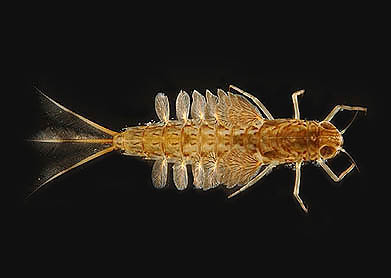
Fun fact for the day: just as some immature insects are called nymphs, the immature water-dwelling insects such as mayflies and damselflies are known as naiads, after the Greek mythological water nymphs. 

I think we can all see the resemblance between a mayfly naiad and a Greek naiad.


Monday, 6 August 2012

Writing the Olympics, throw the superlatives.


London, a badly surfaced road, sometime in August. Bradley Wiggins, rides a bicycle steadily, taking care not to be crushed by a taxi, blown apart by a rogue backpacker or happy slapped by a local teenager. Overhead, the sound of planes can be heard, accompanied by more planes, beeping car horns and the flash of digital cameras.
This is just any other day, it is any other month, it is any other place, give or take a couple of acoustic details. This is the day we will all live every time we leave our houses in a morning- except just for this month, this somewhat special occasion when we can actually choose not to talk about the weather, gripe about the price of milk or moan about the length of time spent queuing up for things. This month, we can unite over common ground and choose, amidst bleakest of long term prospects, to actually celebrate some achievements.

The London 2012 Games has led a furore of opinion and dominated the news with politicians and dignitaries fighting amongst themselves for photo opportunities and retweets- everyone from Boris Johnson to Morrissey has had a go, and with mixed success. To think that London has been magically transformed in a year is a triumph. This time last August we were streaming live pictures, from many of the same places, but in that short space of time the flames have somehow accumulated- as if gathered in copper petals- and become a symbol of strength, unity and achievement.

The Mayor of London led the way with the soundbites, 'call me jingoistic' he said,

Tuesday, 22 November 2011

Ekphrasis: A Writing Exercise

As some of you will already know (because I keep harping on about it), I spent last week at a writing residential in North Wales. This is the second time that I’ve been to Ty Newydd, and neither occasion has disappointed. Each day was loosely structured to include a writing workshop in the morning, free time in the afternoon to write / read from the vast collection of poetry books in the library, and a reading / Q&A in the evening. I was inspired. I wrote a lot. Most of which is unusable, but there are a few pieces that contain faint flecks of potential – and, for me, that makes for a fairly successful week.

The piece that follows is a written version of what I took from Tuesday’s workshop on ekphrasis. I’d experienced this workshop before (last year in fact), but it has been an exercise that I have employed regularly when I’ve been stuck, or when I have found myself regressing back to my cryptic ways. This workshop was crucial to my development and learning in the first year of my MA, and enabled me to change my opaque poetry into something that was less difficult. I hope that you find it as useful as I have found it.

* * *

The term “ekphrasis” derives from the Greek ek, “out of”, and phrasis, “speech” or “expression”. In poetry and literature it is used to describe a poem or a section of prose that translates or speaks of a piece of art; you have probably read many examples of ekphrasis without realising that you were reading an ekphrastic poem.

For example, John Keats’ poem ‘An Ode to a Grecian Urn’ uses an ancient artefact as a subject, allowing the speaker to address it directly, while also describing some of the pictures on the object’s surface. Keats used one form of art – a stimuli for inspiration – and translated it into another art form. However, it is also possible to construct an ekphrastic poem without a ‘real’ work of art (notional); Robert Browning’s ‘My Last Duchess’ is an excellent example of this. The painting that the Duke of Ferrara addresses is not real outside of the poem; it has been imagined by Browning, enabling the Duke to plausibly speak to his dead wife as if she were alive and encouraging the reader to think of her as a real person.

In recent times, photographs have become a popular focus within poetry - and despite capturing a very specific and static moment, they offer a variety of directions and options. The poet needs to make decisions, and perhaps the most crucial decision is POV: who’s eyes will we see through? who will be the speaker in the poem? Personally, I think some of the most successful ekphrastic poems are those that do something interesting with POV. For example, in ‘I Go Back to May 1937’ sees the speaker (daughter) travelling back in time to her parents graduation day (the photograph), just prior to their marriage. She wants to warn them, “I want to go up to them and say Stop, / don’t do it – she’s the wrong woman, / he’s the wrong man”. Similarly, in ‘Long Exposure’ (Neil Rollinson) the use of POV is striking; the poem steps away from the photograph and hovers more generously on the photographer. However, the speaker is a further step away from the photographer, observing his movements and the process of taking a photo. The reader is never given an exact description of the final image; we’re left to imagine the results, only able to see what the twice-removed speaker is capable of seeing / describing to us.

The Poem & the Photograph: A writing exercise

1) Find a photograph. I like to open a book like A Year in Photography: Magnum Archive at a random page and then write. However, things like weekend newspaper supplements, old photo albums, or even a Google image search can offer countless photographs – and endless sources of inspiration.

2) Consider POV. The options here are as unrestricted as your imagination will allow. You could choose a speaker who is contained within the photograph: a person, an object, a shadow. Alternatively, you could decide that your speaker is external (outside of the photograph): the photographer, a bystander, or even (as demonstrated in the Sharon Olds’ poem above) a person’s experience on viewing a photograph.
The above list isn’t extensive, it’s more of a starting point to get you thinking about the importance of POV and voice, and the way in which it can greatly influence the subsequent direction of your poem.

3) Think outside the frame. Don’t allow yourself to be restricted by what is within the picture frame. Photographs have edges, boundaries, but our minds are without such parameters. You can fill in what the snapshot hasn’t captured; the scene around the edges, the scene in front of the photo.

4) Experiment with time. It can sometimes be interesting to shift time, hypothesise about what happened 30 seconds before or after the photograph was taken and imagine what the ‘new’ photo would have looked like. Equally, this can be exaggerated to include greater time gaps; you might like to work away from a specific moment in time towards a future time, asking: Where are these people now? Are they still alive? What happened to them? (See ‘Six Young Men’ by Ted Hughes)

Thank you for reading,
Lar