written and posted by members of Lancashire Dead Good Poets' Society

Showing posts with label written by Dominic Rivron. Show all posts

Friday, 3 May 2024

That Despicable Feeling

I've noticed a tendency over the years for writers to talk about writing as if their way of approaching the craft is the only way. Recently, I heard a writer I really rate and respect say words to the effect that if you didn't have a head full of stories clamouring to be told then you might think you want to be a writer but, in reality you don't: you're just in love with the idea of being a writer. The best thing you could do would be to acknowledge this and find something else to do.

I'm a great fan of their work, but I think they're seriously wrong about this. I'm sure what they say reflects their own reasons for writing and it does explain aspects of their work: their narratives so often have the quality of a myth or a fable about them. I've often wondered how they pulled that trick. The idea that they have a story in their head that they're just itching to get down – that their narratives are more story-driven than character-driven – would go part way to explaining it.

It might work for them, but it's not the only way. I wouldn't dream of considering myself in their league, but, like a lot of people reading this, I suspect, I do write, and I know that my motivation is very different from what I've just described. To me, the fictional world I want to write about is an elusive thing.


It's as if it's concealed in a circular tower, with no visible doors or windows. I can wander round it for hours, running my fingers over the surface, looking for the slightest crack that might indicate the presence of a secret door. Once I've found it, I have to find the magic, secret words that'll unlock it. (By the way, in case I'm making it sound like I'm into Swords and Sorcery stuff, I should point out I'm not). Once in, usually, I'm away. Sometimes it turns out to be no good, or a dead end, but at least I get going. With luck, once you're in and you get to know the characters you meet there, a story begins to take shape.

Not being able to find a way in can be stressful. You can work off your excess energy writing reviews, blog-posts and the like, but it's not the same. I'm guessing Raymond Carver was a very different writer to the one I mentioned at the beginning. In his story, Put Yourself In My Shoes, he creates a fictional alter-ego, Myers, and puts him through a hell not unlike my wanderings around the circular tower:

As he drove, he looked at the people who hurried along the sidewalks with shopping bags. He glanced at the gray sky, filled with flakes, and at the tall buildings with snow in the crevices and on the window ledges. He tried to see everything, save it for later. He was between stories and he felt despicable.

Later in the story, some people, knowing that he's a writer, insist on telling him a long, rambling anecdote about a stranger who died in a hotel room they were staying in. They think he might be able to use it, but of course (and this is the point of the story) anecdotes and short stories are two very different things.

Dominic Rivron

Friday, 26 April 2024

The Emperor and Boris Johnson

Isn't it frustrating, the way you tend to forget your dreams the moment you wake up? (If you're one of the lucky few who don't, rest assured most of us do). One minute, there you were doing something you can't remember anything about except that it was vivid, surreal or intriguing, the next you're breathing the stale air of a slept-in bedroom and gazing at the sun filtering through the bedroom curtains, with nothing more exciting to look forward to than putting your socks on.

I looked into this a bit. I discovered that dream-researchers have determined that if, as you begin to drop off, you say, 'I want to remember my dreams' over and over a few times, it really does make you more likely to remember them. I was surprised to find it works.

I started to keep a dream diary. It quickly became obvious (to me, at least) that the act of doing this also helps you remember. I discovered, too, that like life itself, it's not for the faint-hearted. Dreams can be hilarious, but they can also be eerie and unnerving. One night you might bump into Donald Trump in a paper hat, sweeping the floor in a MacDonald's, the next, someone whose face you never see can take you on a journey through a dark place to meet a dead relative. If I'd not kept it up, though, I'd never have gone for a bike ride with Father Brown, lived in eighteenth century Scotland or got to push my son out of the way of an out-of-control tram.

One night in December 2021, the Prime Minister announced he was going to play Beethoven's Fifth Piano Concerto, the Emperor. People might have a low opinion of him, he said, but wait till they heard it. They'd be impressed.

I was working as a school-teacher at the time (in the dream). Originally, it was said that he'd come to our school to perform it, but there was such an outcry that it would contravene covid regulations (which ones? Who knows? It was a dream) that this plan was dropped. Instead, he'd perform it at a local hall. At lunchtime, the children trooped off in a 'crocodile' to hear him. It was compulsory.


The sight of him plonked in front of a piano tickling the ivories is one I'll never forget. I didn't get to hear him play for very long, but it quickly became clear that his hand and finger movements were not co-ordinated with the sound of the music. He was pretending to play the concerto on a fake piano, playing along to a recording and hoping no-one would notice.

I kept the diary up for about six months. On the plus side, it lent purpose to the hours I spent in bed asleep. I looked forward to dropping off, wondering what I was going to be treated to each night. On the other hand, it was time-consuming and, although there were occasional insights, it began to feel as if I were accumulating a load of junk, stuff you have no use for but can't bring yourself to throw away. I'd been writing a lot of short stories and hoped the diary would be a source of ideas, but quickly discovered what I should've realised from the outset, that dreams and stories are structured very differently.

However, during the lockdowns in 2020, like lots of other people, I found myself exploring my local area. I'm pleased that I did. I have to admit, I started to notice things I'd not noticed before and now find it a far more richly interesting place than I used to. I started making short films about it with my mobile phone. One – the idea of a dream diary must've been brewing in my head at the time – was called: The Dream (<<< just click on the title to activate the hyperlink to YouTube.)

Thanks for reading, Dominic.

Friday, 19 April 2024

One Night: A Short Story

17:01:00 Posted by Steve Rowland , , 2 comments
Janine is a heavy sleeper. I read somewhere years ago of a house getting blown up in a gas explosion. The only occupant was asleep in bed at the time. The explosion had blown the bed, with him still in it, up in the air and out into the street where it landed, still right way up. I truly believe that if this happened to Janine, she'd go on sleeping. Pedestrians would have to walk round her and cars pull out to avoid her until she woke up, as she usually does, if she doesn't set both her alarm clocks, sometime mid-morning. When I told her this, she gave me a withering look. She pointed out that she was the brains of the outfit, the one with the job. If she was hard to wake up it was because she was the one who needed her beauty sleep. Who was I to argue? She was right.

Me, I wake up at the slightest thing. If Janine rolls over, or the beams creak as the house cools down, or the cat jumps off the kitchen table downstairs with a soft thud, I'm likely to wake up with a start. And once I'm awake, there's no getting back to sleep. I can lie awake for hours. I'm not making light of it: insomnia can make your life a misery I know but, to be honest, it doesn't bother me as long as I don't have a busy day coming up. I quite enjoy it. Being awake when most people are asleep means your phone doesn't ring and you're free to spend your time as you wish. People generally hold to the view that we sleep night in order to lead fulfilling lives during the daytime. I take a rather different view. It's my belief that everything we do during the day we do to prepare ourselves for the seven or so hours we devote to sleep or, if we can't sleep, solitude. Night is my favourite time of day.


Janine and I always sleep with the bedroom window slightly open. I suffer from asthma and a constant flow of fresh air helps me breathe. Of course, it does mean that I'm more likely to be woken up by passing aeroplanes and barking dogs but being able to breathe is more important than being able to sleep and, as you probably realise by now, I don't mind that much about being woken up. The other night, though, I was disturbed by what sounded like someone moving about in the garden. I thought I could hear footsteps walking through the dead leaves that tend to swirl in piles on the lawn at this time of year. Twigs cracked. I got up and went over to the window. The moon was out, the sky was clear – it was one of those nights when you can see almost as clearly as you can in daytime. There was no-one out there as far as I could see but, just to make sure, I decided to go downstairs. I'd get a better view, I thought, through the patio doors.

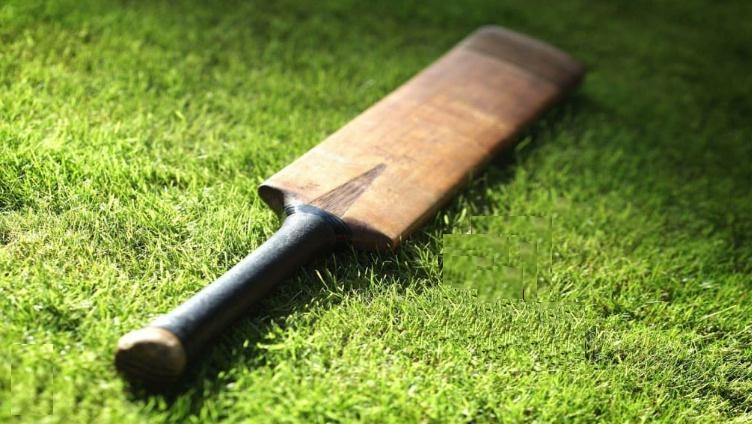
I pulled on a jumper over my pyjamas and took the old cricket bat I keep for such eventualities out from under the bed. I could never bring myself to actually hit anyone with it but I hope the sight of it might scare people off. Okay, it's probably not a good plan. I hurried downstairs. I pulled back the curtains and peered out of the patio windows. Nothing. Perhaps, I thought, the sounds had been made by an animal – a fox, or even a badger. Moving about without being seen was second nature to them. I decided to go outside and take a look around.

I slipped my shoes onto my bare feet and let myself out through the patio doors. Our garden, like all the others in the terrace, is a long, narrow strip of land. I've never been a keen gardener. Neither has Janine. I did make something of an effort, once, though. As a result, a line of planters made out of old car tyres painted white still stands along the edge of the patio. They've been full of weeds for the last year or two. Janine says I really ought to do something about them but neither of us goes out into the garden much. Beyond the patio, there's a lawn. One thing I do still do is mow the lawn now and again. A forest of bushes stretches beyond it that gets more ill-kempt the further away from the house you go. Right at the end there's a patched-up wooden fence. Beyond the fence lies the canal tow-path and beyond that, the canal. I made my way across the lawn, half-expecting some animal hiding in the shadows to break cover and run for it. I carried on through the bushes, past a rotting pile of grass-cuttings, all the way to the fence. I stood – I'm not sure for how long – gazing over it at the dark, shiny surface of the canal.


I turned back to the house. A rectangle of yellow light on the upper floor told me I'd forgotten to turn off the bathroom light when I went to bed the previous evening. Windows lit up like that always remind me of my childhood, of playing out with my friends, and of coming home in the evening at the last possible minute, or possibly a few minutes later. My mother would be running a bath, assuming, probably rightly, that I'd be covered in mud. It crossed my mind that if I were living in the kind of story I used to read back then, I'd go back into the house now and back to bed. I could imagine how it might go:
 
After what seemed like only a few minutes, he thought he could hear noises coming from the garden again. He jumped up and ran to the window. The moon was still high and there was no doubt about it this time. Someone was moving about in the bushes at the bottom of the garden. He picked up the cricket bat again and hurried downstairs. Looking out through the patio doors, he saw that whoever it was had left the bushes and was now walking across the lawn towards the house. It was a man. He was carrying a cricket bat. To his horror, he realised it was himself. Powerless to stop himself, he opened the doors and walked out across the patio, passing his oblivious, zombie-like alter ego walking in...

It would almost certainly go like that. The writer would have him trapped in some sort of weird time-loop. He'd have no life beyond the house, the garden and the moonlit canal. Janine, like a princess in a failed fairy story, would sleep for ever.

Dominic Rivron

Tuesday, 9 April 2024

Furthest, Fairest Things

Furthest, fairest things, stars, free of our humbug,
each his own, the longer known the more alone,
wrapt in emphatic fire roaring out to a black flue.

                                                                   Basil Bunting, 'Briggflatts'

When I was was a kid, somebody bought me The Observer's Book of Astronomy, one of many books written on the subject by the late Patrick Moore. I was intrigued by the pictures of constellations, although I must admit I spent more time looking at the book than into the night sky. More than once, I must've thought it would be interesting to be an astronomer, but I was lousy at maths and just don't have the sort of mind that's good at remembering long lists of names (I tried a few times to memorise the main features on the moon, but they never stuck).

Years later, when I moved to the Yorkshire Dales, I found myself living in an area free of light pollution. For most of my life, the sky had been no more than an orange haze. All of a sudden, there was so much to see.

I got hold of a star map (the Observer's Book had disappeared a long time ago) and actually managed to memorise a few constellations: Orion, Cassiopeia, Taurus, Cygnus, Auriga, Draco, Leo. It felt good, being able to recognise them, just as it did to know the names of the local hills. And it's not just the constellations: there's a lot of other things up there you can discover without a telescope, too. Peripheral vision is more sensitive to light than central vision. You may know this trick already, but if you don't, try looking just to one side of the second star in the handle of The Plough (look at it out of the corner of your eye, in other words) and you can see there are, in fact, two stars. A binary system. (In fact, there are four stars, but only two are visible to the naked eye). 


Talking of such things, Andromeda, I discovered, is a good constellation to know: the Andromeda Nebula (M31 pictured above) is the nearest major galaxy to our own and if you can recognise the constellation, it's easy to locate the nebula from it. If you know where to look on a very dark night, you can just make it out in the corner of your eye. Binoculars reveal it to be a mysterious-looking smudge. As for seeing our own, the Milky Way Galaxy, we're in it, of course, but as everybody knows, at the right time of year on a dark night you can see the distant, inner part of it as a long, silvery band stretched out across the sky. When it's really dark in the Dales, you can even make out the dust-clouds near it's centre. It's like your standing on the outskirts of a forest, staring into its depths: the stars you see when you look up are the foreground, the individual trees that immediately surround you; the distant band of the Milky Way, the green-brown haze of the more distant trees that merge into a single mass. 

Of the constellations I learned to spot, one of the ones that most resembles the thing it's supposed to depict has to be Leo. For those who don't know it, the prominent group of stars known as the Sickle is clearly the lion's mane. Look behind it and all the other parts of the beast readily fall into place. Once seen, never forgotten.


The thing is, though, any intelligent species living on a planet orbiting the star Denebola would have no idea that their sun was, to us, a lion's back end, that the ancient Egyptians worshipped the constellation – which they called knem – or that the ancient Greeks associated it with the Nemean lion, a monster killed by Hercules. And it would never occur to them that superstitious Earthlings today think that if their sun is in the same part of the sky as our sun when someone is born, it makes that person ambitious and confident. I'm assuming here that this species has optical vision, not unlike our own, cultures, myths and languages we might recognise and are able to see the night sky much as we see it. These are big assumptions. They may, of course, have completely different ways of perceiving the presence of our star and ascribe it a significance we can't even begin to imagine. Nevertheless, it makes you wonder. It begs the question, if our sun is a visible star in the night sky of other intelligent species, what cultural significance, if any, do they attribute to our star? Are we, without knowing it, orbiting the body part of some mythological alien animal?

We might, of course, be of significance to more than one civilisation – and on more than one planet. I say 'be' but which tense we should use begins to get very complicated when we start contemplating these things. All that we do know, whichever planet we live on, is that star-light takes centuries to reach us and, whatever significance we might ascribe to each other's home-stars, all of our species probably exist for a mere blink of a cosmic eye. I say probably, because our lives are mere snapshots of evolution: we're still evolving. Who's to say what we're evolving into? And who's to say what other species elsewhere in the universe, perhaps millions of years ahead of us, have already become? As for the stars, though, as Basil Bunting put it:

Then is Now. The star you steer by is gone,
its tremulous thread spun in the hurricane
spider floss on my cheek

                                                                        Ibid.

I wrote this poem below a few years ago. It was first published in The Passionate Transitory magazine which, sadly, though passionate in its promotion of poetry, itself turned out to be transitory. I think, when I wrote it, Pluto was still a planet. Don't get me going on that.


News from Pluto

Something's about to happen. I'm not sure what.
I've watched for long enough and, yes, I get
Impatient, as the months slip by. And yet
This is important. In a way, I'm not.
Earth, erratic, crosses the ecliptic;
By day, the sun's scarce bigger than a star:
It makes you realise just how small we are.
Will I get home? I must be realistic.
Gravity's low. Perhaps my bones grow thin.
I jog the corridors, try to keep fit,
But face the fact (there's no escaping it)
I have become this waiting game I'm in.
One day, it'll happen, I've no doubt.
Exactly when, I don't know. I'll find out.

Dominic Rivron

Thursday, 7 March 2024

Poetry Magazines, Past and Present

Poetry magazines. I've subscribed to a few over the years and I've always been a sucker for any I found in charity shops. Then, one day, somebody passed a pile on to me when they were having a clear out. Result: I seem to have acquired a small collection. It was never a deliberate intention. It just happened.

Some are recent. A lot, though, date from the heyday of kitchen-table poetry magazine publishing. Some have a professional, almost mainstream look about them. Others have a more home-brewed appearance. Some, looking at them now, aren't exactly magazines, but pamphlets devoted to one poet. A few stand out. New Directions 36 features work by Allen Ginsberg and Octavio Paz. Then there's Ambit 75, from 1978. The cover (below) is a reproduction of a letter from J.G. Ballard to Ambit editor Martin Bax, regarding a Ballard short story that appears in the magazine and the possibility of illustrating it. The same magazine includes a review by Fleur Adcock of Basil Bunting's Collected Poems. Another, typewriter 6, features concrete poetry that explores the limits of the typewriter. In these internet days, it's easy to forget quite how 'out there' these games people played with typography seemed at the time.


Not so long ago, I found myself in an unexpectedly warm discussion with someone about the fate of printed poetry magazines. It was partly my fault and he was quite right to point out that their waning fortunes were, largely, down to rising postage costs. I don't think that tells the whole story, though. I said to him that it was also, perhaps, down to the rise of online poetry magazines, which he disputed, claiming no-one actually read them. This got me thinking. It's an uncomfortable question, but how many people who've bought printed poetry magazines over the years – even in their heyday – actually read them from cover to cover? I suspect a lot of buyers are poets wanting to to check out a magazine prior to submission or who feel they should support a particular magazine. It would be naive to think subscribers and readers are the same thing. And even if all the subscribers to a particular magazine were avid readers, if you get a poem published in it, then like all poetry in printed books and magazines, it's going to sit there in the dark for all but a couple of minutes of a reader's life (less, if it doesn't engage them), pressed up against a similarly unread poem on the opposite page.

About six months ago, I bought a box of tall glasses. I take a new glass from it from time to time if I break one or need an extra one. They're all individually wrapped with bubble-wrap and sellotape. I unwrapped one the other day to discover it had two dead spiders in it. They must've been there since the glasses were wrapped and packed. While still alive, they'd filled the glass with a fog of spider-web. Imagine my surprise when, as I tried to clean it out, one of the 'dead' spiders came to life, scuttled across the work-top and disappeared behind a row of storage jars. Rather like a poem in a magazine, it had sat in the dark for heaven knows how long, before suddenly bursting into my world for a few moments – only to disappear back into the darkness. If it were a poem, it would be a good poem, as I'm unlikely to forget it and here I am writing about it and talking about it to anyone who'll listen. As is often the case, I think we often make too much of the difference between work found on the internet and its analogue counterpart. In both cases, what we write has one chance to grab the attention of the reader. If it fails, it suffers the fate of the unfortunate second spider. What matters is not whether it's published in an online or in a print magazine: what matters is whether it's a good poem or not.

With a print magazine, the fact that you can hold it in your hand means it speaks to you before you actually read it. The medium is the message almost as much as the poetry it contains. That it had to be designed, typed, photocopied, folded, stapled and distributed, all from the much-vaunted kitchen table, adds to its aura. And you might want to make your poetry into a beautiful, physical thing – as, say, Blake did – and I'd have no argument with you: it's great that people still do this. It's great, too, that some online magazines issue occasional hard-copy anthologies. Nevertheless, it's impossible not to notice that poetry lends itself to the internet: there's no getting away from the fact that most poetry fits very nicely on a screen. And there's no escaping the fact that internet pages – though less permanent than print – can have an aura of their own. It springs not only from the craft involved in making them (which any writer of HTML in the early days of the internet can attest to), but the fact that you never really know where it is: you can't take hold of it and, like Frankenstein's reconstructed man, it takes electricity to bring it alive.


When you get a print magazine in your hand and turn to the first poem, if it doesn't appeal to you, you'll turn the page. You bought it, after all: you want to get what you can out of it. I don't think anyone likes everything they find in any one print magazine of any kind: if you enjoy forty to sixty percent of the content, you think it was worth buying. I have a hunch, though, that people are less forgiving with online magazines. If the first couple of posts are not to their liking, a lot of people will stop scrolling down and look elsewhere. Just as with the printed equivalent, to do so, I think, is a mistake.

Of course, not everything's as good as it could be, any more than it is in the world of printed mags, but there are a lot of good online lit mags out there. It's right to mourn the passing of the golden age of the print-only version, but wrong to overlook what is perhaps a new, online golden age. There are too many to name: one has to go out there and search for oneself. I could make a list but, if you're not into online lit mags, I'd hate to deprive you of the fun of searching for them (while avoiding, if you're thinking of getting published, those that charge 'submission fees': vanity publishing is alive and well). If, like, I suspect, most people reading this, you're already into them, you'll have a mental list of your own.

I could imagine, back in the days of Gutenberg, mourning the disappearance of works like the Lindisfarne Gospels (if, that is, I'd been lucky enough to actually see and been able to read them). Similarly, today, when I hold Ambit 75 in my hand, it's impossible not to think that something great has passed from the world (Ambit, sadly, came to an end in 2023). There again, when I check out my favourite online zines, it's obvious something equally worthwhile in its own way has come into it, too.

I'll finish off with the first poem – I think – I ever got published in a printed poetry magazine, Mark Robinson's excellent (though now, sadly, defunct) Scratch back in 1995:

Ranter

Would they let him in?

He'd have to sound convincing. For a start,
he'd need a name - you know,
the sort that sounds
uncrackable, as if
he'd lived with it for years.

He'd need a reason, too.
This proved more difficult. It was not enough
to be the life and soul of the poem. They'd
see through that, they'd know
he'd almost certainly get pissed, then try
to set the universe to rights, grasping the sleeves
of exasperated punters. That's when
things always start to go wrong, he thought. In the end,
they'd have to throw him out.

"You bastards, I made you." He could hear himself slur, skidding
in a pool of his own vomit. "Where would you be
without me?
" And then:

"I think we've had enough, sir."

"Bastards..." "Goodnight, sir."

Back to the street.
He'd have to think of something else.
He could make promises:
he'd keep his clothes on, only relieve himself
in the appropriate place, not puke
on the floor, keep his ideas to himself, even, though
what's the point? he thought. I'd
most likely break them, along with the glasses, and
perhaps it's not my sort of place after all.
Perhaps I just want to get out of the rain.

He might just take a bus instead.
Invent the route. Watch himself
stretched out across an empty seat
reflected in the darkness of the glass.

He might end up anywhere, might even rediscover
dragons


Dominic Rivron