written and posted by members of Lancashire Dead Good Poets' Society

Showing posts with label Desert Island Discs. Show all posts

Saturday, 13 September 2025

My Desert Island Discs

So there I am, stranded on the mythical Greek island of Dyskos, with just my solar-powered Dansette record player, eight precious slices of vinyl, a book of my choosing and a luxury item, happy as a castaway sandboy. 


Before we get to my personal selections, just a brief preamble about the BBC's longest-running radio programme (first broadcast on 29th January 1942). Nearly 3,500 episodes of Desert Island Discs have been broadcast, introduced by its theme tune linked here to put you in the mood: By The Sleepy Lagoon. 

Each week a famous guest would be invited on and prompted by the presenter, he or she would talk about their life, interspersed with eight pieces of music they would choose to have with them if they were ever cast away on a deserted island. The shipwrecked celebrity was also allowed one book of their choice and a luxury item that could serve no purpose as part of their escape plan. The longevity of the programme is a testament to what an inspired format Roy Plomley had devised.

Early episodes were broadcast live and have been lost to posterity, but an extensive archive of the recorded shows exists and many episodes can now be accessed via the BBC's online platform. 

One recorded episode was never broadcast. The BBC thought it had invited the thriller writer Alistair MacLean to the studio, but on the appointed day the head of the Ontario Tourist Bureau arrived with his list of chosen music. Rather than disappoint the wrong Alistair MacLean, Roy Plomley graciously went through the motions. 

The strangest luxury item nomination came from John Cleese who chose to take Michael Palin with him. And the most idiosyncratic selection of music came from Dame Elisabeth Schwarzkopf who chose, among her eight pieces of music, seven of her own recordings! 

Selecting just eight records was an almost impossible task for me, with so many thousands to choose from in my collection built up over decades, so many hundreds vying for a legitimate right of inclusion. As paralysis threatened, I made a trio of sweeping decisions to simplify the task:

1) This would be a rock and roll shipwreck. Alternate founderings featuring classical music or spoken word  recordings might lie in wait for this castaway in future. Who knows?

2) I would only select British artists - so no Byrds, Dylan, Jackson Browne, Jefferson Airplane, Jimi Hendrix, Joni Mitchell, Love, Neil Young, R.E.M, Spirit, Talking Heads, Translator or Velvet Underground.

3) I wouldn't pick more than one record from any given year - sorry 1967 in particular. 

Those criteria helped some. Here are the eight that got into the waterproof crate, in chronological order.

A Hard Day's Night - The Beatles (1964)
The soundtrack of our unshackling, as I once stated in my poem about Beatlemania (read it here: Beatlemania ). The Beatles burst into my life when I was nine. Cliff Richard and Adan Faith had seemed tame, but here was beat music that I could relate to. Armed with a newly acquired transistor radio, I switched on to the excitement of it all and never looked back. We went to see A Hard Day's Night at Peterborough Odeon a load of times. It felt as though a different future had just opened up for us - innocent but magical times.

Season Of The Witch - Julie Driscoll, Brian Auger & the Trinity (1967)
Julie Driscoll came to my attention via a performance of 'This Wheel's On Fire' on Top of the Pops. On the strength of that I rushed out and bought the group's debut 'Open' LP, which doesn't contain the single but has many even more wonderous things. I was fourteen, living in Cambridge, had started dating girls, fancied myself as a bit of a groover. Jools was one of the beautiful people. Season Of The Witch was a sophisticated and jazzy rendition of a Donovan song and quite the trip, man, at eight minutes long.

Fat Old Sun - Pink Floyd (1970)
The Cambridge connection was strong on this one, given that three quarters of the band had grown up in the university city where I went to school and spent my teenage years. I wrote a recent blog about Pink Floyd's origins (read it here: The Tea Set ).I bought Atom Heart Mother as a Christmas present for my steady girlfriend. We used to listen to it in the dark on Sunday evenings, lying on the sitting-room floor in her house or mine, with parents patrolling just beyond the door, so it seemed. Fat Old Sun encapsulates those memories.

Green Tree - Quiver (1972) 
After passing my A-Levels (English, History and Geography) and being offered a place at Warwick to read English, I opted for a gap year, left home, got a job and moved into a shared house with a bunch of like-minded friends in Cambridge. I started painting (couldn't do it for A-level - timetabling issues), read copiously, entertained girls, went to see lots of live music. Quiver were part of that local scene who signed for Warner Brothers and put out two great albums of their English version of West Coast music. Green Tree embodies that positive vibe.

Bright Side Of The Road - Van Morrison (1979)
I was living in London (Hackney) and teaching English and Drama at a comprehensive school. I'd been a fan of Van ever since Astral Weeks a decade before, and had all of his albums, but living in the capital gave ample opportunity to see him. He lived nearby in Holland Park and his tours frequently began or ended at the Hammersmith Odeon or the Dominion on Tottenham Court Road. London in the second half of the 1970s was a great place to live and Bright Side Of The Road triggers so many fond recollections.

Waterfall - The Stone Roses (1989)
I'd left teaching and London behind, was happily married with two young daughters and living in the Shire of Herts. I'd jumped ship into industry, working for Eastman Kodak, and in any free time, I wrote freelance for the music press. I reviewed this album very favourably, concluding: "These four young Mancunians have combined to re-establish my faith in the possibility of a truly popular home-grown psychedelia." And so it was. My daughters particularly enjoyed “She Bangs The Drum”. Their mother and father loved “Waterfall”.

Great Hosannah - Kula Shaker (1999)
In my work life, I was spending quite a lot of time abroad, in the USA and various European countries, implementing new IT systems for the firm that employed me for 33 years. I suspect ultimately it took a toll on my marriage as I was abroad as much as I was at home. I was still writing regularly about music, enjoying a raft of new guitar bands like the brilliant Kula Shaker, and writing songs as well, some of which would end up in the repertoire of the Deadbeats, the band I played bass and sang in.

Put The Sun Back - The Coral (2007) 
The Coral are, in my opinion, the best British band of the 21st century. I've hung out with them, interviewed them, written about them, been to many of their gigs. 2004-2014 was a turbulent decade in my personal life, divorce, another marriage, eventually another divorce and a move up to Blackpool (jewel of the north). The music of The Coral has somehow soundtracked it all in a bittersweet way. And Blackpool enjoyed a year in the Premier League. Put The Sun Back eloquently captures the mood of those rollercoaster years.

If I had to save just one of the above from the clutches of the waves, it would probably be the Van Morrison. (I've surprised myself there.) As for a book, that would be 'The Glass Bead Game' by Herman Hesse. I never tire of re-reading it. And the luxury item? One of those wooden rakes so I can make and re-make a Zen garden in the mythical Dyskos sand while listening over to the eight records stacked on my trusty Dansette's spindle..


That's all folks. I didn't provide links to the songs, but you'll find them all on YouTube. And if you're a fan of these exercises, by all means leave a comment with your own choices of desert island discs. I'd love to read them. S ;-)

Monday, 8 September 2025

When The Music Starts To Play I Want To Be Around

I taught in a High School in North Blackpool for twenty five years. By the time I regenerated- that’s retired to you- my kids were big into Dr Who and said “Daddy you haven’t retired. You’ve regenerated" and that was good enough for me. Regenerated. Wow! And indeed I have. I’ve been regenerated- that’s stopped working to you- fifteen years now. During that time I‘ve set out to do all the things I’ve been saving for years to do. Like writing for the Dead Good Blog for instance.

During those twenty five years I rose to the dizzy heights of senior management. And boy was it dizzy when I looked at those around me and listened to what they had to say about education. I also hobnobbed with the school governors when I was up there in that rarefied atmosphere, rather short of oxygen. One day I was chatting to the chairperson of said governors. Well you do don’t you, chat to them so that they know that you’re there running yourself ragged to make his school successful while he basks in glory at the top of the mountain. Wanting something to chatter about, it transpired we that were both “into” music. He was lamenting the fact that one of his favourite albums he couldn’t find on CD. This was “Twice around the Houses” by Jonathan Kelly. Not that I am a bottom polisher, but I told him that I had got said LP but not on CD. I wasn’t even sure that it was on CD then or even now. I stand to be corrected, of course, because somebody reading this is looking that up right now, I bet.


Then he suddenly invited my wife and myself to his house for a “Desert Island Discs” soiree. So when your boss invites you and your wife to his “Chair of Governor’s House", you jump up, fall in and say, of course, “Oh Yes Please!” Don’t you?

I had readily agreed to accept his kind offer. I said I was a bottom polisher. However the most frightening thing that I had to do was to tell my wife that of which I had committed her to. I knew she would hate it. But you can’t go to soirees at the boss’s house without your wife can you? It would be the height of bad manners and both social and professional suicide and I knew that she would push me off the mountain, leaving me to retire, regenerate or whatever I wanted to do. All without oxygen and no tea or anything else for a year. However after goodness knows of how many pretty pleases and promises to take her everywhere she ever wanted to go for the next fifty years or something like that, the time arrived several weeks after the invitation to go. I forget to slip in that there would be another couple there, the lady of which was also a school governor and her partner who was consulate doctor. So hey this was serious stuff.

Still the next thing to do was draw up my list of Desert Island Discs. Thankfully we only needed to pick eight, just like the BBC programme, since that would give us an epic twenty four discs to listen to and discuss anyway. 

So where to begin? I had been buying records since I was twelve in 1963. The first of which was “Blue Bayou” by Roy Orbison. It will stagger you if I tell you I have been buying, purloining, borrowing, and copying records ever since. And guess what, just like T.S. Eliot measured out his life in coffee spoons, I have measured out my life in records. I have still got them all, every single one. Sad bastard. And I can remember where, why and when I got my grubby little mitts on each one. Well actually my mitts would need to be clean wouldn’t they? I mean, come on, I’m not irresponsible.


Anyway after pondering, sweating, and sleepless nights passing, I made, at least, I wouldn’t like to say how many lists and that was, in fact, the most enjoyable thing of the whole lot because I love music. Then after a lifetime of decision and selection- right word there because my collection –rather a grand word- went back to a time I was twelve as I said. It was indeed a lifetime’s journey. I was famous for talking about music none stop. A friend of mine once said, “You’re nobody until Bill Allison has been to your house and looked over your records”. Right on! So I eventually made the CD with my selection. More of that later.

The evening approached. Like what do you wear when you go to your boss’s house, and spend an evening with him and his wife and other guests from the rarefied mountain top! ”Just be yourself”, my wife said. So I went with my jeans and trainers on. That vogue mode of mine had got me to most other places I had been to. It wouldn’t get me into Buck House or the Posh Friday Night Pubs in Poulton le Fylde. Nevertheless it was more than good enough for this night. Slick Shit Ho!

My wife looked gorgeous as she always did. I have to say it at this point she doesn’t really like music. It all sounds the same to her. Especially the music I am addicted to. Somewhere in “The Merchant of Venice”, it says that you shouldn’t trust anyone who doesn’t like music. It’s a good job that we really do love each other. I always turn the music off when she comes home.

So we drive up. Knock and are invited in. Offered sherry. Escorted into- what the Estate Agents call- a reception room. Introduced to our fellow castaways and disc jockeys ready for the Grand National of our lives. The guidelines are laid out; the male of each couple will play their selection and talk about that particular selection and why they have chosen it and what it means to them. Very much like the beloved BBC Radio programme of the same name. “Desert Island Discs”. We didn’t get round to the Bible, Shakespeare, a third book of choice or a luxury item. Maybe next time. Shame!

Anyway while we savour our sherry and limber up, here’s an hors d’oeuvres

Roy Plomley, originator and first host of Desert Island Discs
Out of interest, over 2500 episodes of Desert Island Discs have been broadcast since 1942 and they are all archived on the BBC Radio 4 site and all are available as podcasts. Pick as you please from them all above- because down here we’ve got the green light and we’re off. I was first up because well as you can guess my surname has always been the blight of my life. Allison. First for everything except the things that matter. No - just kidding. It’s always good to be first but anyway I can’t do much about that now, I suppose, can I?

Suddenly this turns serious as I talk to you about my selection as to how and why. I am a very dedicated muso. I hope that you have gathered that by now. If not you will have gathered it by the end of the article. You have to remember that the Desert Island Discs evening I am describing took place some years ago and that my selection may have changed after all these years. There was a criteria for my selection. It traced out different aspects of my life. As I said measured out, not in coffee spoons but music. But there was a method and madness in each piece of music. Let me unroll that for you now if I may. What follows is a version of what I said at the time. There was so much more to say, there always is, but time was of the essence. Are you listening comfortable? So here goes…

1 “Surf City” - Jan and Dean
First up was a 1963 hit by Jan and Dean written by Brian Wilson and Jan Berry. I remember listening to this on Radio Luxemburg, fading in and out, on my tiny transistor tucked under my sheets at home in my little box room at the top of the stairs with my mum snoring in the next room. It was all there, Californian sunshine set to high harmonies - another world, far from grimy Bolton. The chorus ran "two girls for every boy". That’ll do for me.

2 “That Would Be Something” - Paul McCartney
The Beatles changed everything. They opened the garden gate to somewhere else. Every boy in the world had a cheap guitar and a Beatle wig and thought they were going to make it. Most didn’t. But The Beatles did. However I didn’t want to play some Yeah Yeah Yeah stuff because by 1971 it had fallen apart. Everything put together falls apart. Out of the end, amongst other things though came Paul McCartney’s first solo- really solo, he played everything on it- album- 'McCartney'. It was laughed at and ridiculed at the time. But as far as I am concerned it has more then stood the test of time with some great songs. “That Would Be Something” – the whole album was more than just something. Much more.

3 “Waterloo Sunset” - The Kinks
One of the most wonderful sets of opening chords you could imagine. Instantly recognisable, everybody recognises it and sings along as the vocals start. It was one of the first songs where Ray Davies staked a claim to be a poet in a well-established English tradition and has walked that road ever since. As long as I gazed on Waterloo Sunset I was in Paradise. Say no more.

4 “Mr Tambourine Man” - The Byrds
If the Beatles opened the garden gate, Bob Dylan kicked down the front door. Sitting listening to Bob on such a joyous evening approaching midnight might not have been the best thing to do in such an esteemed gathering, so The Byrds were the next best. Another great opening. Dylan said that it was groovy because you could dance to it. He was impressed that somebody had made his music danceable to. Let’s twist again like we did last summer.

my younger self (left) and Dylanologist John Bauldie
5 “Tinker’s Blues” - Bert Jansch
“Tinker’s Blues” is a short guitar instrumental from guitar maestro Bert Jansch from his second album 'It Don’t Bother Me'. I wanted to show how important so called folk music and so called Folk Clubs were to me in the late sixties. 'Bert Jansch and John Renbourn', an album of acoustic guitar instrumentals they play together is one of my all-time favourite records- then and now. Folk Clubs were ancestors of online dating. A Famous Clancy Brothers Folk Song went “The boys won’t leave the girls alone.” Too right.

6 “Spanish Radio” - Jimmy Webb
This is a song from Jimmy Webb’s wonderful 'Suspending Disbelief' album. I guess that's what music does at its best, asks you to suspend disbelief. Well come on now-Someone left the cake out in the rain. How much suspense do you have to disbelief to get that one? Macarthur’s Park is melting in the dark. Really? Webb said if The Beatles could write about newspaper taxis and glass onions why not melting parks? Webb has written some of the most intelligent and romantic songs – if that is not a contradiction in terms- of the late twentieth century. “Wichita Lineman”, “Galveston” “Up, up and away” and plenty, plenty more. Everyone should be a Jimmy Webb fan. More cake anyone?

7 “Tom and Alexi” - Mike Heron
“When the Music starts to play I want to be around”, the title of this piece, is the opening track of the first Incredible String Band’s self-titled 1966 album. Mike Heron was the co-partner of Robin Williamson, the front men of this hippy dippy band for nearly ten years, splitting up in 1974. They were underground favourites and I fancied myself as a bit troglodyte then. Still do!

Heron should have been a superstar in his own right if all things were equal. But, of course, they never were. “Tom and Alexi” came from a solo album. It’s a song about a Russian and an American astronaut sharing a space ship pazzing around the Earth. Far from being troglodytes!

There was a method in madness picking this song. All joking apart, music can be and often is a very serious part of your life. Most of the time that’s why you listen to it. At the time I heard this song I was involved in wrangling over contact for my daughter. There’s a line in the song as these astronauts look down on the Earth –"It’s hard to be geopolitical from up here”. They had seemingly put their own vested interests and differences down on Earth to one side whilst looking down on her beauty. At the time I just wished my ex-wife and I could have done that.

8 “ The Girl from Ipanema” - Astrid Gilberto
Last but not least some Bossa Nova. Some romance on Brazilian beaches. But I guess we go back to where we started from. Two girls for every boy. Well in this case one. A sister song to “Pretty Flamingo". Springsteen does a great live version of that. Check it out.

So there it is. Eight songs peppered and flavoured with lots of others to boot. All done.

That was it. Ordeal over. I kept my job but got told off for taking too much food from the buffet. I can’t remember any of the sixteen tracks the others played. Still music was always like that. You loved yours, couldn’t understand why everyone didn’t like it and you couldn’t understand why they listened to the crap that they did. On the way home my wife reminded me of the title of a Richard Thompson song. "Never Again".

Thanks for reading. Bill Allison

Wednesday, 1 January 2025

Music

When I first saw that the topic for this week’s blog was music, my mind immediately jumped to Desert Island Discs. I have been practising for this show for years and now have all eight tracks firmly in place and was so looking forward to giving folk a preview of my choices. Unfortunately, it appears that the producers seem to have mislaid my name and address at the moment but not to worry it would only be a list without the sounds so I’m changing track (so to speak).

I got to thinking that as this is a written piece then how do musicians read what is on the pages of their scores. And then how did the system of notes and bars etc originate. However, when I got to looking at the history I found that as a non-musician a lot of the information was beyond me so I decided to pick out some of the highlights which intrigued me.

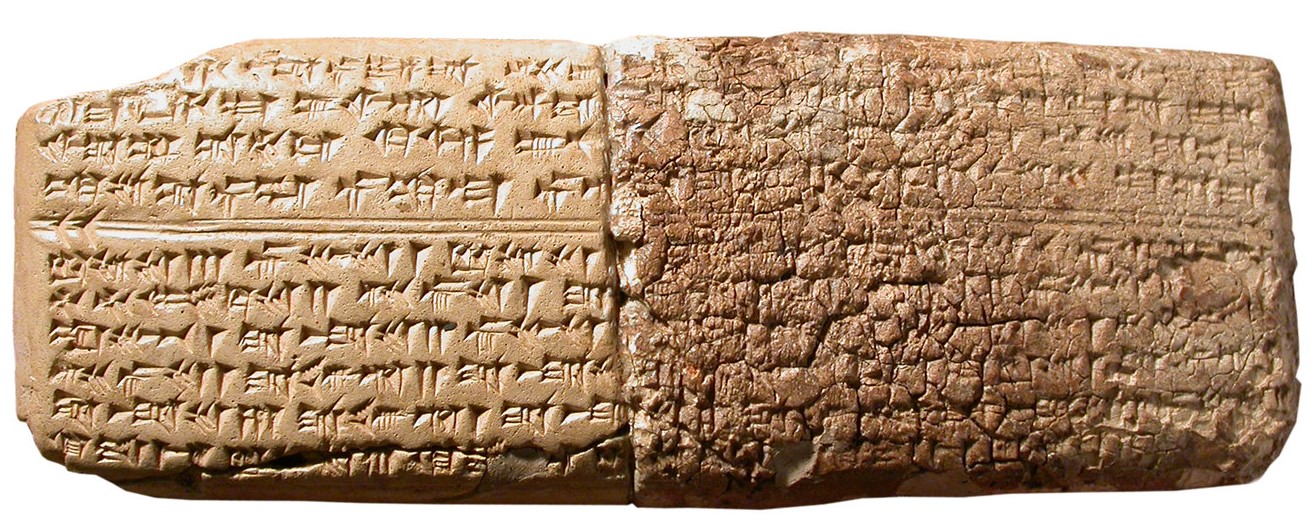
It’s known from designs on pottery and artefacts that the use of music has been part of humanity from its earliest times in both religious and secular activities. Possibly as long ago as 60,000 years. But the first sign of some form of notation has been found in what is called the Hurrian Hymns, a collection of music inscribed in cuneiform on clay tablets excavated from the city of Ugarit in Mesopotamia (no comment) dating to approximately 1400 BCE.

Philolaus and Pythagoras
In 600 BCE Pythagoras, while walking past a blacksmith’s workshop, was intrigued that the sounds made by the smiths’ hammers sound like tuneful musical notes. He was a musician as well as mathematician so he went home does some calculations and worked out the mathematical proportions governing the notes of the music scale. He discovered that two notes which make an interval of an octave always have a ratio of 2:1. A perfect fifth is made with the ratio of 3:2, and a perfect 4th is 4:3. Combinations of these intervals then create the other notes which make up the major scale.

The scholar and music theorist Isidore of Seville, while writing in the early 7th century, considered that ‘unless sounds are held by the memory of man, they perish, because they cannot be written down.’ By the middle of the 9th century, however, a form of notation began to develop in monasteries in Europe as a mnemonic device for Gregorian chant, using symbols known as neumes; the earliest surviving musical notation of this type is in the Musica Disciplina of Aurelian of Réôme, from about 850 CE.

Guido d'Arezzo, the musical monk
The founder of what is now considered the standard music staff was Guido d'Arezzo, an Italian Benedictine monk who lived from about 991 until after 1033. The syllables Guido d'Arrezo chose to use in the system he developed as an aid in the teaching of sight-singing were based on a hymn to Saint John the Baptist, which begins Ut Queant Laxis and was written by the Lombard historian Paul the Deacon.

1. Ut queant laxis

2. resonare fibris,

3. Mira gestorum

4. famuli tuorum,

5. Solve polluti

6. labii reatum,

7. Sancte Iohannes.

And what did that become? Answer below.

By the 12th Century, we find many manuscripts with a five-line stave that we recognise today. However, the system of musical notation was not quite complete. There was still no indication of how long a note should last. Franco of Cologne was the first person to address this, creating a series of square- and diamond-shaped notes with no stems. This system was later adapted by Philippe de Vitry who created symbols that would not be entirely unrecognisable today.

The notes were named, with the Maxima being the longest, however as music has a tendency to speed up, it was equivalent to our modern semibreve, four beats.

Bar lines were added in the 17th Century. Now musicians could really write down musical ideas. This lead to more complex compositions and began shifting the music of the time from Baroque to Classical music. Around this time, notes also became more rounded, forming the symbols we know today.

There is a mind numbing amount of poems about music so I thought this might be more suitable and is the answer to my question. I bet you can’t help singing along.

The Sound of Music
Do-Re-Mi

Let's start at the very beginning
A very good place to start
When you read you begin with A-be-see
When you sing you begin with do-re-mi
Do-re-mi, do-re-mi
The first three notes just happen to be
Do-re-mi, do-re-mi
Do-re-mi-fa-so-la-ti…
Let's see if I can make it easier
Doe, a deer, a female deer
Ray, a drop of golden sun
Me, a name I call myself
Far, a long, long way to run
Sew, a needle pulling thread
La, a note to follow Sew
Tea, a drink with jam and bread
That will bring us back to Do (oh-oh-oh)
Do-re-mi-fa-so-la-ti-do
So-do!
                                  Oscar II Hammerstein, Richard Rodgers


Thanks for reading. Happy New Year, Terry Q.


Thursday, 3 September 2020

Rhapsody

If I am ever famous enough to be invited onto Desert Island Discs, two of my choices would be rhapsodies. The first is the Hungarian Rhapsody No2 by Franz Liszt, a piece of music that carries me  into a fantasy land. It is filled with light and shade, love and passion, folk dance and history. It has everything I need to make me spring from the sofa and reel around my living room like a woman possessed. The rhapsody takes me to my happy place and anyone who knows me well, knows that I am happiest when I'm dancing. Thank you Mr Liszt.

Okay, so back to Desert Island Discs. My second choice is the incredible Rhapsody in Blue written by George Gershwin. I probably first encountered the piece while watching the wonderful film An American in Paris,unforgetable because of the wonderful dance perfomed by Gene Kelly and Lesley Caron that was set to the Gershwin. The music tranforms the dance into a sultry love scene. Kelly's strength and Caron's flexibilty as they dance around a Parisian fountain, enthralls me. There is a link here just in case you haven't seen the movie or heard the music.Kelly and Caron - Rhapsody in Blue

George Gershwin was born Jacob Geshwin on 26 September 1898 into a Russian-Jewish/ Lithuanian-Jewish family living in New York. His grandfather, Jakov Gershowitz, was born in Odessa and had served for 25 years as a mechanic for the Imperial Russian Army to earn the right of free travel and residence as a Jew; finally retiring near Saint Petersburg. His teenage son, Moishe Gershowitz, worked as a leather cutter for women's shoes. Moishe Gershowitz met and fell in love with Roza Bruskina, the teenage daughter of a furrier in Vilnius. She and her family moved to New York because of increasing anti-Jewish sentiment in Russia, changing her first name to Rose. Moishe, faced with compulsory military service if he remained in Russia, moved to America as soon as he could afford to. Once in New York, he changed his first name to Morris. Gershowitz lived with a maternal uncle in Brooklyn, working as a foreman in a women's shoe factory. He married Rose on July 21, 1895, and Gershowitz soon Americanized his name to Gershwine. Their first child, Ira Gershwin, was born on December 6, 1896, after which the family moved into a second-floor apartment on Brooklyn's Snediker Avenue.


In 1924, Gershwin composed his first major classical work, Rhapsody in Blue, for orchestra and piano. It was orchestrated by Ferde Grofé and premiered by Paul Whiteman's Concert Band, in New York. It subsequently went on to be his most popular work, and established Gershwin's signature style and genius in blending vastly different musical styles in revolutionary ways.

Here's on you may recognise;

Russian Rhapsody

I intend to rule forever,
no one else will ever reign,
over my beloved Russia
Vladimir Putin is my name.

There is some opposition
led by Alexei Navalny
I neutralised his power,
put nerve agent in his tea.

I am the great composer
of the Russian Rhapsody,
I’ll keep you dancing to my tune
I’ll orchestrate your way.

I dispatched Litvinenko
I poisoned spy Skripal,
Novichok on doorknobs,
no blame can fall on me. 
I am President of Russia,
ruthless with no shame,
remember if you vex me,
Vladimir Putin is my name.      


Thanks for reading.  Adele

Saturday, 25 July 2015

Play On

To many of us for whom there is no god, a love of music that feeds body and soul is about as devotional as we are ever likely to get.

Music is a fundamental expression of our humanity. Whether we create it or listen to it, music communicates, consoles, entertains, inspires, liberates and sustains. It has been possibly the single most constant component of my life, (with fatherhood, affairs of the heart and a passion for football all in close contention) and it continues to be so - the appetite doesn't sicken. Just this month I’ve been enjoying new albums by Ash, Souad Massi, the Orange Peels, James Taylor and Wire; last night I went to an amazing gig in St Annes by very talented local musician Joni Fuller.

My tastes are catholic: jazz, blues, folk, rock, symphonic, reggae, indie, choral, punk, 'world' - it just has to touch that chord. I enjoy listening to it, playing it (bass guitar is the instrument of choice) and writing about it. Psychedelia is my favourite musical flavour and for many years I co-edited the music fanzine Holding Together, as well as writing for various other publications.

Today is unusually sunny, given the disappointing July we've been subjected to, so - with seagulls wheeling overhead in blue Blackpool skies - I'm going to do a  Desert Island Discs on you. I can almost hear the theme tune playing...

These chosen castaway selections are among the many special records that have sustained me personally over nearly five decades. My Top Fifty has about 300 entries! You'll understand then if my Desert Island Discs number ten rather than the traditional eight, for which excess I'm willing to forfeit the luxury item. These ten albums are not necessarily my absolute favourites of all time, but each one, from The Beatles to The Coral, continues to resonate in that special way that only music can. In chronological order then, as the solar-powered record player swings into action...

Revolver – The Beatles [1966]
The real Summer of Love began for me on 5th August 1966, the day the Beatles released ‘Revolver’ upon an expectant world. That LP perfectly captured the zeitgeist that was stirring from London to San Francisco. To this thirteen-year old it was both the fabbest and the coolest musical statement and I still consider it probably the finest album ever made by anyone, anywhere, anyhow. Its fourteen tracks are all wonderful compositions in themselves; as a collection, I think they are unsurpassed. Combining an anti-establishment stance [“Taxman”] with wry social observation [“And Your Bird Can Sing”, “Doctor Robert”] and existential questing [“I’m Only Sleeping”, “She Said, She Said”, “Tomorrow Never Knows”] plus some of the band’s most vibrant love songs [“Here, There And Everywhere”, “Good Day Sunshine”, “Got To Get You Into My Life”,], the Beatles really nailed the yin and the yang for us proto-hippies. They switched the points and in doing so allowed us to forgo destination Squaresville in favour of a magical mystery tour. ‘Revolver’ is the fanfare which heralded the dawn of a golden age and I still get an echoing sense of that boundless optimism whenever it is played.

Surrealistic Pillow – Jefferson Airplane [1967]
‘Revolver’ may have tilted my world but ‘Surrealistic Pillow’ turned it upside down. The Airplane were more exotic than the Beatles. They had the weird name, the enigmatic look, a girl in the ranks and they came from America. More than that, they were a San Francisco band – and by 1967 San Francisco was where it was all happening, birthplace of the hippie nation and crucible for the youth revolution that would surely inherit the earth, (or so we fondly imagined). 

Even more important than all of those factors was their music – and that has always been the key. The Airplane demonstrated they were way cooler than the Beatles in 1967 with not one but two albums that outstripped ‘Sgt Pepper’ (itself in thrall to the vibe that was emanating from the West Coast). With their repertoire of classic rock songs [“She Has Funny Cars”, “Somebody To Love”, “White Rabbit” and “Plastic Fantastic Lover”] allied to their folk-rooted love songs [“Today”, “Comin’ Back To Me”, “How Do You Feel”] all combined with country, blues and jazz flavourings, Jefferson Airplane gave us in ‘Surrealistic Pillow’ a record of sophistication and depth that is still quintessentially the sound of the Summer of Love. 

Twelve Dreams Of Dr Sardonicus – Spirit [1970]
Spirit’s excellent ‘Twelve Dreams…’ was frequently blasting from the speakers during my first year at university. Their fourth and (in my opinion) finest creation will always be associated with those halcyon days of the early ’70s: living with my girlfriend in a student house, reading great literature for pleasure,  all of us thinking earnestly about how we could make the world a better place. The sun shone practically every day and the pharmaceutical sunsets were stunning. Could life be finer than this? 

‘Twelve Dreams…’ encapsulates all of that experience for me. It’s a mature song-cycle, finishing back where it starts, that treats of the big themes we discussed endlessly at the time – how to live to one’s potential as an open, loving human being free of exploitation or oppression without fucking up others or the planet we live on. It’s all there, almost a libertarian manifesto on two sides of vinyl. Of course, as important as the ideas were, they would be nothing without the tunes and the sheer mastery with which Spirit executed them. “Nature’s Way” has to be one of the loveliest songs ever written, but it’s only a short head above the other eleven magnificent dreams on offer: “Animal Zoo”, “Love Has Found A Way”, “Mr Skin”, “Morning Will Come” – just a roll-call of musical gems. The band performed aural alchemy when they created ‘Twelve Dreams Of Dr Sardonicus’ and forged in the process one of rock music’s great and enduring moments. The sun still shines from its grooves.

Crocodiles – Echo & The Bunnymen [1980]
The late ’70s proved to be a bit of a desert in the psychedelic landscape. We had the Clash, Sex Pistols, Gang Of Four, Wire, but with glue being preferred to flowers in the sniffing department, once Reagan and Thatcher commenced leading a dance of death across the western hemisphere, there really wasn’t a lot of peace, love and understanding to go round. 

At the beginning of the ’80s I was living in a high-rise tower-block in Hackney. The elevators stank of piss and the buildings were graffiti-sprayed. “Help the police – beat yourself up” famously got amended to “Help the lice – eat yourself up.” How we chortled as we climbed the garbage and glass-strewn stairway to 17th floor heaven. In recompense, the view out across the city of London at night was quite stunning. 

Fortunately, up on Merseyside, a new generation had been listening to the acid sounds of the sixties. I remember going to see Echo & The Bunnymen in late 1980 or early 1981 with my pal Lorraine. One of us had bright pink hair (and it wasn’t me). Ian McCulloch and friends emerged in full camouflage gear singing songs such as “Crocodiles”, “Going Up”, “Stars Are Stars”, “Villiers Terrace” and “All That Jazz”. They were like notes from underground to let us know that psychedelia was alive and flickering in the interstices of the concrete wasteland. Our motto in those dark days became: “Leave no turn unstoned.” 

Translator – Translator [1985]
Translator was a group of Angelinos who relocated four hundred miles up the coast to San Francisco because the vibe was so much more positive. Their eponymous third album became the soundtrack to an Indian summer and my wedding daze. 

I like to think that my eldest daughter was conceived on my wedding night, born as she was nine months to the day later. She was certainly a love-child, as indeed was her sister two years further on. Starting a family causes one to reflect on the state of the world our children will inherit. Becoming a parent is a huge act of faith and this record, brimming with thoughtful optimism and positive vibes was a ringing endorsement of that act of faith. As Steve Barton sang: “It’s alright to feel what you feel; we are friends of the future, we’re afraid for each other, we go towards the same heartbeat…” 

Not only on “Friends Of The Future” but also on “Come With Me”, “Another American Night”, “Inside My Mind”, “Breathless Agony” and others, Translator – dharma bums to a man – delivered a set of classic American rock songs infused with an almost Buddhistic essence and shot through with psychedelic touches, no more so than on “New Song”, with its steal from the Beatles’ “Rain” and its raga-like guitars. For its craft, its energy, its musicianship and its compassion, I loved this record then and I love it now – and my daughters are happily into their twenties. 

The Stone Roses – The Stone Roses [1989]
At the end of the ’80s, four young Mancunians combined to re-establish my faith in the possibility of a truly popular home-grown psychedelia. This Sceptic Isle hadn’t thrown up many widely-regarded exponents of the genre after the high days of the late sixties. Echo & The Bunnymen, Teardrop Explodes, the Boo Radleys and Soft Boys had moments of promise – but Cope and Hitchcock had to go solo to pursue their singular acid visions away from the mainstream. However, in 1989 the Stone Roses served up the finest album of British psychedelia in a couple of decades and it gradually stole out over the airwaves. This was rebel music. It was overtly anti-government and anti-monarchist in content [“Bye Bye Badman”, “Elizabeth My Dear”], but its form was a jangly blast, a blissful, rushing groove. It was splendidly psychedelic and was widely embraced by a grateful musical nation.

The Roses (plus John Leckie who surely deserves a ‘fifth Rose’ status akin to George Martin’s ‘fifth Beatle’ tag) conjured up one of the finest debuts on record, a truly shining moment. It was an artful and mature work that owed its defiant content as much to the spirit of the Situationists (and the uprisings of 1968) as it did to a deep-rooted opposition to Thatcher. It owed its musical form as much to the Byrds and the Monkees as it did to the ecstasy-fuelled rave culture of the late ’80s. 

My daughters (then aged three and one) particularly enjoyed “She Bangs The Drum”. Their mother and father loved “Waterfall”, “Don’t Stop” (a complete track built on backwards guitars), “Made Of Stone”, “Sugar Spun Sister” and the epic “I Am The Resurrection”, classic tunes every one. For many who were half a generation younger than me, this was their ‘Revolver’. To these ears, it was an album of citrus-sucking sunshine, full of a zest for life, in the face of the establishment, capturing the spirit of an age which had had enough of Tory misrule in the UK and tyrannical misrule across much of Eastern Europe. Mere months later, the Berlin Wall came tumbling down. 

Lulu – Trip Shakespeare [1991]
Trip Shakespeare were three guys and a gal from Minneapolis, USA, who dared disturb the fabric of the universe with their music. ‘Are You Shakespearienced?’ (their sophomore album) was a teasingly clever allusion to the first long-player from Jimi Hendrix – but that was the Trips all over, a smart and playful bunch who had majored variously in anthropology, art, Chinese and English literature and then chose music over academia. They lit up the early ’90s for me with their inventiveness and verve. At that time they were just the best band rocking. Pleasingly but not slavishly psychedelic in sound, theirs was a music of the spheres, metaphysical and truly mind-expanding, as well as being good to dance to. 

‘Lulu’, their fourth and final outing, was their most sparkling creation with its mix of literate and arcane lyrics, its arresting musical compositions chock full of inventive arrangements and its amazing three-part vocal harmonies all set off  to perfection by what I believe are called tight production values. “Your Mouth”, “Down My Block”, “Jill Can Drive”, “Look At The Moon” and “Patricia” are highlights of a very fine set.
 
For several years the sounds of Trip Shakespeare virtually ruled in the Rowland household and they are the only group other than Jefferson Airplane (and latterly The Coral) to have had their posters grace my living-room walls. 

Kontiki – Cotton Mather [1997]
On its release in 1997 (an epic year for psychedelic music) I raved about ‘Kontiki’ being the best record of the last twenty years, fit to be spoken of in the same breath as ‘Revolver’ and ‘Surrealistic Pillow’. The passage of time has not altered that opinion. In fact, the deluxe  re-mastered release of Cotton Mather’s magnum opus in 2012 (replete with recording notes, a bonus disc of demos, alternate takes and songs that didn’t make the final cut) just reinforces what a stellar work Robert Harrison and his band contrived to make. That they created it in a pokey home studio using a 4-track cassette recorder and a 2-track DAT machine is quite extraordinary.

‘Kontiki’ is so inventive (teeming with ideas), so beautifully produced, so full of variety, depth, fearless experimentation and joyfully executed classic pop tunes that the hundredth listen is as exhilarating as the first. I still can’t get over how Robert Harrison (of Austin, Texas) sounds so spookily like John Lennon on these songs and I defy anyone hearing “Homefront Cameo”, “Spin My Wheels”, “My Before And After”, “Lily Dreams On” or the utterly magnificent “She’s Only Cool” to deny they are in the presence of greatness.

With this album, Cotton Mather constructed an elemental, chiming, complex masterpiece, as mesmerising as an aural sunburst – a record so good, in fact, that I had to go out and buy copies for my friends. 

Free All Angels – Ash [2001]
Ash formed in 1989 when boyhood friends Tim Wheeler and Mark Hamilton each received guitars for Christmas. Just over a decade later, along with Rick McMurray and Charlotte Hatherley, they created this masterpiece. 

At their outset, Ash seemed unlikely candidates – an amphetamine-fuelled punk band from Northern Ireland – but by this, their fourth album, Tim Wheeler’s innate lyrical romanticism was shining through and that sensibility seemed to transform the band’s brittle brilliance into something more expansive. They still sounded incendiary, burning with a passion, but that passion now flamed with the warmth, colour and breath-taking variety of a firework display rather than an oxy-acetylene torch.

“Walking Barefoot” and “Pacific Palisades” are paeans to the summer of love; “Shining Light” and “There’s A Star” are hymns to the heavens; “Someday” and “Sometimes” are stunning, soaring ballads of love, loss and redemption. Then there’s “Cherry Bomb” (the second finest song to come out of Ulster after “Teenage Kicks”) and a quartet of spiky, edgier numbers. ‘Free All Angels’ is forty-eight minutes of near faultless rock’n’roll, an album burning with energy but also possessed of soul in abundance and a grandeur that makes it a very special record. 

This Ash opus doesn’t make many musical references back to the ’60s. It is neither mellow, pastoral nor trippy. Rather, it’s fiercely contemporary – but to everything there is a season and when the occasion merits it I can guarantee that ‘Free All Angels’ will blow away any encroaching dark clouds and raise the spirits. 

a detail from the LP cover of Magic And Medicine
Magic And Medicine – The Coral [2003]
It is entirely fitting that The Coral should round out this castaway parade of musical favourites. They became my main love of the last decade, they’re from Merseyside (which is where this long, strange trip had its inception) and ‘Magic And Medicine’ was released in the year I turned fifty.

It’s their most pastoral offering, with its tales of forests “so rare and divine”; of secret kisses, “some kind of forgotten bliss on this summer’s eve”; of femmes fatale who leave you “chasing shadows in the sun all along the dusty road.” Much of the mood and lyrical content of the album is informed by James Skelly’s reading of ‘The Golden Bough’ (Sir James George Frazer’s comparative study of mythology and religion), of Aleister Crowley’s diaries (he of the Hermetic Order of the Golden Dawn) and of the works of Dylan Thomas.
 
The sheer quality and variety of sounds The Coral conjure up on this album is hugely impressive. Originally rooted in the simple, propulsive virtues of skiffle but taken to a completely different level with inventive drumming, twin acoustic and electric rhythm guitars, melodic bass, keyboards and exceptionally inventive lead-guitar playing, ‘Magic And Medicine’ rocks, rolls, ripples, swings, twangs, mesmerises and wigs out with a truly psychedelic sensibility, nodding to Beefheart, the Doors, Echo & The Bunnymen, Love and the Yardbirds in the process. Magic medicine indeed – just pass it on!

If you're not familiar with any of the albums, I hope I might have inspired you to take a listen. 

yesterday's sounds today - Battersea Rain Dance on the turntable
This week's poem is a new creation sparked by a writing workshop at the Grundy Art Gallery a couple of months ago (not that you'd necessarily glean that from reading it). Apologies if it sounds somewhat scathing, but some music critics have been known to elevate the critique above the art, never quite apprehending the magic of the moment.

Lines To A Music Critic
At the conjunction of Indica and Vine,
within the Gate of Horn
reality speaks
from wire and barrel and cone
to highlife beauties
all misty in the glass.

Musical winos, we piss and tell
our truths in jazz-tinged blasts
while you,
grooving to the sound of time
trickling through your ears,
suck up your synthemesc milk
trying to get a hit.

Square beyond the circle,
you raddle and grasp,
but your scribbled ramblings
don't mean shit,
don't come near
the heart of the matter.
You miss both point
and counter-point and sadly
you'll never get either;
no feeling for the mystery
in your self-serving flights
of purple prose.

Press deadline calls,
so stumble up
numb-faced into the waking world
and the full-stop of tomorrow -
while we play on here below,
entrancing night lingering
on borrowed time,
orchestrating the frenzied flow,
ecstatic dancers in tow.

Thanks for reading. Have a groovy kind of week, S ;-)