written and posted by members of Lancashire Dead Good Poets' Society

Showing posts with label photography. Show all posts

Thursday, 12 June 2025

Crazes: Guilty As Charged

I am the Queen of Crazes, or the Crazy Queen, whichever you prefer.

After 73 years I finally have the answer to my crazes craze. I’m currently awaiting a diagnosis of ADHD, although I know in my head this is what I’ve been dealing with all my life. In some ways, it’s reassuring to think there’s a reason for my constant frantic activity.

However, I digress. Let’s start at the beginning. Young children often have crazes, changing like the seasons as somebody suddenly starts a new one, and everybody follows. I was no different, pleading for a hula hoop, which had to be ordered at the local toy shop, and seemed to take weeks to arrive. No Amazon deliveries in those days. 
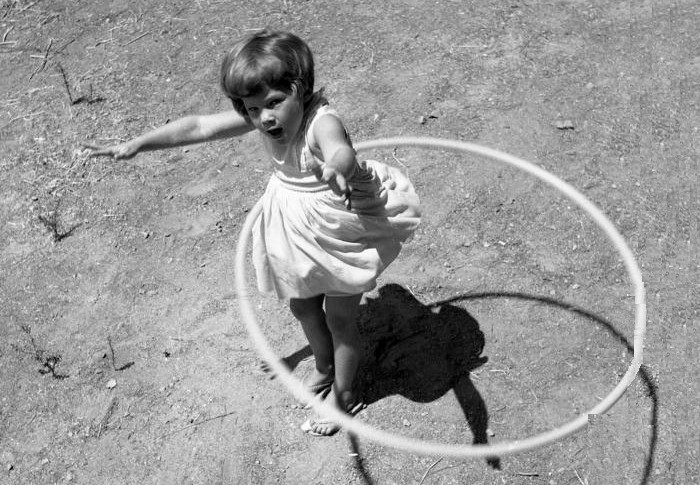

The days following the arrival of the hoop were spent in frenzied practice in the garden (and once - only once - indoors, when I knocked an ornament off the sideboard and was told in no uncertain terms that if the hoop was found indoors again it would be snapped in two and instantly disposed of - I didn’t dare ask where). I got to be quite an expert hula hooper, shimmying it up and down my body, round my neck, arms and legs. Just recently, I found a hula hoop at a play centre and thought I’d have a go. I was shocked to discover that all skill had left me, as the hoop rapidly spun to the floor, despite my energetic gyrating, and lay there looking up at me as if to say, ‘that was nearly seventy years ago, woman, get a grip.’

Then there were marbles - excitedly played on drain covers in the street, and jacks and five stones. These all reached a peak before being replaced by the next unpredictable craze. My favourite craze around this time was, with hindsight, rather a strange one. It involved collecting small items and swapping them with friends at school. This probably sounds mundane and boring these days when eight year olds are busy applying makeup, taking selfies and snapchatting, but let me assure you this was one of the most exciting things in my life at that time.

The routine was this: the participant secured a toffee tin (usually from a Christmas stocking) before scouring the house for any small item that would (a) fit in the tin and (b) possibly be of interest to another participating child. I can remember my tin so well that I can smell the pieces of scented paper cut from one of my mum’s birthday cards. The smell was of roses, like the picture, as was popular in the 1950s. Why any child would be willing to swap some treasured item for a piece of birthday card I’ve no idea, but I do remember them being very popular. Apart from the cards there were ‘charms,’ tiny little cats and dogs and bells, worth nothing in monetary terms, but worth a fortune in terms of swap-ability; pieces of broken jewellery, little brooches, thimbles and the odd dolls’ house item. My younger brother, swept along in the excitement of this absorbing new game did cause a bit of trouble by swapping our tortoise for a German helmet, but that was swiftly remedied by mum marching down the road with the aforementioned headwear and returning home (minus helmet) to plonk the bewildered tortoise back by the hollyhocks in our garden.


But back to the original game. Day after day, we would race out at playtime with our tins rattling, bypassing the bars - where girls (dresses tucked into knickers) would be swinging and giggling - and straight to the only bit of shelter, the porch by the boys’ entrance. Like drug pushers we’d prise open our tins and allow each other to peer in. So many happy playtimes were spent in that porch, bargaining and swapping - and swapping again. My lifelong hoarding means that, after nearly seventy years, I still have two of the brooches I acquired, a tiny ‘ivory’ elephant and a cheap twisted metal bow. I only have to look at them to be back in that porch with my toffee tin.

Crazes during my teenage years revolved mainly around fashion, hair and make up. Mini skirts, hot pants, skinny ribs, all tried and tested (not very successfully - I didn’t have the legs or the neat little bust for any of these, but they were the latest craze, so who was I to argue?)

All my life I’ve had obsessional crazes. I hadn’t considered them until the last few years when I began to realise that I probably have ADHD. In no particular order these are the crazes - I like to call them hobbies - that have obsessed me over the years…

Novelty cakes (this was a business for thirteen years, but also a wild craze); appliqué; novelty cushions; craft fairs; baking for cake shops; knitting; sewing; patchwork, quilting; cross stitch; crochet; roller blading*; fimo; pottery, lino printing, walking daily; photography (between a business and a craze).


Finally, the non crazes or perhaps the life long crazes that I can’t ever see ending: I’ve loved reading, writing and drawing since the day I first opened a book and deciphered a word, then copied it onto a sheet of paper and drew a picture to illustrate it. I have diaries going back to the age of six, although the more interesting ones came later. However, the obligatory stationery to accompany these activities is another story, and cannot possibly be condensed into a few words.

I feel another blog post coming on….

Crazy by Jill Reidy

The time has come
Suspect denies all knowledge
Of any crazes
Since moving to that house
‘Not me officer, I just read,’
They don’t believe her, she looks shifty
Rules are established for those investigating
Five minutes to find evidence

Hercules Poirot, allocated the attic
Takes the steps two at a time
Crashes headfirst into huge tottering piles
Frames, all sizes, all colours
Photographic prints in wallets,
Scattered across the floorboards
Cameras, batteries, lights
photography magazines, memory cards
He battles through
Gives the half finished dolls’ house a cursory glance
Grinds underfoot the tiny figures
Waiting for prosthetics
Skids on the curtains, never hung
He turns, notes the carrier bags
Stacked high under the eaves
Peers in, sees the folded fabrics
Paper patterns, tailors chalk, cutting board
Patchwork pieces, cushion covers needing zips

Poirot sighs, calls down, descends the steps
To the landing
where Inspector Clouseau stands,
Hands gloved, plunged deep into a sack
‘More,’ he says, ‘more fabric’
Rolls his eyes
withdraws a length of cool white linen
Points to the open cupboard
Bulging with colourful ribbons and zips
‘And these,’ he sighs
More bags, patterns, knitting abandoned,
wool unravelling, needles, every size
Clouseau holds up a small frame
Catches Poirot’s eye
Any idea? Tapestry? Weaving?
Cross-stitch says Poirot with a shake of his head
And these?
Rag rugs, quilting, crochet, appliqué
Poirot rattles off dismissively

Miss Marple, ground floor, out of her depth
opens the door to the understairs cupboard
peers in
Why all the tools?
duplicates of every one
Drills, glue guns, hammers
screwdrivers, sets of spanners,
A pack of unused, now unusable, fimo Brooch pins, earring studs awaiting decoration
Reaches in
What’s this?
Knee pads, elbow pads, helmet
Miss Marple frowns
suspect is nearly as old as she is
Roller blades?!
A six, just the suspect’s size

Sherlock Holmes, alone in the gloomy garage
Spots a box
Opens it tentatively
Hardened clay
Five misshapen pots,
Small cutters and scrapers and prodders
A sheep by a wall, stones meticulously fashioned out of clay
He digs down deeper
Pulls out a square of lino
More tools, a roller, dried ink in a tub
‘Pottery and printing,’
He mutters to himself

They meet in the kitchen
Poirot, Marple, Clouseau and Holmes
Enough evidence? Asks Poirot
More than enough agrees Holmes
Get her in says Clouseau wearily

The suspect eyes the scattered bags
She has no defence
‘I didn’t realise….’ she trails off
Then in a whisper,
‘Guilty as Charged.’


Thanks for reading……Jill Reidy

Wednesday, 31 July 2024

Image


Have a look at the image above of the Boulevard du Temple taken by Louis Daguerre in 1839. It is believed to be the first photograph showing a living person and certainly the first most practical method for taking an image. What do you think is missing? Answer below.

In 1826, Nicéphore Niépce had first managed to fix an image that was captured with a camera of his family’s estate but at least eight hours or even several days of exposure in the camera were required and the earliest results were very crude.

Niépce's associate Louis Daguerre went on to develop the daguerreotype process, the first publicly announced and commercially viable photographic process. The daguerreotype required only minutes of exposure in the camera, and produced clear, finely detailed results.

On August 2, 1839 Daguerre demonstrated the details of the process to the Chamber of Peers in Paris. On August 19th the technical details were made public in a meeting of the Academy of Sciences and the Academy of Fine Arts in the Palace of Institute. For granting the rights of the inventions to the public, Daguerre and Niépce were awarded generous annuities for life.

Now I’m going to fast forward and look back a bit and go on a bit of a rant. In 1983 The National Museum of Photography, Film and Television was opened in Bradford. In 2011 the museum was voted the best indoor attraction in Yorkshire by the public, and it was one of the most visited museums in the north of England.


I can vouch for that as our Social Club at the hospital used to run trips there and we were guaranteed a couple of full coaches for our visits. I remember being able to do weather forecasts and read the news from autocues. Every part of the place was fascinating.

In 2016 you could see the way things were going when the decision was made to move a world famous photography collection to the V&A in London. More than 400,000 images were transferred out in an act described as cultural vandalism.

I went back there last year and was shocked at the tackiness of the place now. I’ll acknowledge that the basement holding the Kodak collection (above) is still excellent with the work of pioneers like Niépce, Talbot and Daguerre, the daylight studio, the birth of popular photography etc. But that is because they hadn’t changed anything.

It was redesigned into The National Science and Media Museum back in 2017 and the memory I have of it now is that it had been designed especially for children to run around in and bang or press buttons. The scientific and technical information available is pathetic. And now the Museum is closed for yet another make over. Open again in 2025 apparently.


And just to finish it all off it has one of the worst cafes I’ve ever been in. That’s that done.

So let’s go back to ‘Le Boulevard du Temple’ and 1838. Daguerre captured the street scene in Paris. However, due to the long exposure time required for early photographic techniques, moving subjects, such as people, did not appear in the final image. The exposure time was several minutes, and moving objects would not be captured as they were constantly in motion. As a result, the photograph shows a seemingly empty street, devoid of human figures, even though the area was bustling with activity.

Boulevard du Temple 1839

The shoeshine boy and customer
is pretty good
but what he should have done
was to ask a mate of his
to set up as an artist
canvas and easel
and the dramatic flourish
of a brush pointing to his window

but maybe that’s being
a bit picky and anyway
at that distance
it would have looked like
someone with his hand in the air
rather than a dramatic point
about the End of Art

which is always a load of
what’s probably scattered
all along the Boulevard
though it didn’t stop Painters
packed in L’Académie des Sciences
gasping exactly that
though to be fair
gasping at Daguerre’s silver coated plate
is what I do every time I see it.

First published in the French Literary Review, August 2017


Thanks for reading. Comments welcomed.
Terry Q.

Wednesday, 31 March 2021

Retirement - Just Go With The Flow

07:00:00 Posted by Jill Reidy Red Snapper Photography , , , , , , , , , 5 comments

Retirement.  That’s the time to wind down, take up a stress free hobby, go for gentle walks, watch daytime TV and meet friends for long lunches, right? Wrong. Certainly in my case.  


I’ve always been busy.  Babysitting came first.  In the sixties, parents, unbelievably, trusted an unknown 12 year old to look after their offspring.  I had three families on the go, one of them with four very lively children, all of whom drove me to distraction.  Once they were finally in bed I used to eat my way through the cupboards and spend hours on the phone to my best friend who was babysitting just across the road.  


At 13 I got my first ‘proper’ job, working in a mini market on a Saturday morning (10/- for four hours - that’s 12.5p per hour in today’s money) and then, in addition, at 15 I took on working in a dentists on a Sunday (I can’t remember the pay now, but I know I hated the whole thing).  One of the fathers from the babysitting job was a dentist. He was Jewish, hence the Sunday opening.  His practice was in Stamford Hill which was a fair way from where I lived in Southgate, and meant that I had to travel with him in his car.  I was a very shy teen and he was a grumpy, monosyllabic, old (to me) man, who probably had no more desire to take me with him than I had to be there, squashed up against him in his noisy Fiat 500.  Thankfully, that job came to an abrupt end when I persuaded my dad to phone Mr Cardash and tell him I was so busy revising for my GCEs that I wouldn’t be able to work for him any more.  In fact, most Sundays, I was lying in bed till lunchtime then spending about two hours on clothes, hair and make up, and meeting my best friend to talk about boys.


At about the same time I answered an advert in a shop window for somebody to look after a little boy and do some light cleaning.  I was hopeless at cleaning but I loved children, and the lady who took me on seemed pretty desperate so the job was mine.  It turned out that Myra Schneider was a writer and spent most of the time in her study whilst I looked after Benji and half heartedly wiped a cloth around the house.  Interestingly, I’m still in touch with Myra*, who is now in her 80s and continues to write, having had several books of poetry published over the past 50 years.  I’d like to think I played a small part in her success.  


To prevent this turning into a four page blog post (and, after all, it’s supposed to be about retirement - we’ll never get there) suffice to say my CV is long. In addition to the above, in no particular order: barmaid, shop worker, novelty cake maker, graphic designer, typographer, market stall holder, craft teacher, cafe worker, caterer, school dinner lady, deli assistant, factory worker (shoes; catalogues), teacher and GP admin assistant. 


And then came retirement. With hindsight, I was lucky that a new Head came to the school that I’d happily worked in for 15 years.  Without her appointment, the subsequent two year dispute and the final decent payout I would never have taken early retirement.  As it was, it coincided with the birth of my first grandchild, and the need for a childminder several days a week.  The decision was made, and at 55, I gave up half my teachers’ pension to relax and enjoy life.  Oh and look after a lively baby.  That’s one thing I’ve never regretted.  Fifteen years later, the relationship with my first grandchild is testament to the time we spent together.


Once my childminding duties had been cut down to just a few days a week (with three more grandchildren added to the mix) I felt the need to get busy again, and secured a part time job at a GP surgery.  I was taken on to cover for three months for someone who was off sick.  Six years later, I reluctantly gave in my notice, as my interest in photography became more intense.  


My life has never had a grand plan.  Things have happened to me by chance, and I’ve always been happy to go with the flow.  Retirement has been no different.  Fate brought me into contact with Claire Walmsley Griffiths and the original altBlackpool online magazine, where I could make use of two of my favourite activities: writing and photography.  I met more local creatives and seemed to be accepted into their midst, despite being at least twenty years older than most of them.  My photography took off and went from strength to strength. I began to feel that my life had gone full circle, from Art College in the early ‘70s to the Blackpool art scene 50 years later.  


Oh, and I wrote a book


Finally, in retirement, I found my ideal job. 


This week’s poem is not one of my own, but one I’ve loved for a very long time.  I think it was written for me….


Warning by Jenny Joseph


When I am an old woman I shall wear purple

With a red hat which doesn’t go, and doesn’t suit me.

And I shall spend my pension on brandy and summer gloves

And satin sandals, and say we’ve no money for butter.

I shall sit down on the pavement when I’m tired

And gobble up samples in shops and press alarm bells

And run my stick along the public railings

And make up for the sobriety of my youth.

I shall go out in my slippers in the rain

And pick flowers in other people’s gardens

And learn to spit.

You can wear terrible shirts and grow more fat

And eat three pounds of sausages at a go

Or only bread and pickle for a week

And hoard pens and pencils and beermats and things in boxes.

But now we must have clothes that keep us dry

And pay our rent and not swear in the street

And set a good example for the children.

We must have friends to dinner and read the papers.

But maybe I ought to practise a little now?

So people who know me are not too shocked and surprised

When suddenly I am old, and start to wear purple.


Thanks for reading……..Jill


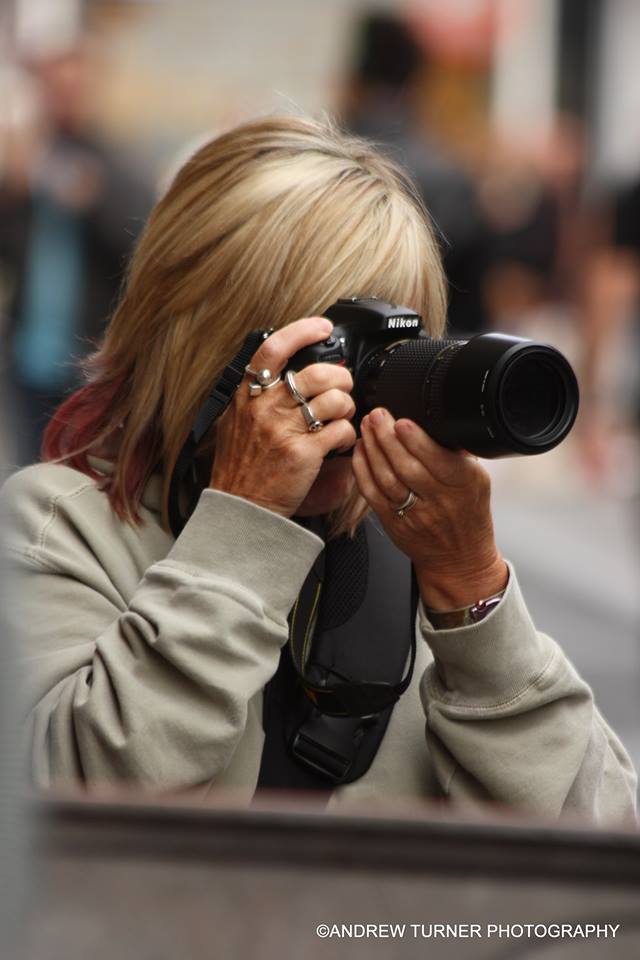
And thanks to everybody who has snapped me taking photos.

Friday, 8 March 2019

Colour...is it all the same ?

I've always been interested in colour from a young age. Colour as applied to dress and fashion.

For my last year's college specialisation I chose to do loom weaving. Part of the work entailed dyeing yarns and it was fascinating to collect dyestuffs and discover that their colours did not necessarily have anything in common with the resulting colour.  My topic title was "Inspiration for Weaving." So I photographed many sights of natural events, and places like snow covered peaks, moorland, streams, forests and the like. Then I chose colours from selected photos to incorporate in my weaving.

Being an outdoor person I am acutely aware of colours in the landscape and take endless photos.   But recently I've been perplexed in my idea as to what colours are, and do we all see them the same?
I know that animals and insects see colours in a different way to ourselves, and I know that some people are "colour blind" and that some people see no colours at all! However, what has entered my mind recently is 'do we all see colours the same?'

I'll try to explain.  Okay, from our baby days we are 'taught' colours...so mum might say "the balloon is red" etc. and we absorb that knowledge and associate a name to a colour, but what if we don't all see the actual same colour ? What if I look at grass and say "look how green that it is", but do I know that my colleague is seeing the same colour? What if his/ her 'green' isn't the same as mine?

Not that it really matters, but it just occurred to me, and it's rather a dark subject and a bit profound for late evening so I'll sign off on what has been a very busy, traumatic day and hopefully I'll have time tomorrow to write a bit more.

 
So here I am after a busy day, finally writing a quick piece...
 
Colour my life
Colour my childhood yellow-
When summer days were long and mellow.
Colour my teen years red-
When I danced long and late to bed.
Colour my college years gold-
When I matured and suddenly felt old.
Colour my twenties plum-
When I became a wife and a mum.
Colour my thirties midnight blue-
When I found my love wasn't true.
Colour my forties powder blue-
When with love true I started anew.
Colour my fifties fluorescent green-
When joy filled my days and tears unseen.
Colour my sixties dull grey-
As I lost my love one sad day.
Colour me now what you will,
As the years stretch before me still..

Thanks for reading my rather hurried piece, Kath.        

Saturday, 11 March 2017

Self-effacing

Selfies! Oh heck. I'm going to keep it snappy this week as I don't have a great deal to say on the topic.

I do possess an iPhone and I use it all the time - for phone calls! I also use it for texting, emails, as a notepad, a calculator, an alarm clock and for recording interviews as audio files. Occasionally I've even used it as a camera, but I've never been tempted to take a selfie. No sir, not once.

Maybe it's because I worked for Kodak for over thirty years and love good photography, which selfies rarely aspire to be (even though the camera technology in phones is pretty damned impressive nowadays)? Maybe it's a generational thing - this fad fed by the technology of the recently possible only appeals to those born since the digital dawn?

In truth, I think it's simply that I prefer being the observer and not the observed.

I suppose it's a plus and very democratic that mobile phone and wireless technology has made self-portraiture easily available to all. In very olden times one would have had to be wealthy enough to employ a portrait painter to render a likeness in oils or watercolour. In less faraway days, the services of a professional photographer would be required...until Kodak made photography available to all at an affordable price a century ago.

That doesn't explain the explosion of selfies that are all over social networking sites like an ego-rash.

If it has to be a self-portrait, let it have something to recommend why anyone else but oneself should want to look at it: compositional structure, texture, depth of expression, wit even. (See the example below.) Am I asking too much? Probably. Am I missing the point? Possibly. It's no big deal.

The camera as an eye into the soul...
As for a poem on theme, I've struggled (obviously) but emerged with this helping of triple-stacked haiku which sums up the essence of selfie-obsession as far as I'm concerned.

Does My Ego Look Big In This?
Dissemination
without artistic control
of slices of self...

distorted features
stacked alongside the famous,
posing laconic...

'me' generation
longing to seem iconic,
framed for a second...

Thanks, as ever, for reading. Keep it real, S ;-)

Saturday, 15 November 2014

Dark

For most of my working life I was gainfully employed by Eastman Kodak. I chose them as they were an ethical company. Their products brought joy, and better health, to millions for over a hundred years - happy snappers, amateur and professional photographers, motion picture makers, x-ray technicians. We'll pass quickly by the statistic that the armed forces were one of our biggest customers [for reconnaissance film-stock]. We'll also skate around the fact that Kodak developed the first digital camera in the 1970s but chose not to bring it to market for fear of triggering the historical inevitability that eventually saw the demise of silver-halide technology.


It's stating the obvious to say that photographic film and paper, by virtue of their light-sensitive properties, had to be manufactured in the dark - or zero ambient luminence as our American colleagues were wont to term it. What many people don't realise is that thousands of Kodak workers [and those of Agfa, Fuji, Konica] spent their working lives in total darkness on film and paper production lines. I was never on a production line, but I have experienced the conditions and such darkness is profound. These workers had pale skins and large eyes; they were the lemurs of the industrial landscape!

Because I worked for Kodak, I developed a keen interest in photography as a medium. I always preferred black and white images. There's a sense of the essence of what's being represented feeling more basic and profound, more powerful, truthful even, when shorn of the adornment of colour. Of course, colour is essential for capturing the beauty of life, nature, the universe but if you want to capture truth, then it's got to be black and white. Call me opinionated.

Today's poem was written as I pondered this black & white versus colour dichotomy and started to question the impact that powerful photographic images of the dark side of life - in newspapers, magazines, online, on tv - actually have on us, the 'consumers' of such images.

F.Stop The Moment
Dark grief,
negative relief,
pain in the grain;
graphic distress
encapsulated.
   
How do we respond,
well insulated as we are,
with our emotions plied
in palatable doses only,
always pre-arranged?
   
We hold your sorrows
in a frame
and feel a momentary pity
that will pass and leave us
free of vast dilemmas
which mean life and death to you,
but only filter through
our complex egocentric webs
as back page articles
or early evening news.
 
Thanks for reading, and have a good week, S ;-) 
 

Thursday, 10 April 2014

Readdressing Creative Processes

06:30:00 Posted by Lara Clayton , , , , , , 6 comments
At times I think it can be helpful to have several mediums in which to express creativity. That way, when one outlet fails or becomes too stressful, there is always another. For me, I quite like the rewards of baking, the extra spoonful of love that seems to be included with a handmade card, the sense of 'achievement' that comes with building an Andy Warhol Campbell's soup can on Minecraft, or taking a photograph which manages to capture how you see the world / feel about it. The latter is something I've always had a liking for, and yet is one I've never really taken beyond my 'click and point' camera.

Over the years, I've been absorbed and inspired by many wonderful photography exhibitions (one of the luxuries of having lived in London) and I enjoy flicking through books of photographs for those images that make me think 'wow'.

Anyway, as a result of my writing being slow (and slightly painful at times) I decided to make an effort to take more photographs. To learn more about the technical side of photography. To teach myself something new. To have a different creative hobby which might in turn release the poetry from my head. To take images without the pressure there seems to be to write a line or stanza.

Below is one of the photographs that resulted from an early morning Sunday walk on the beach...


...and below is the poem which resulted from the above photograph.


Re- Focus

I slowed the shutter speed, increased the ISO.
By the time the image appeared on the camera's display
there was nothing left - a world bleached into obscurity.
The receding tide, wet sand and resting gulls
now lost in a thick, glaring white.
A whiteness like that I imagine in death, in the middle ground,
in the space between this place and the next.

Later, when I downloaded the photographs, they looked like errors:
The missing subjects, the lack of colour and contrast.
But as I began to edit, dragging the 'brightness' slider
backwards into negative figures,
I watched as a faded grey structure pulled itself from the absence,
sharpening, gradually becoming darker - its iron legs
lifting from the fog, as if refusing to disappear.  


Thank you for reading,

Lara

Thursday, 27 March 2014

From the Depths...


On Sunday, after the sporadic showers on the previous day, Shaun and I decided that our plan to revisit the Yorkshire Sculpture Park was probably a bad one. Therefore, Shaun suggested a trip to the National Media Museum in Bradford. He'd visited some years ago with Scouts and believed it would be something I'd enjoy. As is usually the case, he was right. It was a fantastic day: learning about the history of photography, television and the internet; watching strange video footage of acrobatic flies and Black Country delicacies; and taking in the Magnum Open for Business exhibition -  "the story of contemporary British manufacturing and industry told through the lens of 9 Magnum photographers." Here I found myself drawn to a trio of black and white photographs by Stuart Franklin. One, a photograph of a wave machine inspired me to write a poem and, although only an early draft, I thought I'd share it.          


Sea Monster

This mechanical whale does not harness
the energy of the waves.
Instead it rises in the storm's swell,
churns and foams the waters further.
These ribs aren't wooden groynes,
and this wall of tissue provides no armour.
For all worries form a cloud of plankton -
dredged into the bowels of an unforgiving beast.


Thank you for reading,
Lara