written and posted by members of Lancashire Dead Good Poets' Society

Showing posts with label coffee. Show all posts

Saturday, 7 March 2026

On Coffee And Cafés

Not such a lengthy blog for a change, this Saturday night. Having written essays in recent weeks about curry and kings and tangerines, this post will be as short and stimulating as a shot of Greek coffee.

The coffee tree was first cultivated commercially in the Yemen, having been introduced there from the rainforests of Ethiopia where it grew wild. For a long time the  Yemenis had a world monopoly on the export of coffee beans. 

From 1538 to 1636 the Ottoman Empire controlled the southern coastal region of the Yemen, notably its famous coffee port of Mocha. Egypt was the richest province of the Ottoman Empire at that time and the chief commodity it traded was Yemeni coffee. 

Cairo merchants were responsible for moving it from the Yemen to markets throughout the Islamic world - the Arabian peninsula, Persia, Syria and Türkiye. Cities like Cairo, Damascus, Istanbul and Tehran all contained coffee houses by the middle of the 16th century and coffee drinking became a staple feature of Muslim life.

From the Middle East, the Mediterranean trade route soon took coffee to Greece and Italy and from there on to Germany, France, the Netherlands and England. Coffee houses were well-established in many major European centres by the end of the 17th century. 

The French were initially responsible for taking coffee plants to the West Indies and from plantations there it eventually spread to Mexico and then South America. Today Brazil is the world's leading producer of coffee beans, closely followed by Colombia Guatemala, Indonesia, Nicaragua, Venezuela and Vietnam.

a Greek café
My favourite place to drink coffee (not that I do it so much anymore) is in a Greek καφενείο (coffee house) as pictured. In truth, it's really Turkish coffee, thick and black (from that Islamist tradition narrated above), but the Greeks stopped calling it that for political reasons in the 19th century. 

A good café, coffee house or kafeneio should be a restful place to read, socialise or just watch the world go by while enjoying an invigorating shot of caffeine. 

Coffee houses are civilised and hospitable institutions, a kind of universal oasis in the maelstrom of life, and that's all there is to it really.

coffee with my grandson recently
For a café related poem, I have turned again to my favourite Palestinian-American poet, Naomi Shihab Nye. This is from her 1998 collection, 'Fuel'

My Uncle's Favourite Coffee Shop

Serum of steam rising from the cup,
what comfort to be known personally by Barbara,
her perfect pouring hand and starched ascot,
known as the two easy eggs and the single pancake,
without saying.
What pleasure for an immigrant—
anything without saying.

My uncle slid into his booth.
I cannot tell you—how I love this place.
He drained the water glass, noisily clinking his ice.
My uncle hailed from an iceless region.
He had definite ideas about water drinking.
I cannot tell you—all the time. But then he’d try.

My uncle wore a white shirt every day of his life.
He raised his hand against the roaring ocean
and the television full of lies.
He shook his head back and forth
from one country to the other
and his ticket grew longer.
Immigrants had double and nothing all at once.
Immigrants drove the taxis, sold the beer and Cokes.
When he found one note that rang true,
he sang it over and over inside.
Coffee, honey.
His eyes roamed the couples at other booths,
their loose banter and casual clothes.
But he never became them.

Uncle who finally left in a bravado moment
after 23 years, to live in the old country forever,
to stay and never come back,

maybe it would be peaceful now,
maybe for one minute,
I cannot tell you—how my heart has settled at last.
But he followed us to the sidewalk
saying, Take care, Take care,
as if he could not stand to leave us.

I cannot tell—

how we felt
to learn that the week he arrived,
he died. Or how it is now,
driving his parched streets,
feeling the booth beneath us as we order,
oh, anything, because if we don’t,
nothing will come.
                                                   Naomi Shihab Nye


Thanks for reading. Have a good week, S ;-)

Tuesday, 24 January 2023

Tamping - Forget the Coffee, Get the Teapot


I’ve just been trying to read an article about what happens if I tamp expresso too hard. I quickly lost interest and gave up. On the occasion that I might have a cup of coffee, presently once a day, it is from a jar of instant Nescafe Gold. It will do for me. Visitors to my house can have the same, or choose between regular Nescafe or decaf. At the moment, there are still a few sachets of instant latte lurking in the beverage cupboard, left over from when we thought them a good idea. Nescafe, of course, but unwanted, not liked, still in date. I’m baffled by coffee menus in Costa, Starbucks and similar. On reading the first sentence of that article, I'd satisfied  myself I’m not missing out on anything. I don’t need a coffee maker or a tamping mat, though the mat could possibly have other uses.

Morecambe promenade, circa 1960. Sunday morning with my visiting grandparents always involved going to church – Sunday School for me – then a stroll along the front to what I think must have been Nanna Hetty’s favourite café. We had cups of coffee, even me at age five or six. It was either to warm me up on a cold day, or the huge glasses of squash were considered too much. I enjoyed these excursions and remember feeling quite grown up having coffee and popping two light-brown sugar cubes into the cup. I don’t think there was any fuss about choice. Coffee was coffee and in our house and Nanna Hetty’s house, it was in a small, round tin, in powder form. A few years later, when I was old enough to go to the shop by myself, I sometimes bought an individual sachet of instant Nescafe for a few pence. This was old money, pre-decimal. It was just the coffee, not the ones with added milk powder that are available today. I wonder then, when did all these types of coffee and the use of tamping mats come about?

Italian brothers, Sergio and Bruno Costa started their coffee bean roastery in London around 1971 and opened their first coffee bar in 1981. In Seattle USA, the Starbuck team of business partners Jerry Baldwin, Gordon Bowker and Zev Siegl were doing the same thing around the same time. Fifty-plus years later, they are both globally established, offering a long list of different coffees, keeping their baristas busy with their tamping mats. My daughter doesn’t generally like coffee, maybe a caramel latte, but on a short holiday in London when she was about fourteen, she carried a takeaway Costa cup everywhere as it seemed to be the thing to do. And she didn’t walk with us, she was either a little in front, or a couple of paces behind. Funny that.

Well, those of you with tamping mats, coffee makers, even percolators or coffee bean grinders, you know what you like, so enjoy. I'll have a pot of strong tea. A good builder's brew.

My Haiku,

Who wants a latte?
What’s ordinary coffee?
Is it a flat white?

The Barista’s job,
What is tamping all about?
What is expresso?

Why a tiny cup?
I’ll have English Breakfast Tea,
Yes, tea. Very strong.

Thanks for reading, Pam x

Wednesday, 19 January 2022

10.30 Coffee Time, A Very Simple Pleasure

07:00:00 Posted by Jill Reidy Red Snapper Photography , , , , , , , , , , 9 comments

When my dad reached his three score years and ten he must have decided that he might not have many years left, and wrote an essay on the things that gave him pleasure in life.  I can’t remember all the details but I do know I wasn’t really surprised by any of his choices.  Family, food, coffee, maths, chess, books, nature, cars, crosswords, and - the word I skimmed past very quickly - sex.  


My dad loved food - any food.  Although my mum tried to keep him under control he could frequently be found in the kitchen eating chunks of cheese on thickly buttered bread (Camembert a particular favourite - the smellier the better) As my mum had no sense of smell it was left to the rest of us to complain loudly as we entered the house and were confronted by a strong cheesy stench.  Eventually, the Camembert was double wrapped in foil and clingfilm and banished to the lean-to. 


As it happened, my dad had another twenty three years to enjoy those simple pleasures, and enjoy them he did. Every night at 9 o’clock my mum and dad would each have a Cornetto.  If I was staying, and refused one, he would tell me how delicious it was.  Boxes of chocolates couldn’t be left out if dad was in the room.  He had been diagnosed as diabetic, but never took it as seriously as he should have.  Biscuits and cakes disappeared mysteriously with nobody knowing a thing about it. Looking back, I wish I hadn’t nagged him when I was there.  I was concerned for his health, but maybe he’d got it right: his enjoyment outweighed any risk. 


Seafood and, in particular, lobsters, became a firm favourite.  He found that Lidl sold them and asked for a constant supply, panicking if he ran out.  I can still see him with a knife and hammer, cracking the shells, his mouth watering at the prospect of the meal ahead.  Although lobsters were a bit of an extravagance, not all his simple pleasures were expensive.  Most cost nothing at all.  Trips to the library were frequent and regular.  He enjoyed a wide range of genres, from whodunnits and biographies to intellectual books on philosophy and religion.  


My dad was a life long learner, who had missed out on a university education due to his family's lack of finances, and his father's desire to have his son join him in his one man optical business.  Dad would have been an ideal university student, but sadly it wasn’t to be.  Instead, he continued to educate himself, enrolling for Open University courses and thriving on discussion and debate. Most subjects interested him, but particularly philosophy, religion (he was an atheist), and maths.  He would sit at the computer for hours, reading and composing emails to his fellow students.  I think this was dad’s way of validating himself.  He would never admit it but I’m sure his lack of university education was a huge regret to him, especially as his best friend, my mum’s brother, John, was sent off to get his degree (my grandma working three jobs to pay for it) and then follow it with lecturing for many years at Kings College London.


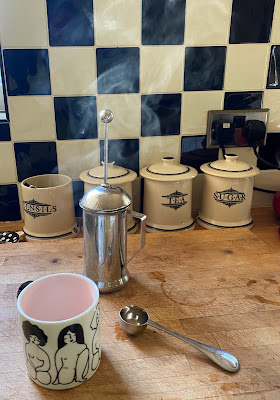
Although I am no intellectual, I can relate to many of dad’s simple pleasures.  I love reading, and guess that came from growing up in a houseful of books, with both parents being avid readers. Food goes without saying, and I also love to learn - but not such intensive and deep subjects as those that consumed my dad.  One thing we had in common was a morning coffee.  It’s not just the drinking of it, it’s the whole ritual of boiling the kettle, heating the cafetière, grinding the beans, making the coffee, heating the milk…….It’s a very special pleasure, and one that I still love.  As the smell of the coffee hits me I think of my dad.


The night before Spamhead suddenly died (yes, that was his nickname for obvious food related reasons), my brother phoned to speak to my mum.  In the background dad called out proudly, “I finished the Telegraph crossword by 10 this morning, and I’m just cooking sausages!”  That summed him up in one sentence. It makes me very happy to think he was still enjoying his simple pleasures right up to the end.


10.30 Coffee Time


Scoop beans

Rich and black

With oily sheen

Pour into hopper

Grind fine 

Savour smell

Freshly ground Continental 

Two large spoons full 

Into heated cafetière

Water boiled

Wait a second

Tip kettle

Gently pour 

Into pot

Stare dreamily 

Through rising steam 

Sniff in sniff in 

Full force of brewing coffee

Lid on

Careful, don’t plunge yet

Meanwhile

Choose favourite mug

Just for coffee 

Not for tea

Pour in milk 

Heat thirty seconds 

Dream of treat to come 

Five minutes

Time to plunge!  

Inhale smell

Coffee brewed

Pour slowly slowly 

Onto milk in mug

Watch as bubbles rise

Let cool for seconds

Before that first delicious sip...

10.30 Coffee Time 


Thanks for reading.......Jill

Tuesday, 22 January 2019

Fat-balls - Feed the Birds


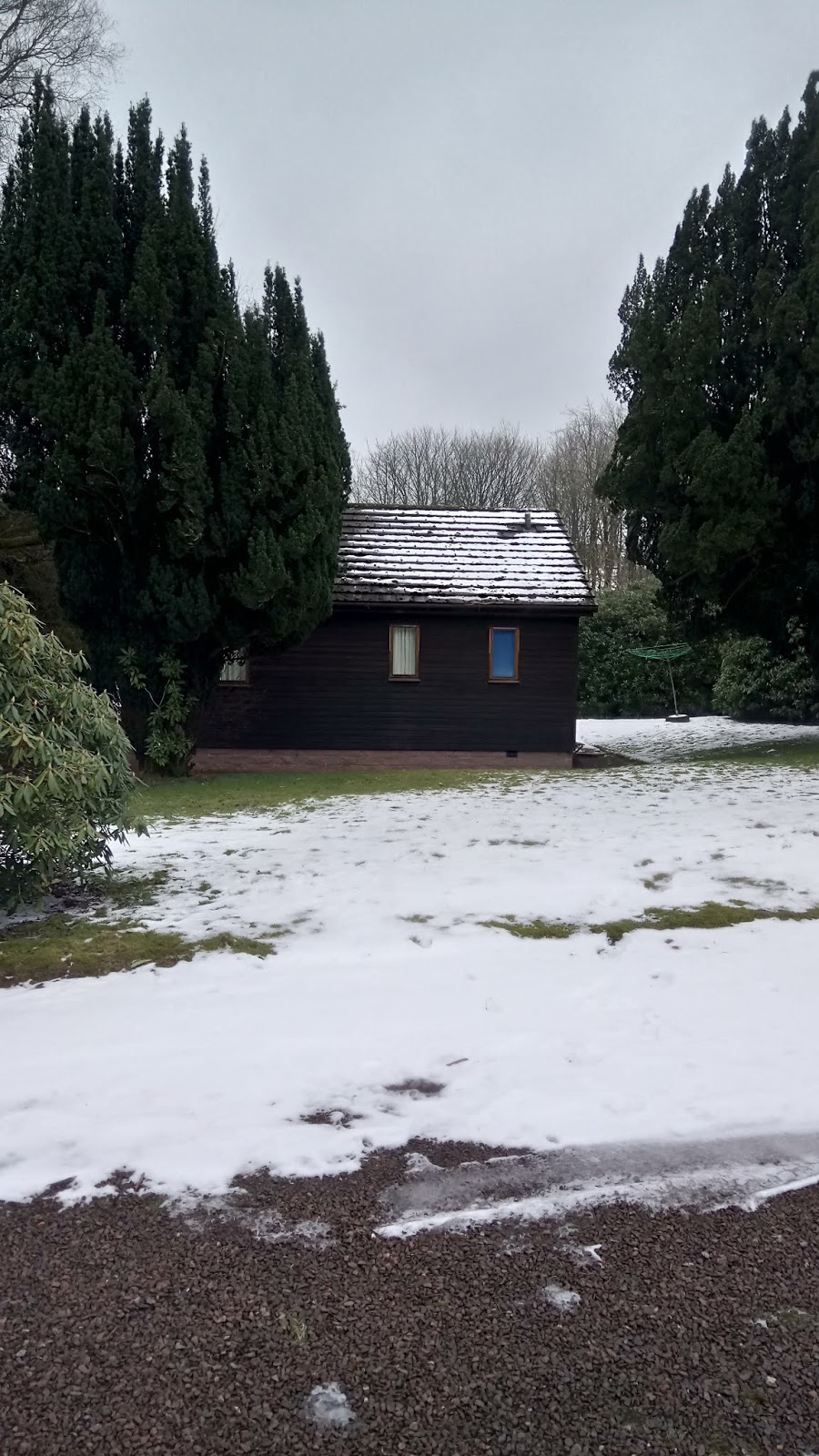
Spending time in Dumfries & Galloway is always intended to be restful and peaceful and that’s exactly what we find at the lodges where we choose to stay. A favourite pastime is watching the birds feasting on the fat-balls and seeds that we provide. We feed the birds at home, but hardly get chance to enjoy the results of constant topping up. It’s different when we’re away. A morning consists of relaxing after breakfast with a coffee on the veranda, or inside if it’s chilly, reading yesterday’s paper or a Kindle. Reading material is soon cast aside as bird watching takes over. Depending on the time of year, we may repeat this in the late afternoon. The lodges are surrounded by evergreen trees and huge rhododendrons offering plenty of branches to hang an assortment of feeders.  

We were there in November for a much needed break. My father-in-law had passed away the week before and the funeral arranged for our return.  We looked forward to the family gathering that was always a highlight of our visits. I had started to be ill in the days prior to our trip and hoped the Scottish countryside air and time to rest would help me pick up. It wasn’t to be, but we still enjoyed our stay.

Health permitting, our spring time visit will go ahead. It’s a good time to watch the red kites at their feeding and conservation station nearby or at Galloway Forest. What I’d really like to do, more than anything, is fill seed feeders and fat-ball holders, hang them up and wait.

As we’re in his domain and it’s nearly Burns Night, I chose this poem,
 
 
O stay, sweet warbling woodlark stay,
                                      Nor quit for me the trembling spray,
 
                                       A hapless lover courts thy lay,
 
                                       Thy soothing, fond complaining.
 
 
Again, again that tender part,
                                      That I may catch thy melting art;
 
                                      For surely that wad touch her heart
 
                                       Wha kills me wi' disdaining.
 
 
Say, was thy little mate unkind,
                                      And heard thee as the careless wind?
 
                                      Oh, nocht but love and sorrow join'd,
 
                                      Sic notes o' woe could wauken!
 
 
Thou tells o' never-ending care;
O'speechless grief, and dark despair:
                                      For pity's sake, sweet bird, nae mair!
 
                                      Or my poor heart is broken!
 
 
                                                                  Robert Burns  1759-1796


Thanks for reading, Pam x 


Monday, 5 March 2012

A Poet Marches On Their Stomach

*Don't panic! It is Monday and not Tuesday. Shaun anad I have switched days because I'm more organised than he is :)

This week’s theme is a pun, a play on words, ‘March is on its stomach’, which relates to the idiom an army marches on its stomach. It suggests that to be effective, an army relies on good and plentiful food, which made me ask myself: what ‘food’ does a poet require in order to be effective?

Personally, I can think of quite a few things that help me to write – be that in the short-term or the long-term – and which in some small way help me to be a better poet, or rather a more inspired one. However, I won't bore you with a long list, instead, I will mention three 'food' (re)sources that I've enjoyed over the last couple of days.


BOOKS, specifically poetry books, fuel my mind. They offer a chance to see how it is done, to learn, to be inspired, to escape, to feel and to discover what you like and what you don't like. I'm almost certain that if I didn't read poetry, then I definitely wouldn't be writing it.


I've currently been reading Michael Donaghy's
Collected Poems, as well as Memory Tray by Deryn Rees-Jones, New Collected Poems by Tomas Transtrӧmer and Profit and Loss by Leontia Flynn. All of which have made either an excellent snack or meal, and have successfully managed to prevent my mind from starving. 


COFFEE & BISCUITS. Before January 1st, the biscuits would have been cigarettes. A single poem would have resulted in a lot of smoke and ash but now, since quitting, there is just a lot of crumbs.


Anyway, I like to sit down to write with a mug of black coffee and a couple of biscuits. It's like a reward for being brave enough to face the blank page... 

Small sips and tiny nibbles that feel reassuring as you attempt to find the first line.


NATURE.
There is nothing like a genourous serving of the outside world. Be it rural or urban, there are thousands of ideas hiding, flitting and just waiting to be caught.

On Saturday, Shaun and I went for a walk around Brock Valley. Trees, mud, water, wild garlic and dishevelled farms is enough to satisify my poetic appetite and cause my mind to start thinking of potential first lines, titles, ends. 


So, on this indifferent Monday morning, why not treat yourself to something that makes you feel better, that inspires you, that makes you smile, that makes you feel freer, that makes you more effective.

Thank you for reading,
Lara