written and posted by members of Lancashire Dead Good Poets' Society

Showing posts with label character. Show all posts

Tuesday, 1 September 2026

Reflect


Our summer didn’t turn out as we hoped. One thing after another put obstacles in the way of our plans, but we were fortunate enough to salvage one pre-booked break away by changing location. We’ve had plenty of time to reflect on the situations we’ve faced, and looking ahead, think about what to do next. We’ll take what comes and do our best to keep a positive outlook.

Saturday put a smile on my face. It wasn’t just Blackpool F.C.’s 4-0 win placing them at the top of the League One table, it was the return and involvement of the player in the number 12 shirt, Jerry Yates. His signature song, ‘Spirit in the Sky’ never sounded better. If you’re reading this, Jerry, - you never know – welcome home.

Sylvia Plath’s only novel, The Bell Jar stayed untouched on my ‘awaiting reading’ shelf for months before I decided it was time. Things I’d read about her unnerved me and yet I felt compelled to read her work. I wanted to know. I wanted to understand and reflect on the complexities of her life. I found it to be a great read. I took it slowly, to process carefully and often stopped reading to reflect on what she, or her main character, Esther Greenwood was doing. I found this poem,

Mirror

I am silver and exact. I have no preconceptions.
Whatever I see I swallow immediately
Just as it is, unmisted by love or dislike.
I am not cruel, only truthful,
The eye of a little god, four-cornered.
Most of the time I meditate on the opposite wall.
It is pink, with speckles. I have looked at it so long
I think it is part of my heart. But it flickers.
Faces and darkness separate us over and over.

Now I am a lake. A woman bends over me,
Searching my reaches for what she really is.
Then she turns to those liars, the candles or the moon.
I see her back, and reflect it faithfully.
She rewards me with tears and an agitation of hands.
I am important to her. She comes and goes.
Each morning it is her face that replaces the darkness.
In me she has drowned a young girl, and in me an old woman
Rises toward her day after day, like a terrible fish.

Sylvia Plath (1932 – 1963)

Thanks for reading, Pam x

Tuesday, 18 February 2025

A Favourite Film - Goodnight, Mr Tom


 A favourite film is a tough choice to make. I’ve picked a few. I think they started as books, with the exception of ‘Grease’, where if I remember correctly, the book came later, and ‘The Holiday’, which doesn’t have a book. Please put me right, if I’m wrong.

‘Grease’, the sound of 1978 and there’s a familiar song in my head as I type. It’s got to be my favourite musical of my generation. A sing-a-long, feel good factor romance. What’s not to like? Ok, stop and wait, there was another that year with great songs, ‘Saturday Night Fever’ with exceptional dancing and a serious storyline.

I don't like romantic comedy, generally, but I make an exception with 'The Holiday'. I like the story, the characters are believable and it isn't too sweet. The cottage is appealing, too.

The 1939 black and white version of ‘Wuthering Heights’ was my introduction to Laurence Olivier when I was eleven or twelve and of course, I fell in love with him. The film only told half the story, but that was Hollywood. Cathy’s death broke my heart.

1939 was the year for ‘Gone with the Wind’, another beloved book and film starring Vivienne Leigh who was about to marry Laurence Olivier, but we won’t dwell on that and it happened way before I was born, anyway.

I’ve got to include the original, 1940 ‘Rebecca’ whilst I’m held captive by Olivier’s gaze and Daphne du Maurier’s writing.

During my childhood and particularly around the age of eleven to thirteen, I watched lots of films with my mum, from Hollywood musicals to Hammer Horrors, but the one I associate with her the most is ‘A Taste of Honey’. This was not a film we watched together sharing chocolate and enjoying mummy and daughter time. This was my forbidden fruit when I was told not to watch it. Too late, the beginning had already got me spellbound, but she sent me to bed saying it wasn’t suitable for me. I think I was eleven at the time, very much a child, still played with dolls and very different to modern day eleven year olds. I knew better than to argue or make that annoying, disapproving ‘arr’ sound. My mum was going downstairs to work in our pub, so I listened out for her leaving. Seconds later I was leaning on the lounge door frame with the door to our flat slightly open so I would hear if she came back up. I was rooted to the spot and loved every second of that film. Whatever my mum was protecting me from went right over my head. I was just disappointed that Jo’s sailor didn’t come back. As an adult I consider ‘A Taste of Honey’ to be Shelagh Delaney’s stroke of genius. Perhaps my mum wanted to avoid awkward questions from me. I’ve worked it all out since.

I was a fan of John Thaw ever since Phyllis Bentley’s ‘Inheritance’ was serialised on tv. To me, he was what made ‘The Sweeney’ and he was born to be ‘Morse’. I wasn’t sure about this completely different character as Tom Oakley in ‘Goodnight, Mr Tom’. Silly me to have such doubts. Not only was he perfect as the character, and the rest of the cast were equally excellent, the film, which was a tv adaptation of Michelle Magorian’s novel completely overwhelmed me. I cried so many times, full of sadness for what was being endured by this young boy, a war time evacuee. There are many twists and turns in the story and as it ends with an agreeable conclusion, fresh tears from me, happy ones this time. It really is that good. I think my eldest grandson might like to watch it with me.

My poem:

William Beech

Authority’s persuasion,
Tom Oakley’s reluctance,
Zach’s hand of boyhood friendship,
William’s acceptance.

My tears, they are relentless
For Will, where has he been?
Tom Oakley stopped complaining,
Taking in what he had seen.

William, shirtless when he saw
The scars left by the belt,
Sickened beyond all words by
The pain he must have felt.

I wish I knew Zach’s poem,
Verses of hope and home,
Safe in William’s pocket
From what life might become.

I love a happy ending,
It’s ‘Dad!’ I hear Will call
At the end of fear and doubt,
As even more tears fall.

PMW 2025

Thanks for reading, Pam x

Tuesday, 23 July 2024

Bells - Last Orders


The first bells of any significance to me must be the ones used by my father and grandfather to call ‘last orders’ and ‘time, gentlemen, please’ in their pubs. They were fixed to a post or wall behind the bar and with a firm tug on the rope, sent out a loud peal with an authoritative tone. At some point the word ‘gentlemen’ was removed and it was simply ‘time, please’, even in the Vaults. The Vaults was considered the mens’ bar, simply because no ladies would like to go in and from what I remember in my formative years, the men were not always gentlemen.

Another distinctive bell I remember from childhood is the ringing of my dad’s alarm clock. These days everything bleeps digitally from a radio or mobile phone, but this wind-up monster, which no longer works but I keep it as a treasured possession, was loud enough to wake the whole house and pub beneath – but not always my dad. I don’t know who was the genius behind the idea, but biscuit tin, yes, a metal one, a few of my marbles inside and the clock on top of the lid was louder than ever with the added power of ‘rattle’. That worked a treat.

I started secondary school at what is locally known as ‘the old Palatine’, an impressive building between Bennett Avenue and Park Road in Blackpool, which is now the University Campus of Blackpool and the Fylde College. It was great for me to return decades later and find it much the same inside, except the long corridor which stretched from one end of the school to the other now had sets of fire doors closing the length into sections. In my early school days it was open and at each end hung a bell. These two bells were monitored by duty prefects who rang them to announce the end of lessons. They could be heard all over the school and were much more efficient than the weak electric buzzers we had to listen out for in the new school twelve months later when we relocated to St Anne’s Road. The old building had character, the new one did not. The old building is still standing and is useful. The new one, demolished and rebuilt after only fifty years, or thereabouts.

I wish I knew what happened to my mother’s brass bell. It was made in the style of a lady with a tiny waist wearing a crinoline skirt. It lived on the mantelpiece for years, then, when my mum was ill and in bed, she had it close to her so she could ring it if she was alone and needed something. It is yet another thing that seemed to vanish into thin air after she died.

Here is a poem, Edgar Allan Poe, placing bells where he perceived they belonged in a life-cycle,

The Bells 

1

  Hear the sledges with the bells—
                 Silver bells!
What a world of merriment their melody foretells!
        How they tinkle, tinkle, tinkle,
           In the icy air of night!
        While the stars that oversprinkle
        All the heavens, seem to twinkle
           With a crystalline delight;
         Keeping time, time, time,
         In a sort of Runic rhyme,
To the tintinnabulation that so musically wells
       From the bells, bells, bells, bells,
               Bells, bells, bells—
  From the jingling and the tinkling of the bells.

2

        Hear the mellow wedding bells,
                 Golden bells!
What a world of happiness their harmony foretells!
        Through the balmy air of night
        How they ring out their delight!
           From the molten-golden notes,
               And all in tune,
           What a liquid ditty floats
    To the turtle-dove that listens, while she gloats
               On the moon!
         Oh, from out the sounding cells,
What a gush of euphony voluminously wells!
               How it swells!
               How it dwells
           On the Future! how it tells
           Of the rapture that impels
         To the swinging and the ringing
           Of the bells, bells, bells,
         Of the bells, bells, bells, bells,
               Bells, bells, bells—
  To the rhyming and the chiming of the bells!

3

         Hear the loud alarum bells—
                 Brazen bells!
What tale of terror, now, their turbulency tells!
       In the startled ear of night
       How they scream out their affright!
         Too much horrified to speak,
         They can only shriek, shriek,
                  Out of tune,
In a clamorous appealing to the mercy of the fire,
In a mad expostulation with the deaf and frantic fire,
            Leaping higher, higher, higher,
            With a desperate desire,
         And a resolute endeavor
         Now—now to sit or never,
       By the side of the pale-faced moon.
            Oh, the bells, bells, bells!
            What a tale their terror tells
                  Of Despair!
       How they clang, and clash, and roar!
       What a horror they outpour
On the bosom of the palpitating air!
       Yet the ear it fully knows,
            By the twanging,
            And the clanging,
         How the danger ebbs and flows;
       Yet the ear distinctly tells,
            In the jangling,
            And the wrangling.
       How the danger sinks and swells,
By the sinking or the swelling in the anger of the bells—
             Of the bells—
     Of the bells, bells, bells, bells,
            Bells, bells, bells—
 In the clamor and the clangor of the bells!

4

          Hear the tolling of the bells—
                 Iron bells!
What a world of solemn thought their monody compels!
        In the silence of the night,
        How we shiver with affright
  At the melancholy menace of their tone!
        For every sound that floats
        From the rust within their throats
                 Is a groan.
        And the people—ah, the people—
       They that dwell up in the steeple,
                 All alone,
        And who tolling, tolling, tolling,
          In that muffled monotone,
         Feel a glory in so rolling
          On the human heart a stone—
     They are neither man nor woman—
     They are neither brute nor human—
              They are Ghouls:
        And their king it is who tolls;
        And he rolls, rolls, rolls,
                    Rolls
             A pæan from the bells!
          And his merry bosom swells
             With the pæan of the bells!
          And he dances, and he yells;
          Keeping time, time, time,
          In a sort of Runic rhyme,
             To the pæan of the bells—
               Of the bells:
          Keeping time, time, time,
          In a sort of Runic rhyme,
            To the throbbing of the bells—
          Of the bells, bells, bells—
            To the sobbing of the bells;
          Keeping time, time, time,
            As he knells, knells, knells,
          In a happy Runic rhyme,
            To the rolling of the bells—
          Of the bells, bells, bells—
            To the tolling of the bells,
      Of the bells, bells, bells, bells—
              Bells, bells, bells—
  To the moaning and the groaning of the bells.

Edgar Allan Poe

Thanks for reading, Pam x

Tuesday, 17 October 2023

The Glittering Prize - Meaningful Things

I have some works of art in my house. Some are on display, others are stored for safe keeping. They are items made by my children and grandchildren, presented to me with love and received with great delight. Some are glittery and shiny, others are not, but to me these special gifts are treasured prizes which fill me with joy. Being a grandparent is a little easier than being a parent, I have found, as the grandchildren usually – not always – go home, and I don’t have full responsibility for making important decisions about them. My glittering prizes are the children themselves, though if there is something precious, it is the teaspoon fashioned from tinfoil by my son when we forgot to take one on a picnic. It has a space in my display cabinet of meaningful things.


I was watching and listening to Sir Keir Starmer’s speech on TV at the recent Labour party conference. I was horrified to see someone get to him and pour gloopy looking glitter over his head and shoulders. Luckily, it was harmless, but how on earth did he get through security? He could have had a knife, a gun, anything. For one tiny moment, as the person was removed and Sir Keir removed his jacket, I wondered if the whole thing had been staged. I soon dismissed that thought. Not a glittering prize but a worrying moment.

One of my favourite modern day poet / writers is Lemn Sissay, MBE, former Chancellor of Manchester University. In 2021 he was appointed OBE for services to literature and charity. Last year he was elected a Fellow of the Royal Society of Literature. He is a trustee of the Foundlings Museum. Not bad going for someone who grew up in the care system, was treated unfairly by a family and repeated let down badly by social workers and social services at the time. He got justice eventually, but nothing could possibly compensate enough for his early life. Reading his memoir, ‘My Name Is Why’, broke my heart and I will salute his strength of character for evermore. He founded the charity Gold From the Stone Foundation which supports care leavers and every year provides Christmas dinners. His glittering prize is doing what he can to help others. Here is one of his quatrains,

‘How do you do it?’ said night.

‘How do you wake and shine?’

‘I keep it simple,’ said light.

‘One day at a time.’

Lemn Sissay  OBE, FRSL


Thanks for reading, Pam x

Tuesday, 26 January 2021

Handwriting - Don't Lose the Basics


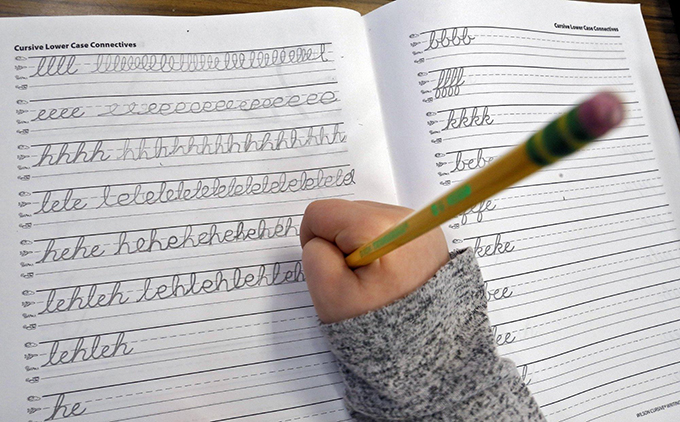
I used to take pride in my handwriting, though these days it is limited to a shopping list or a quick note. I’ve received many compliments for my ‘beautiful handwriting’ which may have started with my interest in calligraphy.  I’ve enjoyed the privilege of doing the place cards for weddings and formal functions as my reputation grew. Over the years my style has changed and become a bit scruffy, to say the least and it’s probably down to lack of use. I can’t blame it on the lymphoedema.

Handwriting was an important lesson at school. My childhood was spent learning how to correctly form individual letters, how they sat on the line, which were tall and which were not.  We practised on specially lined paper, using a fountain pen or a dipped ink pen, after a pencil had been mastered sufficiently for the approval of the teacher. How the letters linked together into what we called ‘real writing’ followed the specific rule of the pen not leaving the paper mid-word, so a character ending below the line would need to be looped back to the line to form the next one. This was the way we were taught and we had to adhere to it. Individual style came later.

My secondary school exercise books, which I still have, show my various experiments in handwriting with some comments from teachers – ‘Do this again in blue or black ink’ (my preferred turquoise Quink was an individual step too far)  ‘This is not an art lesson. No more unnecessary flourishes’.  Eventually I settled into something like a Chancery script and quite far removed from the cursive handwriting I’d grown up with. I think I still write like that.  I used my calligraphy skills to copy a couple of my favourite sonnets which I hung on the wall in matching frames. They need re-doing with ink fit for purpose; another little job on my lockdown ‘to do’ list.

I’m helping out with some home-schooling for my eldest grandson. He’s only five and missing school, which he loves. I really feel for him. He needs his teacher, his peers and the dynamics of his classroom activities. For now he’s got Nanna’s old-fashioned teaching skills coupled with bags of patience, I hope. He is a whizz kid at maths and number work. He needs some encouragement with handwriting. Yesterday was handwriting day, just when he wanted to play. I have lessons emailed to me by my daughter for him to work on with my help. It wasn’t long before I thought I was reciting a Joyce Grenfell sketch.

‘Sit still, dear.’

‘Move to where you can see, then.’

‘Try to keep hold of your pen.’

In an effort to keep things fun, I got the easel out, chalk-board facing, plenty of chalk and words for him to sound out and write on the board. That went well, he was focused and I took a photo to send to his mum. Not much actual handwriting done, never mind. After a play-break, I found him something about dinosaurs on BBC Bitesize KS1. I think it was a science lesson. He enjoyed the interaction with that so much that he had to do it twice. He already knew how to ‘scroll and click’. Of course he did, silly me, he is Year One. We’ll return to his proper school work and do some handwriting another day. There’s no substitute for basic skills.

I wrote this poem a few years ago. Forgive me if you've heard it before. 

An Alternative Education


The 3Rs soon to be redundant

Computer-led kids will be abundant

With all information mega-quick

It only takes a scroll and click.

No need for any conversation

Included in their education.


Last year’s reception class have all gone

And taken a leap up to Year One

To drag sticky fingers on IPad screens

And work out what technology means.

Will this be their basic foundation

Instead of formal education?


Numeracy, or let’s call it Maths

Has rules to follow specific paths,

Beginning with learning how to count

Then adding up and sharing out.

One click away from calculation

Takes away their education.


When did this digital preference start?

Oh why no poetry learnt by heart?

‘Spell check’ becomes their favourite teacher

With ‘grammar check’ and added feature.

The only future expectation,

A self-taught on-line education.


The infants are learning to use a pen.

It’s not a skill they’ll need again

For a future spent staring on-line,

Social activity in decline

With hardly any interaction,

So they won’t need our education.


PMW  2015


Thanks for reading, take care and keep well. 

If you're home-schooling or trying to occupy infants, keep smiling. They love you.  Pam x


Wednesday, 16 January 2013

The Inspiration of Profession


Yesterday as I lugged bags of rubble, old ceramic sinks and decaying skirting boards into the skip, our builder offered me a job. Although it was probably not a serious offer, more a phrase that carries an illocutionary force of praise rather than promise, his idea that I could work for him and write poetry about his work was an arresting one, and one which has inspired the writing exercise described below.
There is an amazing poem (one of those poems that makes me coo with admiration every time I read it) called The Boys in the Fish Shop by Kathryn Simmonds, which shows just how successful a poem about a specific profession can be. If you haven’t read the poem before then you can read/listen to it on the Poetry Archive.
Profession as Inspiration
1)      Firstly, select a profession. I’d suggest choosing either one you know about, or one which you are currently in contact with in your daily life - be that via a shopping trip to the fishmongers (like in Simmonds’ poem), the emergency plumber fixing a leak or the gardener you pass in the park.
2)      Secondly, pay attention to the environment. One of the reasons Simmonds’ poem is so successful is because of the detail included about the shop in which the boys work. The environment in which you place your character/characters has the potential to add depth to character, narrative and the overall poem, as well as showing the reader the profession rather than telling, so use it to your advantage.
3)      Thirdly, notice interesting or unexpected traits in your character. For example, Simmonds notes the ‘acne like mottled skin of pink fish’ and the ‘hoop of a lure’ of one of the boys and the ‘hands on hips, an elbow on a broom’ of another. From each of these statements we infer something about each of the boys – character description is your opportunity to show something without spelling it out.
4)      Lastly, if you are writing the poem in the third, consider including some direct speech from your character. Simmonds uses the familiar address to a customer to bring the reader into this world – that ‘Yes darling’ is so indicative of the environment and class. If you’re not writing your poem in the third person but have chosen the first person, then pay attention to vocabulary use – for your character to be believable then there language usage and tone needs to be believable.

Thank you for reading,
Lara